

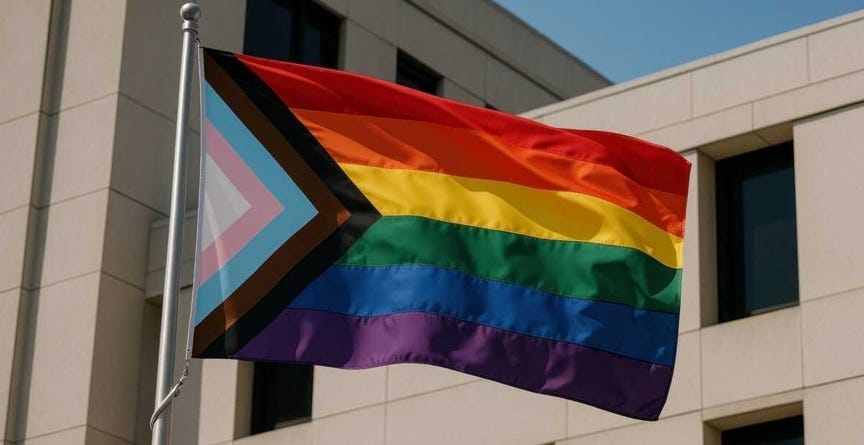
Fly the Pride flag or face consequences. That was the message delivered to custodial leaders at the Upper Grand District School Board as part of a custodian training session that called for a “culture of inclusion and compliance.”
According to A March 2025 training session from the Upper Grand District School Board’s human rights office, the growing pushback against diversity, equity and inclusion is a problem that must be countered. It calls this “‘Cancel EDI’ rhetoric.”
It is impossible to know whether the training expanded on the growing evidence that this approach often increases the very “isms” they are intended to eliminate. However, the context suggests the trainer avoided a fair exploration of why people are rejecting EDI.
Legitimate objections are reduced to “narratives driving the pushback,” including what the presentation calls the “meritocracy myth,” claims of political indoctrination and legal arguments that EDI violates institutional neutrality.
The training can be found below:

While the training says these are merely claims, the Aristotle Foundation published a meta-study evaluating the EDI movement’s claims and found them wanting. It’s ineffective in changing behaviour toward the positive. In fact, the empirical evidence found that EDI approaches actually increased prejudice and harm.
The training does not appear to provide any evidence that EDI accomplishes any of the things it claims to do, but it has plenty of criticism from its critics.
Let’s look at some of the “myths” the training attempts to debunk.
“Diversity in hiring does not lower standards,” one slide boldly claims without providing evidence. And yet, we do have evidence to the contrary.
A Macdonald-Laurier Institute study published in September found an “equity-excellence trade-off,” in which EDI hiring requirements actively weakened Canadian research and reduced overall academic performance at Canadian universities.

Meanwhile, the EDI requirements imposed on the Canada Research Chairs Program cost approximately $36 million per year. That’s a costly flop.
“EDI is not about giving certain groups special treatment,” reads another slide.
Has the Human Rights Office seen job advertisements these days? They don’t say “White males need not apply,” but making jobs only open to women, gender diverse, and ethnic minorities amounts to the same thing.


Finally, “EDI initiatives do not create division among staff.”
Why, then, does the same training later decry “whisper networks” as a phenomenon causing division? Could staff be whispering about many cases of teachers being sanctioned or fired for politely disagreeing with elements of EDI practices?
The board’s case study might help us understand.
In the example provided, James, the custodian, declines to fly a Pride flag because of his religious principles.

James is “reminded” by the principal that his objection goes against board policy, but he insists that his religious rights should be respected.
“Refusing to comply,” the training says, “may result in disciplinary action.”
The board is “building a culture of inclusion and compliance”, and displaying political symbols such as the Pride flag is a “job requirement”, just like “following safety protocols or maintaining clean facilities.”
Juno News asked the board whether the training addressed the mounting body of evidence critical of EDI on its merits and research quality and whether any of their employees have previously faced discipline for refusing to display a Pride flag or other political symbols.
They didn’t respond.


