

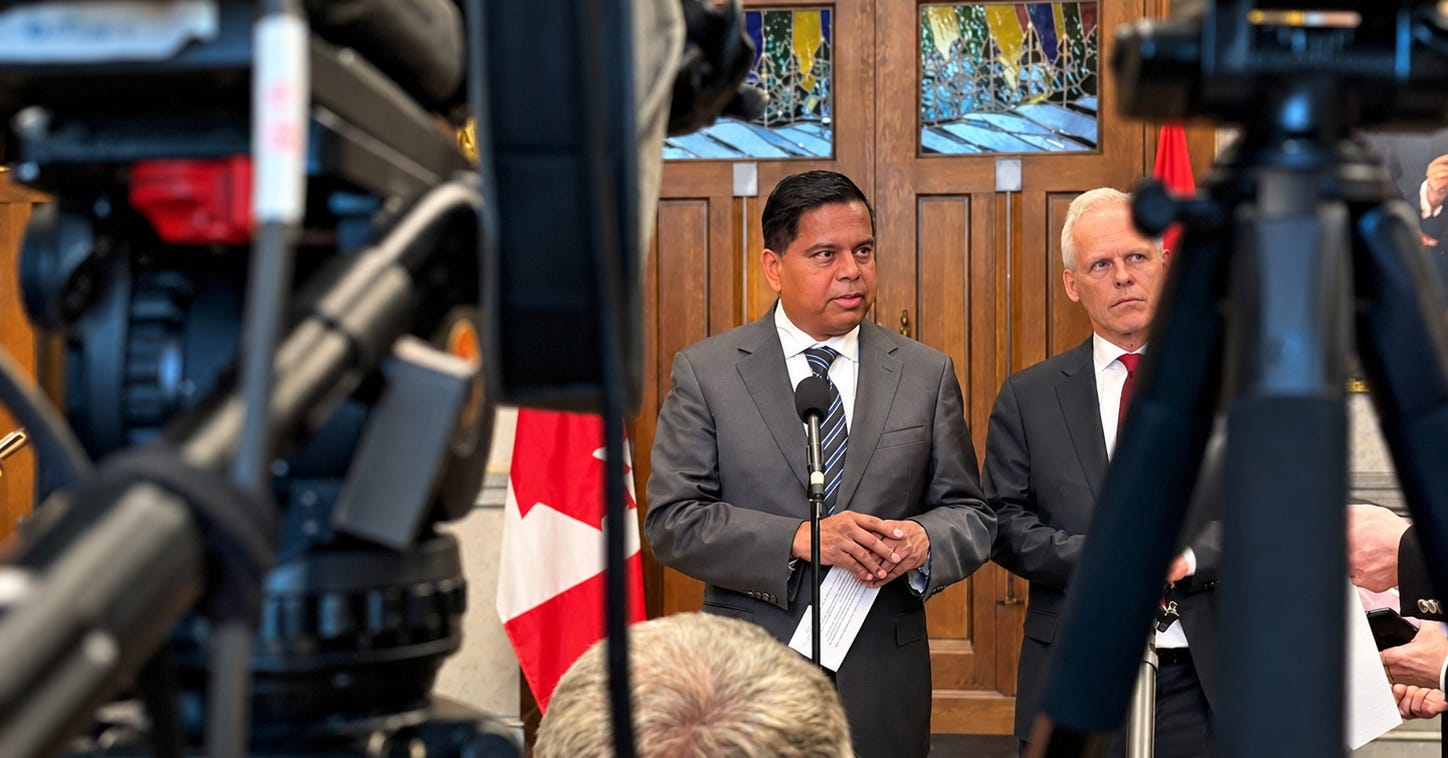
Public Safety Minister Gary Anandasangaree admitted to security screening gaps after a Canadian woman with a fraud finding passed vetting for NATO headquarters before being arrested on espionage allegations.
Anandasangaree faced sharp questioning at the House of Commons public safety committee over how the woman obtained clearance despite her documented misconduct, according to Blacklock’s Reporter.
“We have work to do with respect to our security screening process,” Anandasangaree testified Monday. “That is why we are here.”


The controversy centres on Biwei Zhang, a former University of Ottawa engineering student identified as the Canadian woman arrested July 24 while interning at NATO’s military headquarters in Mons, Belgium.
Belgian prosecutors allege she was spying for an unidentified foreign country and participating in a criminal organization. Neither allegation has been proven in court.
Federal court records show Zhang submitted two applications for the same Canada Border Services Agency position in 2019 and completed the same examination twice.
The Public Service Commission found in 2023 that she committed fraud by taking the examination twice and failing to disclose it when questioned. The federal court dismissed her challenge in 2024.
Zhang was barred from applying for another federal job without Public Service Commission approval for one year and ordered to complete an ethics course. The restriction did not necessarily prohibit her from obtaining security clearance.
Despite that finding, she subsequently obtained clearance and secured an internship at NATO’s top military command headquarters.
Global Affairs Canada granted Zhang’s security clearance based on information from the Canadian Security Intelligence Service (CSIS) and RCMP, Anandasangaree confirmed.

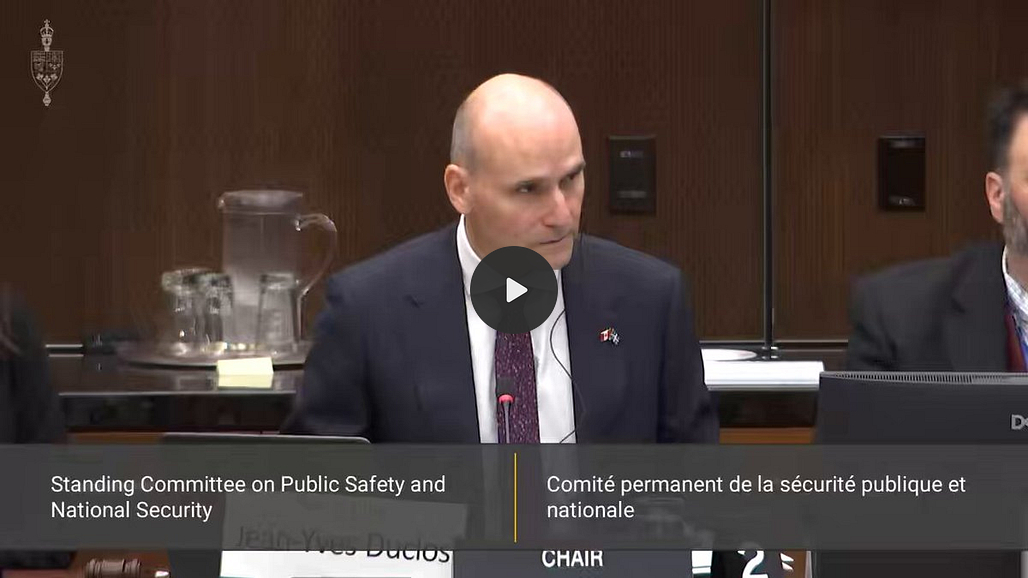
However, it remains unclear whether officials knew about her previous misconduct or considered it during screening.
CSIS has indicated it does not necessarily have access to all the reliability and suitability information collected by federal departments, raising questions about information-sharing during the screening process.
Conservative MP Frank Caputo accused Canadian authorities of failing to detect the suspected espionage before Belgian investigators became involved.
“The buck stops with you,” Caputo told the minister.
“It is a shame, and I think it’s absolutely disgraceful, dare I say, Minister, that it was Belgium that figured out a Canadian was spying rather than Canada,” he said.
“Did you actually get to the bottom of this?” Caputo asked.

Anandasangaree insisted the government would investigate security concerns.
“I have absolutely advised Canadians that any issues that are in the public realm that are of concern, we will get to the bottom [of], including the case you reference,” he replied.
“That’s not what I asked you,” Caputo fired back.
Asked why Canadian intelligence had not detected the alleged espionage first, Anandasangaree pointed to the Belgian investigation.
“The matter is being investigated right now by Belgian police,” he said.
Bloc Québécois MP Claude DeBellefeuille also questioned how Zhang obtained clearance despite her fraud finding.
“Is that incompetence or just laziness?” she asked.
Anandasangaree again deferred to Belgian authorities.

NATO security officials initially flagged the intern to Belgian military intelligence before authorities raided her home and workplace.
The minister defended the overall reliability of Canada’s screening system but acknowledged improvements were necessary.
“What I will say is there will obviously be some serious learning that comes out of that process,” he testified. “Ultimately the provision of security clearance is up to the specific department.”
Anandasangaree also admitted he did not know whether Zhang’s security clearance remained active and deferred questions about possible consequences for those responsible for approving it to Global Affairs Canada.
He confirmed that CSIS and the RCMP had submitted recommendations to improve Canada’s security screening procedures, which he was reviewing. The specific recommendations have not been publicly disclosed.

The public safety committee unanimously voted August 17 to investigate Canada’s security screening processes, including holding at least three meetings.
Conservative MP Dane Lloyd sponsored the motion, while fellow Conservative Chak Au warned the allegations should not unfairly stigmatize Chinese Canadians.
Zhang’s publicly available résumé also reportedly listed previous work involving the Canadian Space Agency and Statistics Canada, although her responsibilities and access to sensitive information remain unclear.
Belgian authorities have not identified the country for which she allegedly worked. NATO previously said there was no indication its operations had been compromised.
It remains unclear whether Canadian officials knew about Zhang’s previous fraud finding, whether it was considered during screening or whether anyone involved in approving her clearance will face consequences.
It's amazing how a chipmunk is so fluent in speaking weasel.