

Mining company sues B.C. gov for millions in DRIPA conflict
The company claims the move was made without warning or compensation and to settle a separate dispute with the Gitxaala Nation.
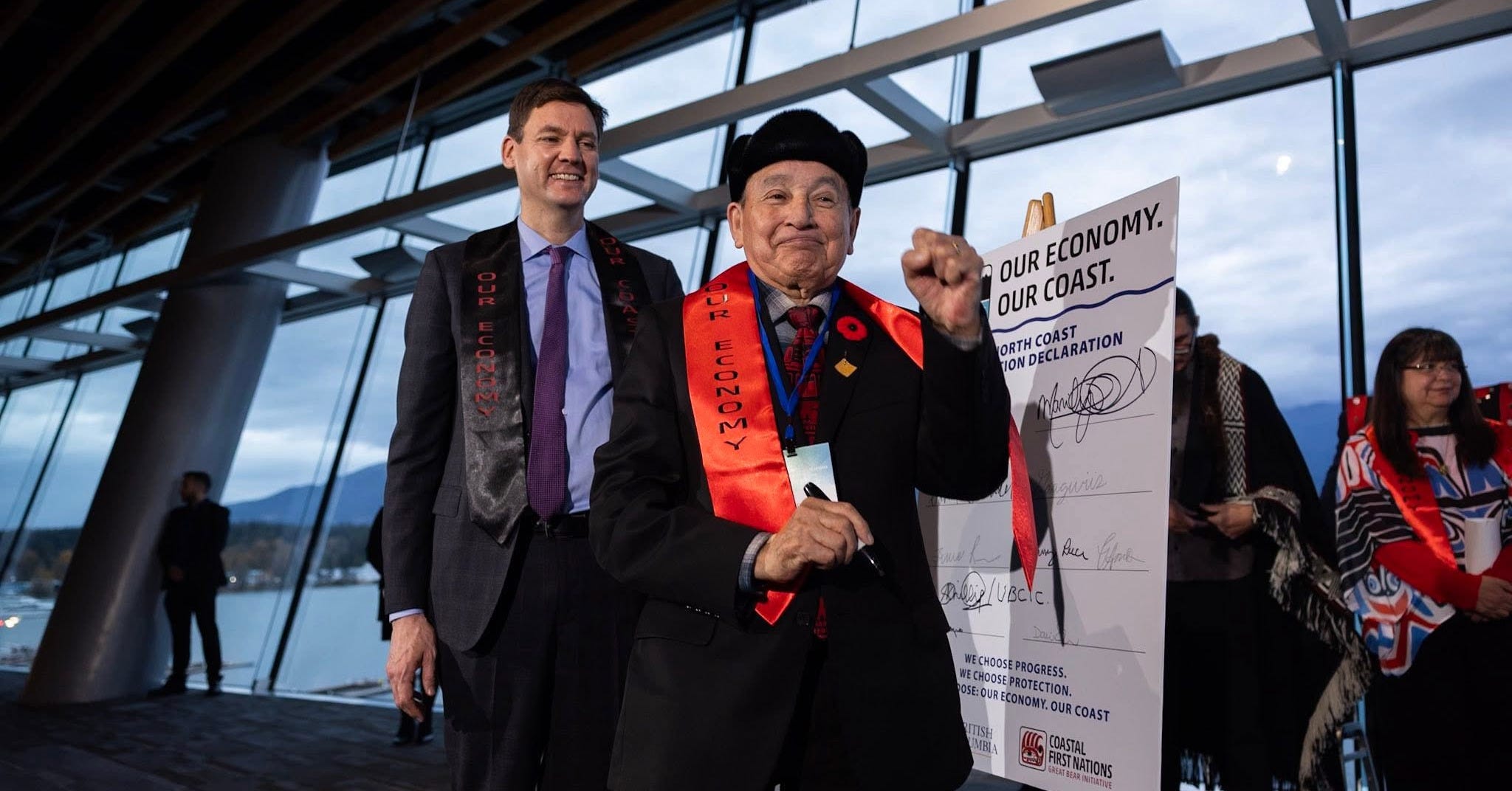
Another warning sign for investors in British Columbia: a mining company that says it spent years and millions of dollars reviving a shuttered gold project is now suing the province, alleging the government quietly revoked its mining rights to advance its DRIPA-driven reconciliation agenda.
MCC Canadian Gold Ventures Inc. has filed a multi-million-dollar lawsuit against the B.C. government, alleging it was encouraged to revive a bankrupt Banks Island mine before its mining rights were suddenly squashed via Orders-in-Council.
“We are deeply disappointed with the actions of the provincial government,” said Director Danish Mir. “If this [is] what the government considers Indigenous reconciliation then every investor in B.C. faces grave risk.”
The company claims the move was made without warning or compensation and to settle a separate dispute with the Gitxaala Nation.
Premier David Eby says the province has faced over 20 legal claims since the Gitxaala Nation’s 2025 Court of Appeal victory over B.C. mineral claims.

Another warning sign for investors in British Columbia: a mining company that says it spent years and millions of dollars reviving a shuttered gold project is now suing the province, alleging the government quietly revoked its mining rights to advance its DRIPA-driven reconciliation agenda.
MCC Canadian Gold Ventures Inc. has filed a multi-million-dollar lawsuit against the B.C. government, alleging it was encouraged to revive a bankrupt Banks Island mine before its mining rights were suddenly squashed via Orders-in-Council.
“We are deeply disappointed with the actions of the provincial government,” said Director Danish Mir. “If this [is] what the government considers Indigenous reconciliation then every investor in B.C. faces grave risk.”
The company claims the move was made without warning or compensation and to settle a separate dispute with the Gitxaala Nation.
Premier David Eby says the province has faced over 20 legal claims since the Gitxaala Nation’s 2025 Court of Appeal victory over B.C. mineral claims.
The MCGV claim stems from 2024 Orders in Council issued under the Environment and Land Use Act that revoked the company’s Banks Island mineral claims and blocked further exploration in northwest BC. No compensation has been paid to date.
“The Province specifically asked us to step in and rescue this mine—we invested millions, began the necessary work of cleaning up someone else’s environmental mess, and created real economic value for British Columbia,” Mir said.
“In return, the Province negotiated away our property rights in a backroom deal without involving us or even telling us. That is not how a government should treat investors.”

The company’s lawsuit alleges misrepresentation by the province over its mining assurances, expropriation without compensation through Orders-in-Council, and unjust enrichment by using its property to settle with the Gitxaala Nation while leaving MCGV to bear the loss.
“British Columbia’s mining sector drives jobs, tax revenue, and economic growth in communities across this province,” Mir said. “We are concerned that the government has failed to recognize the destructive impact of its heavy-handed actions.”
“We intend to pursue this case vigorously and forcefully,” he added.
The Company is represented by law firm McMillan LLP.

MCGV, a B.C. corporation, owns and operates the Yellow Giant Gold Project on Banks Island and acquired it in 2018 at the province’s encouragement, investing millions in its acquisition, remediation, and development, according to a news release.
The 12,914-hectare Yellow Giant Gold Property on Banks Island in northwestern B.C. contains gold and silver resources, with a Preliminary Economic Assessment valuing the project significantly amid rising metals prices and an extended mine life outlook.
Senior provincial officials, including then-minister Bill Bennett, allegedly encouraged MCGV to acquire and remediate the Yellow Giant Property due to its provincial importance and environmental liabilities. MCGV acquired it in October 2018 and says the province continued to support its investment through ongoing assurances.

On Mar. 7, 2024, the province issued Orders-in-Council without notice or a hearing while still in active discussions with MCGV over the property. The company was also excluded from confidential negotiations with the Gitxaala Nation despite the direct impact on its legal rights.
The Orders-in-Council were part of a Gitxaala settlement to resolve or avoid litigation, allegedly using MCGV’s property interests to secure the outcome. MCGV claims its assets were used to advance the Province’s legal and political objectives.
The mining firm has received no compensation for its lost rights and remains responsible for ongoing tenure renewals, annual payments, and fees.

The shuttering of B.C. mining, forestry and energy projects has been ongoing for years under DRIPA, earning considerable pushback from industry advocates.
“DRIPA was sold to the public using the language of ‘reconciliation’ and ‘partnership,’” said Benjamin Lawton, executive director of the Bedrock Network. “However, in practice, the legislation has transformed B.C. into a jurisdiction where no major industrial project, even the most perfect, is secure.”
“It’s hard not to describe this as a form of national self-liquidation at the hands of an elected government’s bad decisions,” he added.
“Effectively, the law has enabled the Alaskan-based Gitxaala, who are also citing DRIPA in a different case to undermine the Mineral Tenure Act, to assume co-governance over British Columbia,” Lawton continued. “This is unheard of.”
He warns the province is being subjected to foreign-based tribal governments intervening in Canadian development, warning that “civilizations do not survive such wars for very long.”


Since UNDRIP became enforceable in B.C., several First Nations have launched lawsuits against the province over energy, mining, and forestry projects.
In May, the Lower Similkameen Indian Band launched a petition to halt Hudbay Minerals’ Copper Mountain Mine expansion, citing UNDRIP, and alleging the B.C. government approved a permit without adequate consultation.
The Lower Similkameen case follows a February suit by the ’Wuìk̓inux̌v Nation seeking to cancel a timber licence extension held by Interfor on Vancouver Island’s Central Coast.
Tensions are also escalating over West High Yield Resources’ proposed Record Ridge magnesium mine in the Kootenays.
A Juno News review found about 80 per cent of B.C. land is under active claims or negotiations, while some First Nations say up to 95 per cent is unceded.
The province covers 944,735 square kilometres and is home to 203 First Nations.