

Ottawa has allocated roughly $1.9 billion to help house asylum claimants since 2017, but cannot say how many are currently housed through the program.
“To date, the Government of Canada has allocated about $1.9 billion to provinces and municipalities under the Interim Housing Assistance Program since 2017,” Immigration, Refugees and Citizenship Canada (IRCC) said.
The program funds temporary and longer-term housing for asylum claimants as rising claims strain local shelters.

Despite the $1.9 billion allocation, IRCC doesn’t track claimants as they move from hotels into municipally controlled or purchased housing.
“Immigration, Refugees and Citizenship Canada is unable to confirm how many individuals are currently housed, and how many were previously housed but are no longer housed,” the department said, citing data that “fluctuates day-to-day.”
As Rebel News first reported, recipients report twice annually, leaving IRCC without real-time occupancy figures.
“The Government of Canada does not have real-time information on the capacity of these sites,” the department said, noting they are operated by local jurisdictions.
As of May 2026, IRCC estimated 15,000 claimants received housing support, with jurisdictions projecting roughly 40,000 by March 2027 and more than 1,500 new bed spaces.
Toronto reported supporting 7,030 claimants, followed by Ottawa with 3,490 and Peel Region with 3,170.
The figures were disclosed in a response to an Order Paper question from Conservative MP Fred Davies.


Meanwhile, the program is shifting from hotels and emergency shelters toward “more sustainable and cost-effective” longer-term housing.
Cabinet budgeted $417 million for sustainable asylum housing, while Ottawa spent $127.5 million on hotels and $27.35 million to buy a Pickering hotel.
A March 31 memo obtained by Blacklock’s Reporter cited scrutiny of asylum costs, while a companion memo said jurisdictions aimed to reduce or eliminate hotel use as new housing opened.

The use of federal money to acquire real estate has also drawn questions from Davies.
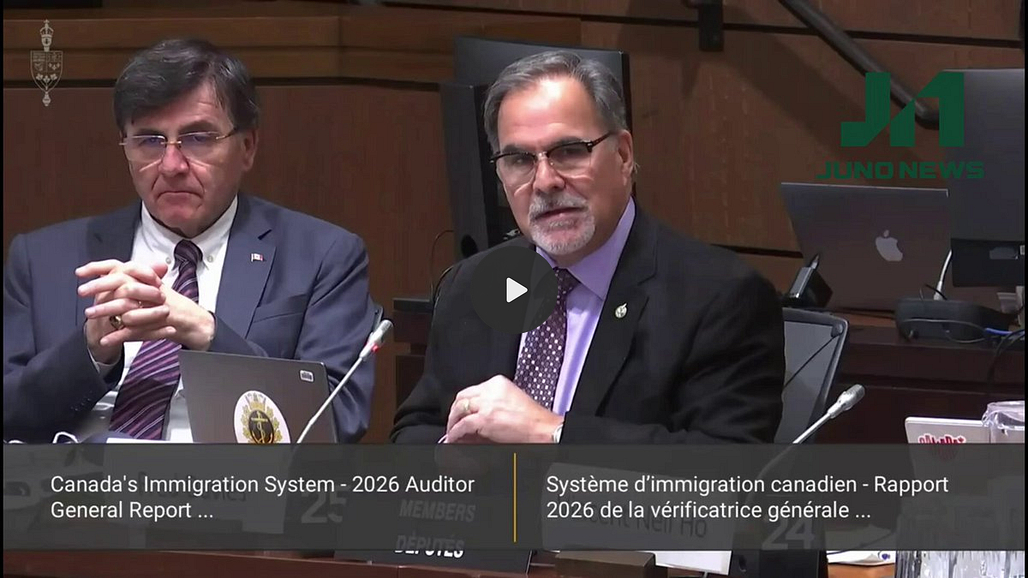
At a May 5 committee meeting, Davies asked Immigration Minister Lena Diab who gets the proceeds if federally funded properties are later sold.
“When you sell the building, who gets the proceeds?” Davies asked.
“We will take a look at the agreement,” Diab replied after saying she could not answer at the time.


The spending comes as Ottawa grapples with a major asylum backlog, with wait times climbing from 14 to 44 months.
IRB chair Manon Brassard cited 154,000 claims in 2022–23 and 176,000 in 2024–25, describing the surge as a “shock to the system.”
In November 2024, Conservative MP Arpan Khanna argued lengthy processing times allowed fraudulent asylum claims to keep people in Canada longer.
“They’re allowed to get a job, they’re allowed to get health care. They’re allowed to stay in our country,” Khanna said at the time. He also claimed an average refugee costs taxpayers $82,000 annually.
A 2024 PBO analysis estimated the average federal cost at $16,500 per asylum claimant, ranging from $9,055 to $40,814 depending on appeals.
"Ottawa has allocated roughly $1.9 billion to help house asylum claimants since 2017, but cannot say how many are currently housed through the program." Yeah, that sounds about right. Why in the world would our government need to keep track of these people ("You people...")? If you ask; YOU'RE A RACIST!
In Victoria two houses near me, freestanding houses, are occupied by these foreigners, yet Canadians are struggling to rent apartments. Canadians are working and spending their earnings and living in accommodations worse than these FOREIGNERS. And I don't mean a bunch of guys all packed into a house, I mean a Muslim family has a house to themselves - a family house, in Victoria. THEY are living the Canadian dream.
Same with doctors. I bet they all have doctors.