

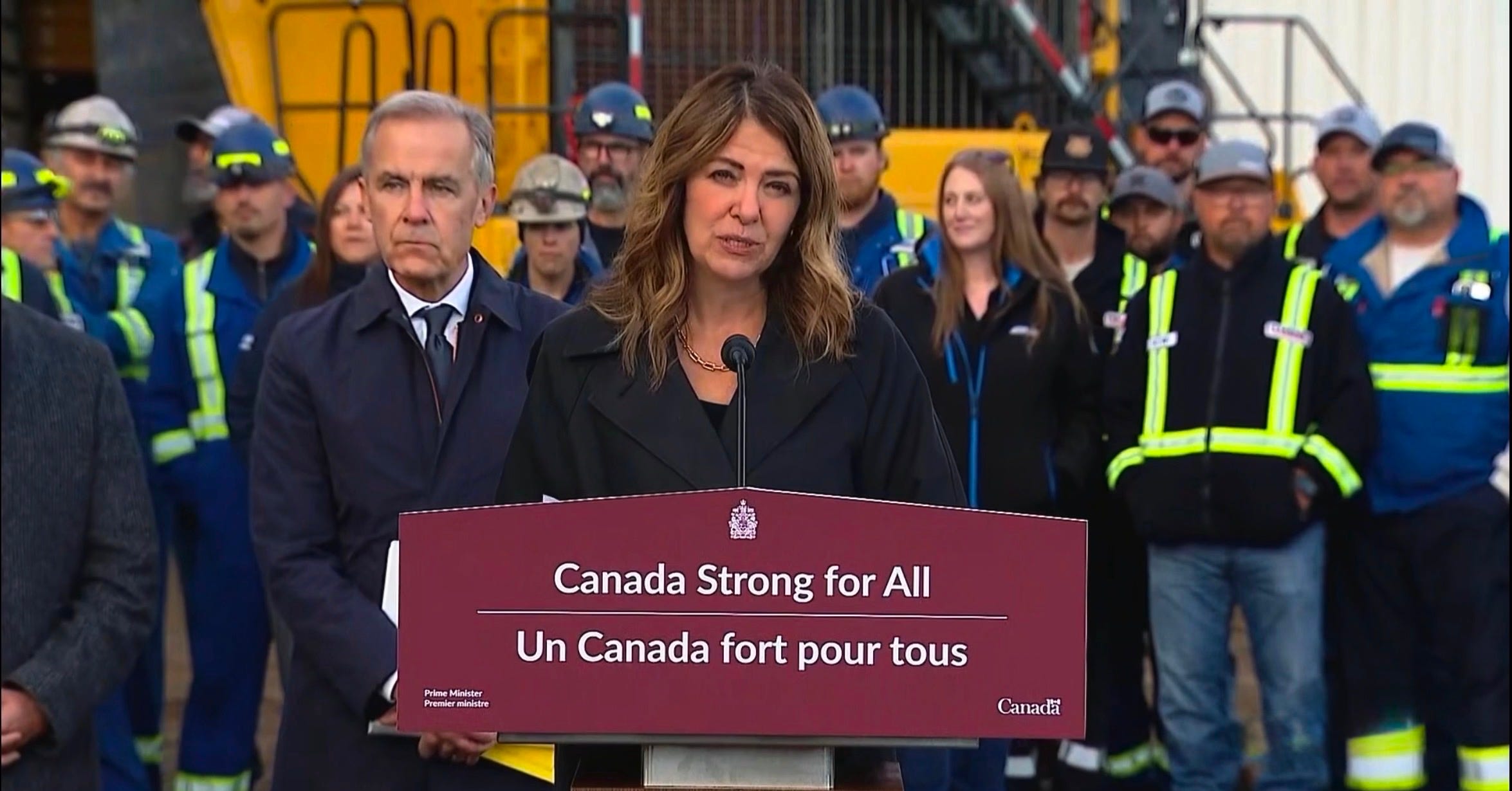
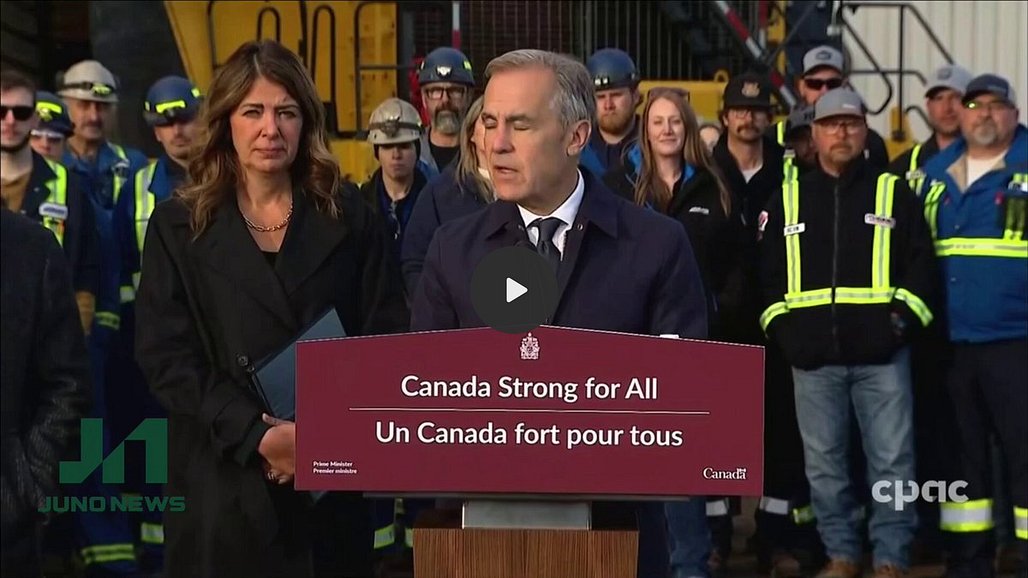
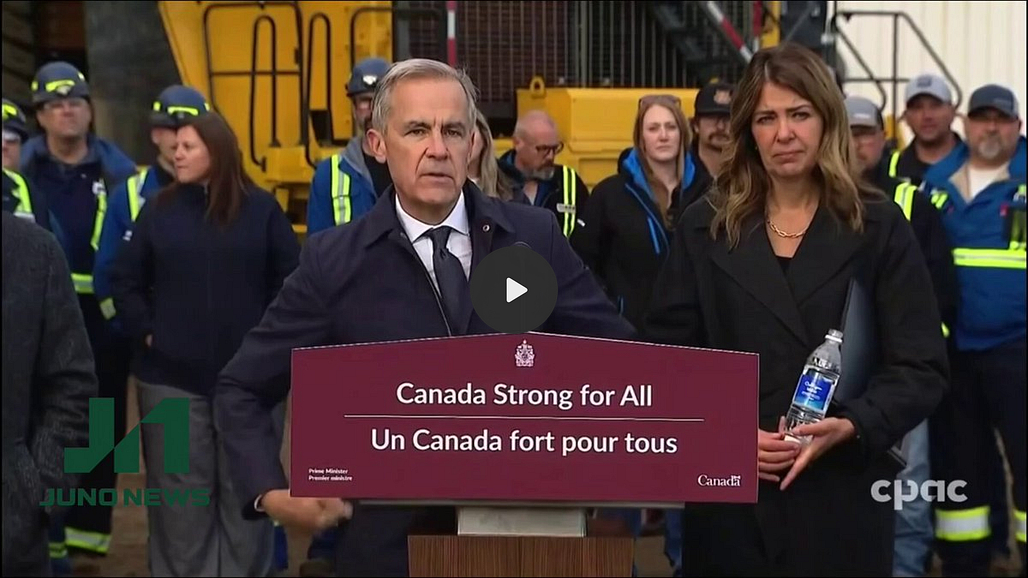
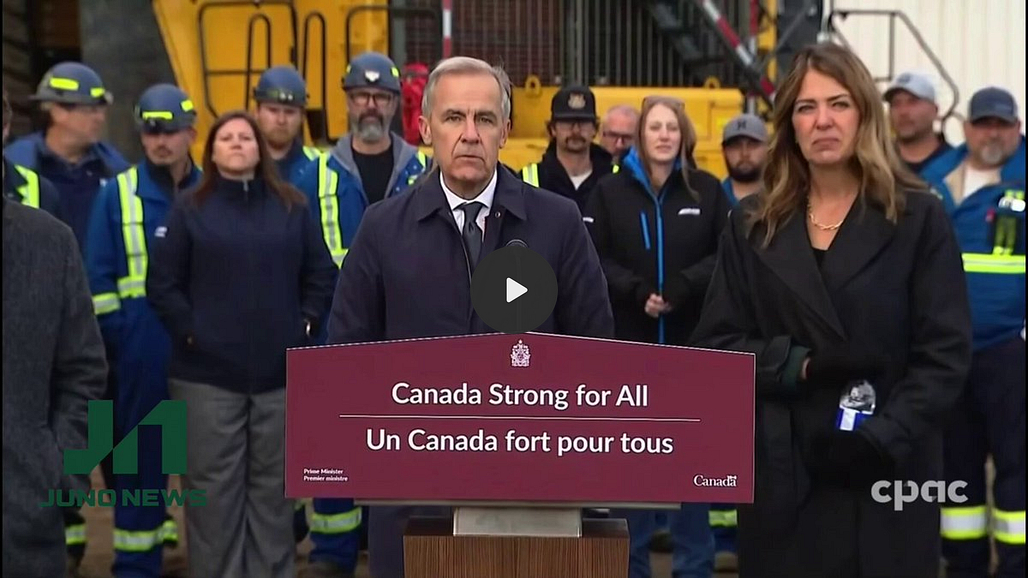
As part of a broader energy pact with Alberta Premier Danielle Smith, PM Mark Carney is fast-tracking the new West Coast Oil Pipeline after Ottawa designated the project as being in Canada’s national interest.
Listing Pacific Link under the Building Canada Act shifts Ottawa from considering whether the pipeline should proceed to an accelerated federal review focused on the conditions under which it can be built.

“Today we’re ready to move forward for Albertans, for Canadians,” Carney said Thursday in Fort McMurray after consultations with more than 130 Indigenous communities.
The proposed pipeline would carry more than one million barrels of oil per day from Alberta to B.C.’s south coast, largely following the existing Trans Mountain corridor.

Ottawa estimates the project will cost between $35.2 billion and $43.7 billion, including contingencies.
Canada and Alberta will share equal ownership of Pacific Link, while Pembina Pipeline Corporation will participate as a private-sector investor. Indigenous communities will be offered a minimum 10 per cent ownership stake backed by federal and provincial loan guarantees.
Ottawa projects the pipeline could generate more than $20 billion in annual GDP and create up to 140,000 jobs. Federal officials estimate broader benefits from higher oil prices could push the economic impact to as much as $30 billion annually.
The federal government has also estimated that reducing the price discount on Canadian oil by accessing overseas markets could generate between $6 billion and $10 billion annually for producers.
But national interest status is not final project approval.
Ottawa aims to finalize the project’s conditions by September 1, 2027, clearing the way for construction, with the pipeline targeted to begin operating in 2032–33.
Engineering, environmental reviews, cost estimates and Indigenous consultations must still proceed. Carney said “hundreds and hundreds of millions of dollars” will be spent developing the project before a final decision.
Filling the pipeline’s million-barrel-per-day capacity could also require substantial additional oil sands production.
Asked whether producers had committed to the upstream expansions needed to fill it, Carney said those remain “commercial decisions,” while pointing to industry participation in the related Pathways project.
The designation marks another major step in Carney’s broader energy pact with Alberta Premier Danielle Smith.
Smith says the agreement has already delivered several federal policy concessions, including Ottawa agreeing not to proceed with its oil and gas emissions cap, holding clean electricity regulations in abeyance in Alberta, suspending the zero-emission vehicle mandate and removing controversial Competition Act “greenwashing” provisions.
“This is a monumental day for our province and for our country,” Smith said.
“The challenge has never been whether Canada has resources to offer; the challenge has always been getting those resources to the markets that need them most.”

The project also marks a shift from Alberta’s earlier push for a northern B.C. route. The province ultimately proposed a southern route largely following the Trans Mountain corridor amid environmental and regulatory hurdles.
Carney has said the federal North Coast tanker ban will remain in place.
B.C. Premier David Eby has said his government will not go to court to block the southern pipeline, while maintaining that British Columbians should be compensated for environmental risks if it proceeds.
For Smith, Thursday’s announcement represents another major step toward construction.
“Today sends a clear message,” she said.
“Canada is ready to build.”
What are the chances of this project even getting into the mind of Carney without the Alberta Vote to Vote on Oct 19? I would say zero.
I will believe it when I see it.