

Kindergarten and older students in Ontario are now being tasked with designing their own land acknowledgements, an exercise pushed by school boards as part of their “Indigenous Education” training, according to materials obtained by True North.
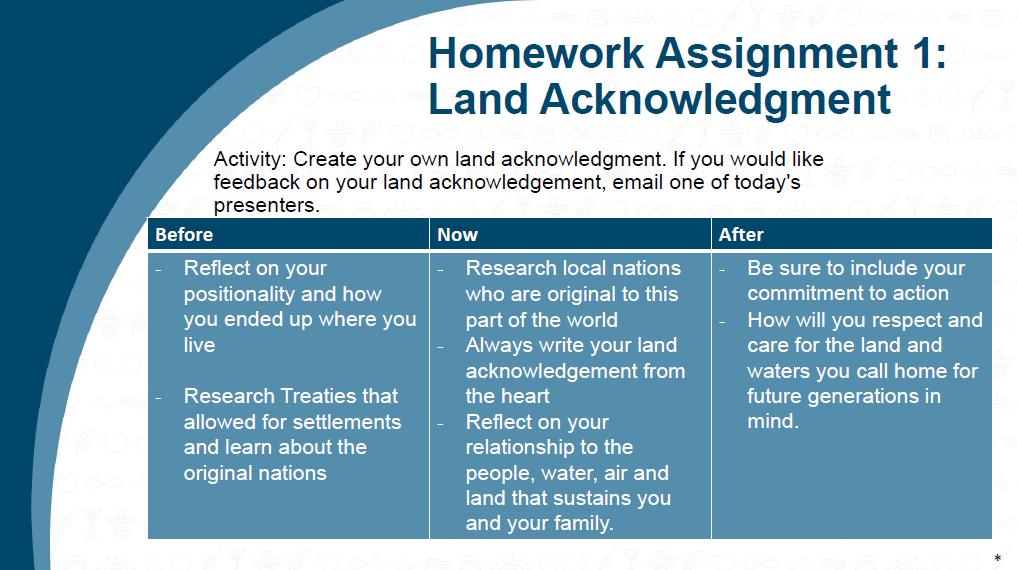
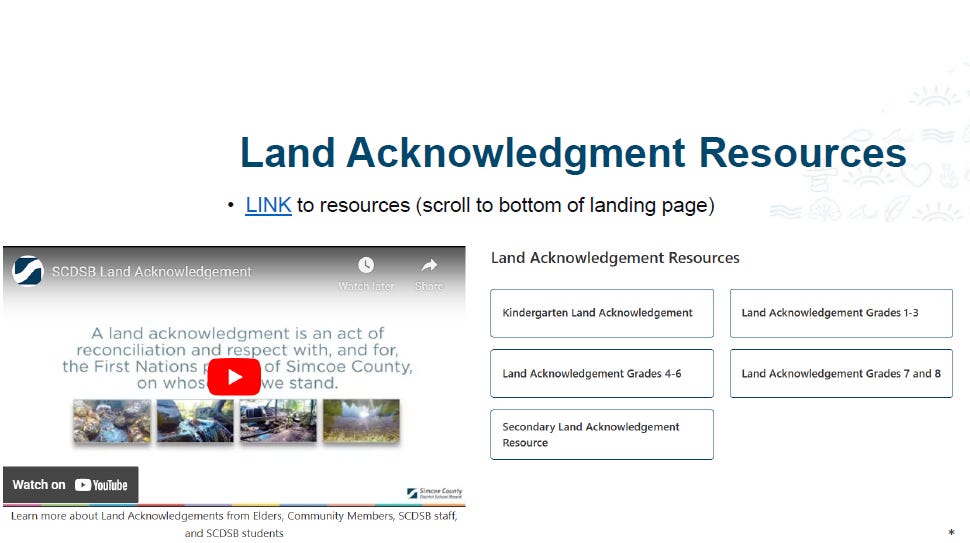
Slides from 2024–25 “Professional Learning Series” on “Indigenous Education” included examples of land acknowledgements written by students at the Simcoe County District School Board. Teachers were trained on how to write their own land acknowledgements and provided with resources to guide students in creating their own. Similar exercises are taking place in other Ontario school boards.
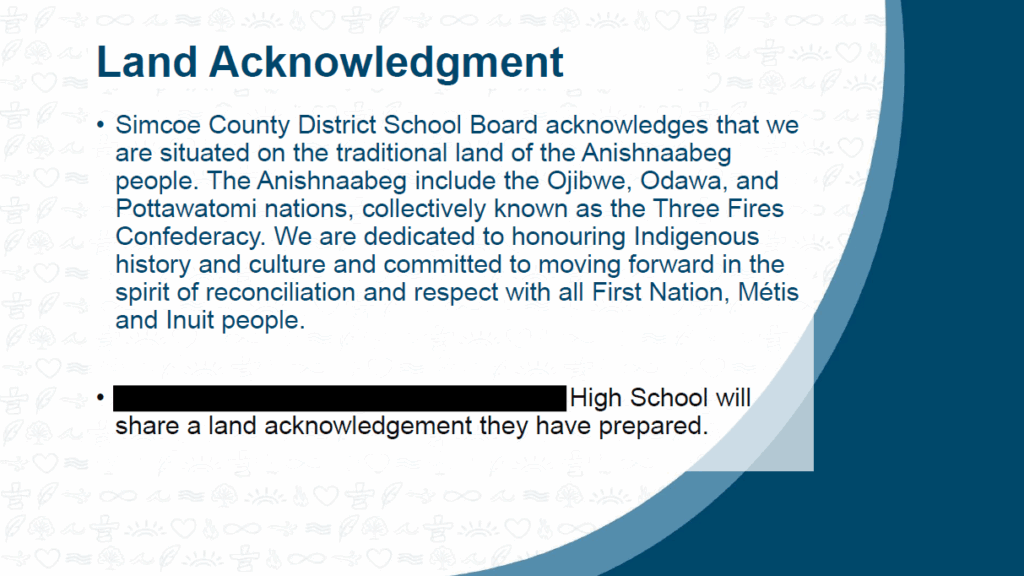
While a range of commercial classroom resources are available, these materials are distinctive because school boards developed and delivered them directly, and they appear to align with ministry-approved objectives.
The more than 20 documents in the “Indigenous Education” training series provided the background information needed to create bespoke land acknowledgements. The training was structured around the principles of intersectional social justice ideology and diminished the legitimacy of Canada and its founders.
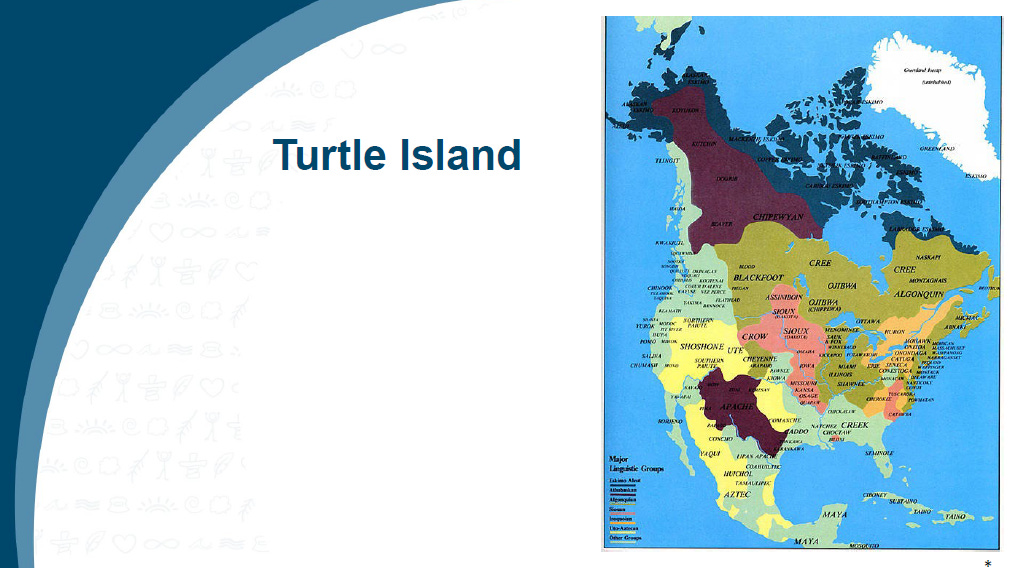
Although the public school system is supported by the systems and structures of Canada’s provincial governments, the training refers to Canada as “Turtle Island,” a continent-wide system of Indigenous territories without intercountry borders.
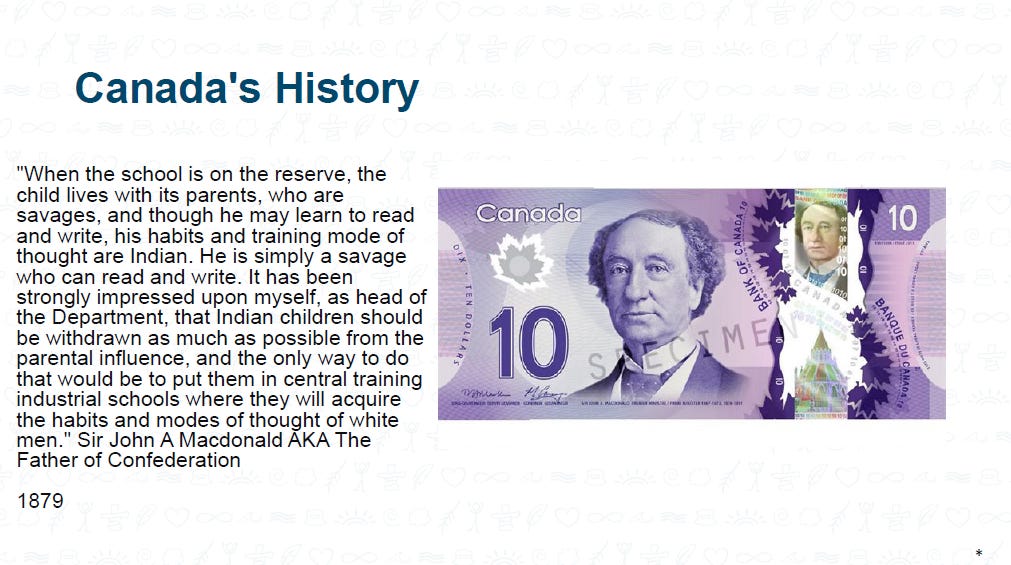
Historical context is also emphasized. A House of Commons speech from 1883 by John A. Macdonald, in which he promoted residential schools, appears in multiple training decks.
Canada isn’t the only sovereign nation on the chopping block. The training suggests teachers use Native Land, a resource that identifies Indigenous lands across the world. However, the resource has been called out for claiming Palestine is Indigenous land, erasing Israel’s existence.
The documents frequently reference “cultural safety,” though the term is defined in different ways across sessions. In one deck, it is described as creating “safe spaces” to learn shared history for “Indigenous and non-Indigenous” students. Teachers are instructed to “make space” for “culturally responsive activities” and to engage in “pre-teaching for sensitive content.”
The training adopts other principles of intersectional social justice, asking educators to reflect on their “positionality” and how experiences of “racism and oppressions” affects their professional practice. One slide encourages teachers to consider how bias can be spread through “everything [they] say, think, and do…intentionally or otherwise.”
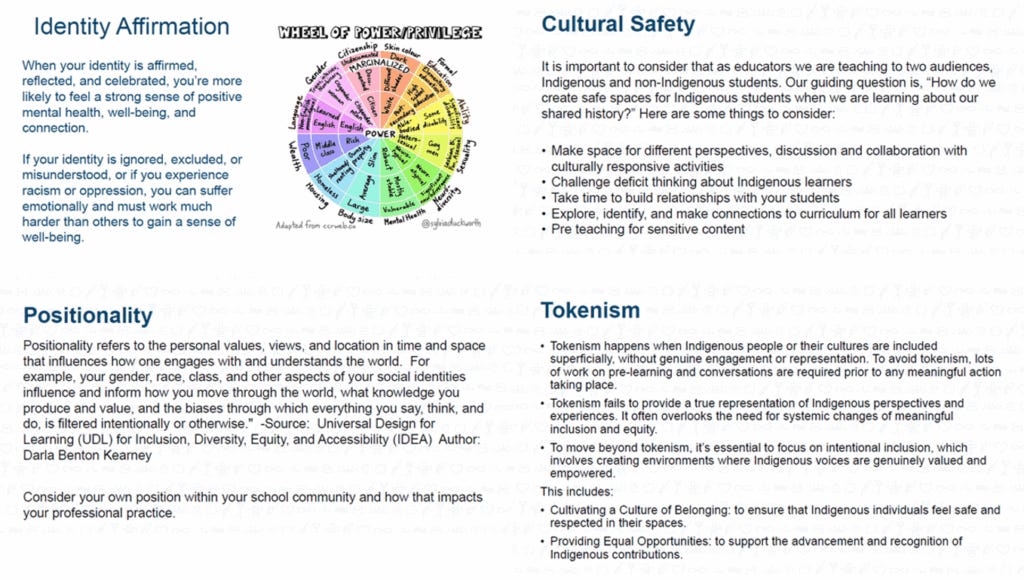
The training materials ask teachers to “move beyond tokenism,” defined as the superficial inclusion of Indigenous people or culture without “genuine engagement or representation.” To achieve “meaningful action,” teachers are encouraged to engage in “pre-learning and conversations” that support “systemic changes of meaningful inclusion and equity.”
Suggested approaches include continuously adapting to language that is “always changing,” avoiding “saviourism language,” and reconsidering the ownership of cultural “souvenirs.”
Simcoe County isn’t the only school board training students to use land acknowledgements in this way. True North obtained land acknowledgements written by Grade 3 students at another Ontario school board, which cannot be identified to protect the source from reprisal. In that instance, a teacher had their class write their own land acknowledgements, embedding Indigenous themes and social justice concepts into literacy instruction. It’s unclear if parents are aware that standard class time, including literacy and math, was used for this purpose.
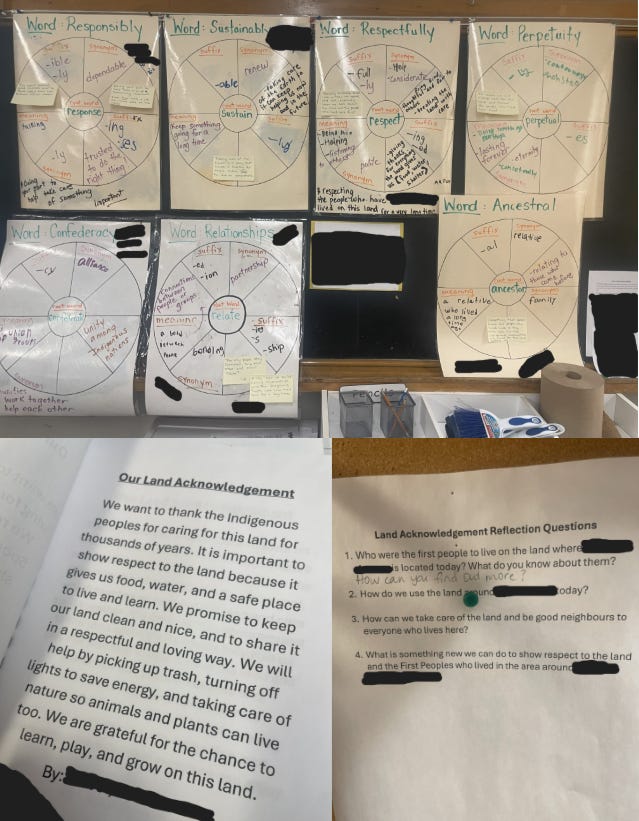
Curiously, one land acknowledgement was also translated into Pashto, spoken primarily by the Pashtun people of Afghanistan and Pakistan.
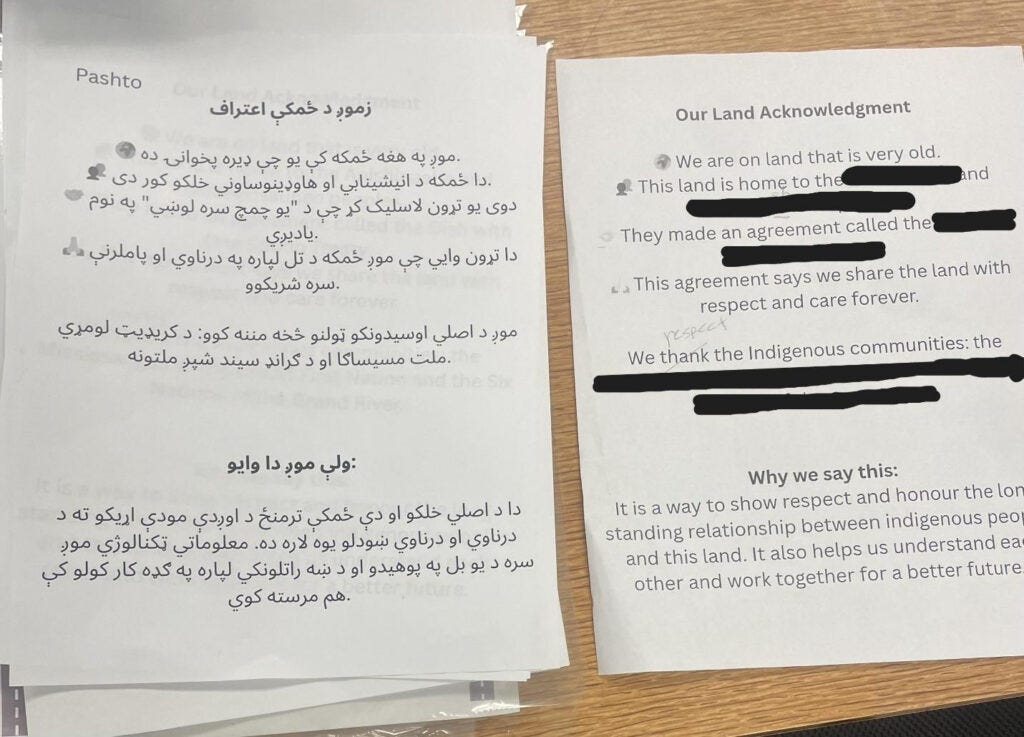
True North reached out to the Simcoe County District School Board for comment, but did not receive a response by publication time.
I wonder, how many Liberal/NDP politicians will ever lose their home or property to this newfound lunacy which is nothing more than a giant ATM for lawyers.
This country seems Hell bent on self-destruction and this might be the issue that accomplishes that.
I'd pose the question, "What is wrong with this country?" but the answer to that is so evident that the question falls into the rhetorical category.
ie: More than a decade of a dim-witted, juvenile, unqualified and vacuous PM with all the intellectual depth of a petri dish, installing dim-witted, juvenile, unqualified and vacuous, people in positions of petty power throughout our bureaucracy, education and justice systems.
Not an ounce of gray matter between the lot of these DEI, WOKE idiots.
Unfortunately, stupid people can never realize they're stupid.
Lemmings, headed for the cliffs. FFS Canada!
Either fire the teachers, who buy into this rubbish, or change their job title to propagandist or indoctrinator. They do a disservice to, what was once an honourable profession.