

The Liberals are moving to scrap plans to expand assisted suicide to Canadians solely experiencing mental illness while also opening the door to advance MAID requests for people who later lose the capacity to consent.
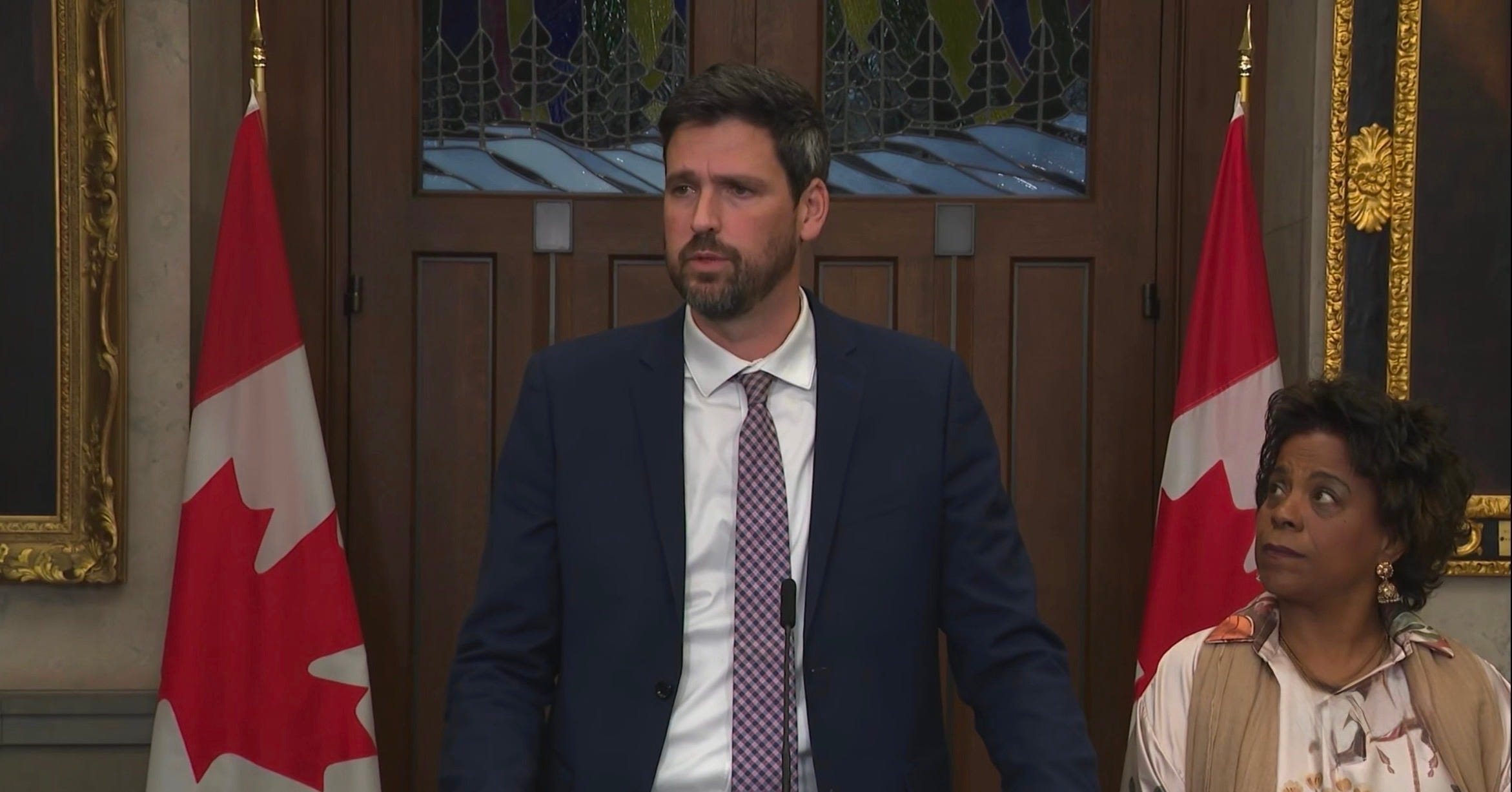
Justice Minister Sean Fraser announced Wednesday that legislation will be introduced this fall to indefinitely maintain the mental illness exclusion, currently set to expire March 17, 2027.
“Canada has made a decision not to move forward with the expansion that is scheduled in the Criminal Code of medical assistance in dying in circumstances where mental illness is the sole basis,” Fraser said.

The move marks a major policy reversal after years of delays.
Canada expanded MAID through Bill C-7 in 2021, while temporarily excluding mental illness as a sole underlying condition. That exclusion was initially set to expire in 2023, but was repeatedly delayed.
Fraser’s announcement does not itself change the law. Parliament must still pass the legislation before the March 2027 deadline.
“While there is not a perfect consensus on this issue, we believe this is the correct approach at this particular time,” Fraser said.
He pointed to “very real concerns” about inadequate access to mental health services and “a lack of consensus” over when mental illness can be considered irremediable.
A parliamentary committee reached a similar conclusion in June, recommending Ottawa indefinitely maintain the exclusion.
The committee warned that inadequate access and long waits for mental health care could worsen suffering and contribute to MAID requests.
Dr. Sonu Gaind, past chief of psychiatry at Toronto’s Sunnybrook Health Sciences Centre, testified that doctors are right less than half the time when trying to predict whether a patient’s mental illness will prove incurable, comparing long-term prognosis to a coin toss.
Psychiatry department chairs from universities across Canada also warned that expanding MAID to people with depression, anxiety, schizophrenia and other mental illnesses could lead to avoidable deaths and undermine suicide prevention efforts.
But while Ottawa is backing away from one expansion of MAID, it is moving ahead with another major change.
The government plans to remove the federal criminal law barrier to advance requests for people diagnosed with incurable illnesses expected to eventually rob them of the capacity to consent, provided provincial safeguards are followed.
Fraser pointed to the example of a man diagnosed with the same illness that had left his mother unable to recognize her family and posing a safety risk.
“He did not want to subject his family to the same experience that he had,” Fraser said.
“We need to create space for people to be able to provide consent when they know they’re going to lose capacity in order to live out their remaining years rather than being put in a position where they fear they have to take that decision prematurely,” he added.


Federal law already allows some patients who have been assessed and approved for MAID to waive final consent if they later lose capacity.
Advance requests would go further, allowing a request made before someone is eligible for MAID to potentially be acted upon after that person has lost decision-making capacity.
Quebec has already moved ahead with advance requests. Outside Quebec, providing MAID to someone without capacity remains a serious offence unless a valid waiver of final consent applies.
Ottawa’s proposal would remove that federal criminal-law barrier for doctors complying with provincially legislated safeguards.
Fraser said the Criminal Code would be amended so a doctor who provides MAID to someone suffering from an incurable illness and complies with those safeguards “will not be treated as a criminal in Canada going forward.”
The proposal, however, is raising questions over who ultimately determines when the conditions set by a patient who can no longer communicate their wishes have been met.
Alex Schadenberg, executive director of the Euthanasia Prevention Coalition, said someone else may ultimately have to make that determination.
“It’s really a problematic situation, and then who makes the decision in the end? Some family members, some doctor who says, ‘Oh, I guess this was requested in the end,’” Schadenberg said.
“To me, it’s almost very eugenic.”

The announcement also landed on a politically charged day on Parliament Hill.
The House of Commons is scheduled Wednesday to vote on a Conservative bill addressing MAID eligibility for mental illness, prompting Conservatives to accuse the Liberals of playing politics and criticize Ottawa for bundling the mental illness exclusion with advance requests.
“We agree that MAID should not extend to people with only a mental illness,” Conservative MP Andrew Lawton said.
“What the minister has announced today is eroding that consensus and introducing division into a very complex subject.”
Fraser said the legislation is still being drafted and will be introduced this fall.
“These are not easy decisions. But we believe they are the correct ones,” he said.
We need to scrap this entire eugenic program. Either that, or we need to revive the death penalty. If the state has the power to administer death itself, then that logic should be extended to include its use in the punishment of heinous crimes. If we're unwilling to do so, then the government shouldn't wield this power at all.
The Liberals must intend to keep their constituents alive.