

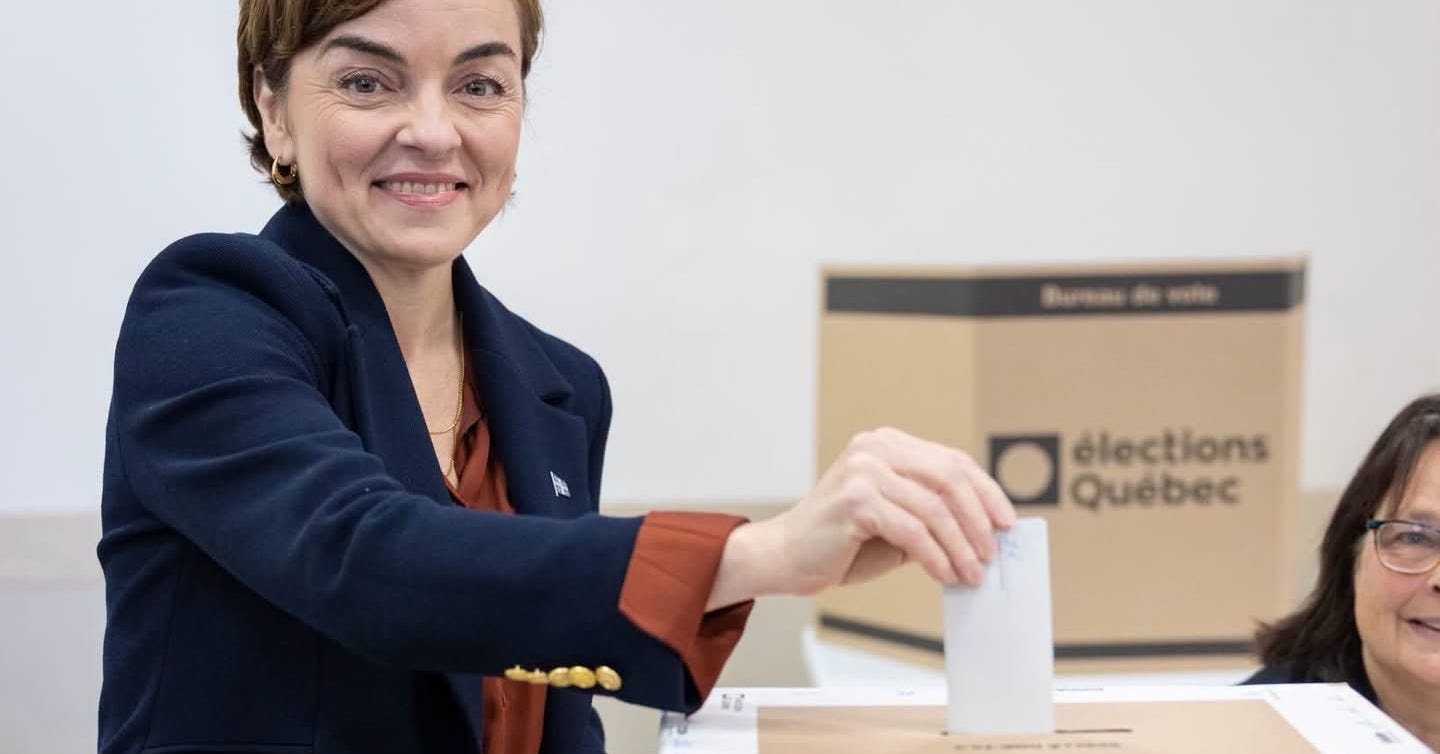
Quebec’s Coalition Avenir Québec has been wiped out of the National Assembly, winning zero seats just four years after capturing a 90-seat majority.
The stunning reversal leaves the party that governed Quebec for eight years without a single elected member and ranks among the most dramatic electoral collapses in modern Canadian politics.
In 2022, François Legault’s CAQ dominated Quebec politics, winning 90 of the National Assembly’s then-125 seats with 40.98 per cent of the popular vote and securing its second consecutive majority.
Four years later, the CAQ won zero seats as its share of the popular vote plunged to roughly 13.4 per cent — a drop of nearly 28 percentage points.
Quebec voters instead returned the Parti Québécois to power under Paul St-Pierre Plamondon.
The CAQ’s grip on the province had already begun to unravel during its second term.
The government was battered by the SAAQclic fiasco, the collapse of the Northvolt battery project and other troubled government-backed investments, while also facing mounting pressure over housing, affordability and health care.


A bitter confrontation with Quebec doctors added to its troubles, while caucus departures and by-election defeats steadily eroded Legault’s majority.
Legault announced his resignation in January. Christine Fréchette won the CAQ leadership on April 12 and subsequently became Quebec’s 33rd premier, giving her less than six months to save the party from defeat.
“My opponent is Donald Trump; he is the real opponent,” Fréchette said at the campaign launch. “I’m asking for a mandate to move forward through a storm.”
But Fréchette soon found herself fighting a political storm at home, defending the CAQ’s record while trying to distance herself from Legault.
“I am not François Legault,” she declared during the first televised leaders’ debate. “I am Christine Fréchette, and I come with my own way of doing things.”
Her opponents hammered the CAQ over spending and debt, SAAQclic, Northvolt and ballooning costs associated with a Santé Québec IT project.
St-Pierre Plamondon opened the debate promising an end to what he called years of “CAQ waste.”

On election night, the scale of the defeat became clear: the CAQ did not win a single seat.
Fréchette also lost her own Trois-Rivières riding.
“The defeat is mine, not yours; keep your head high,” she told supporters in her concession speech.
Fréchette has not announced her resignation as CAQ leader and said before election day that she would remain in the job even if she lost her riding.
Her defeat also ended her stint as premier less than six months after taking over from Legault.


While the CAQ disappeared from the legislature, the PQ completed a remarkable reversal.
After winning just three seats in 2022, the sovereignist party returned to power Monday with 59 seats — 5 short of the 64 needed for a majority.
St-Pierre Plamondon acknowledged voters had handed his party a minority government, saying Quebecers had asked the PQ to work with the other parties and that he had “heard that message.”
But he also used his victory speech to reaffirm the PQ’s sovereignist ambitions.
“A referendum is a chance to decide things for ourselves,” St-Pierre Plamondon told cheering supporters, adding that Quebec’s “national destiny will be achieved one day.”

The CAQ’s zero-seat finish invites comparisons with one of the most famous electoral wipeouts in Canadian history.
Brian Mulroney’s federal Progressive Conservatives won 169 seats in 1988 with 43 per cent of the vote. Five years later, under Kim Campbell, they were reduced to two seats as their vote share plunged to 16 per cent.
Their electoral coalition fractured as Reform surged in Western Canada and the Bloc Québécois swept much of Quebec, helping Jean Chrétien’s Liberals win a majority.
First past the post magnified the defeat: the PCs captured just two seats despite receiving roughly 16 per cent of the national vote.
The circumstances were different, but the scale of the two collapses was similar.
The PCs fell from 43 per cent of the vote to 16 per cent. The CAQ fell from 40.98 per cent to roughly 13.4 per cent.
Both lost roughly two-thirds of their previous vote share.
But the CAQ suffered something even the 1993 PCs avoided: complete elimination from the legislature.
The federal PCs went from 169 seats to 2 in five years.
The CAQ went from 90 to 0 in four.