

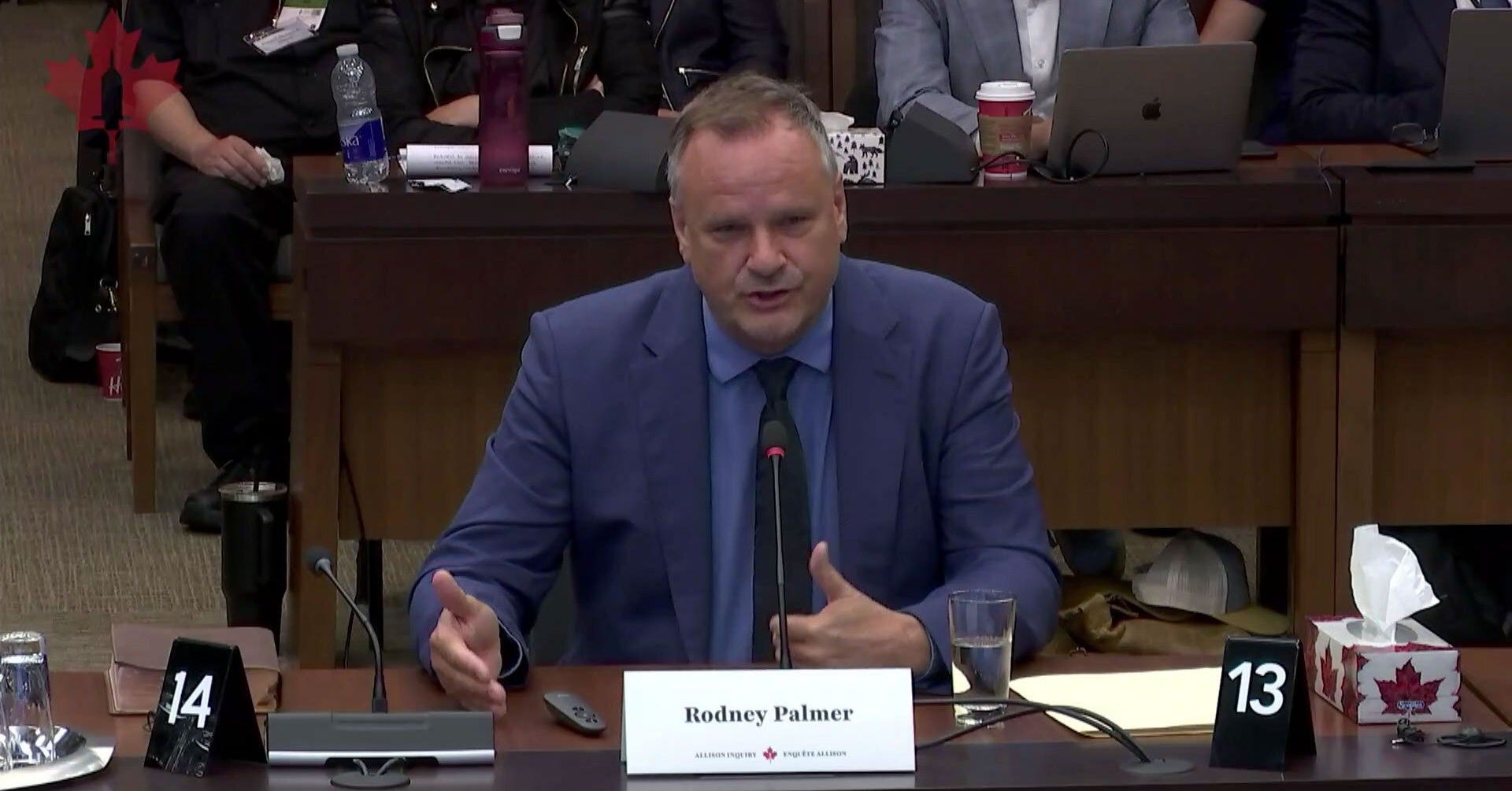
A former CTV foreign correspondent is accusing Canada’s biggest news organizations of abandoning the public during the COVID-19 pandemic, claiming journalists helped silence criticism of government mandates by branding dissenters “anti-vaxxers” and conspiracy theorists.
Rodney Palmer, a former Beijing bureau chief for CTV National News, made the accusation Friday during the Allison Inquiry, as reported by Blacklock’s Reporter.
The four-day hearing, chaired by Conservative MP Dean Allison, provided a forum for Canadians to share their experiences of alleged COVID-19 vaccine injuries and hear testimony concerning the federal vaccine injury-support program.

“I’m talking here about the CBC because it’s a Crown corporation funded by federal tax dollars in its entirety, but it’s not alone,” said Palmer.
“What I’ve just said here could go for just about any news organization: the Globe & Mail, the National Post, Global TV, CTV, many of my former employers. I worked in these organizations, and I saw them doing the same thing.”
Palmer told the inquiry that critics of pandemic-era policies were routinely dismissed with labels he argued discouraged others from speaking out.
“They called them anti-vaxxers, conspiracy theorists and misinformation on social media,” he said.
“You don’t want to be called this so you don’t speak up,” Palmer added. “You self-censor. You shut the hell up instead of coming forward with the truth. This is the language of propaganda and it’s extremely effective.”
Palmer pointed to a June 2021 CBC News notice that rejected claims COVID-19 vaccines could have long-term side effects, citing an infectious disease expert who said such claims were “completely untrue.”
“This is a thing state broadcasters do,” Palmer said. “They attempt to supplant themselves as the arbiters of truth and divide you.”

Conservative MP Glen Motz said the uniformity of legacy media coverage during the pandemic reflected what he described as a longstanding problem with bias.
“Many of us have been saying for many, many years, the obvious bias by our mainstream media,” Motz said.
“Obviously the CBC did not act alone; are you suggesting they were prompted by the state?” Motz asked.
“I don’t know who prompted them,” Palmer replied. “I know they shifted their allegiance from the people of Canada.”
According to federal figures, the former Vaccine Injury Support Program received 3,557 claims between June 2021 and November 2025, with 252 approved by a Medical Review Board. Another 11 appeals were approved, while nearly $21.5 million in financial support was paid to claimants.
The program is now known as the Vaccine Impact Assistance Program and has been administered by the Public Health Agency of Canada since Apr. 2026.

Palmer’s criticism echoes allegations previously made by several former CBC journalists and insiders.
“We betrayed the public,” said Marianne Klowak, a CBC reporter of more than 30 years. “We broke their trust […] We were, in fact, pushing propaganda.”
Former CBC reporter Jennifer Dundas has similarly described the broadcaster as “warped beyond repair,” arguing it should “serve all Canadians, not the adherents of favoured political ideologies.”
Former Canada Tonight host Travis Dhanraj also blamed CBC’s “erosion of trust” on years of “dysfunction at the highest levels” involving what he described as a “small group of insiders on air and in management.”


The criticism comes as the Carney government moves to bolster publicly funded media.
The 2025 federal budget granted CBC/Radio-Canada an additional $150 million to “strengthen its mandate” and “better reflect the needs of Canadians.”
Ottawa is also funding a three-year project to create a national directory intended to help Canadians find local news they can “trust.” Researchers at Toronto Metropolitan, Laval and Concordia universities are compiling the directory, with Canadian Heritage having spent $100,000 on the project at the time government records were obtained.
Heritage Minister Marc Miller has defended taxpayer-funded media as essential to combating disinformation and maintaining “social cohesion,” describing CBC as “ferociously independent.”
Yet federal government research itself has documented deep distrust of legacy media.
A Public Health Agency of Canada survey found just 18 per cent of respondents expressed “high trust” in “journalists and reporters working for large media organizations,” placing them below the federal government.
The findings were based on questionnaires involving 6,200 Canadians and nine federal focus groups.