

Author: John Carpay, President of the Justice Centre for Constitutional Freedoms
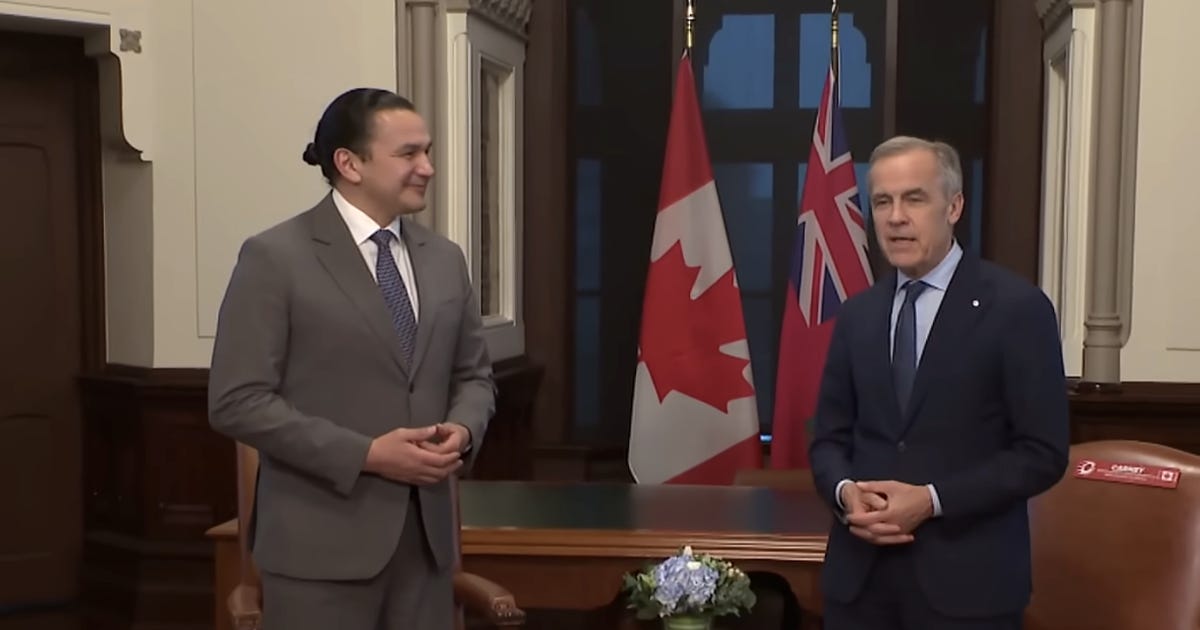
Canada has spent 150 years maintaining a law that sorts citizens according to ancestry. Now Manitoba Premier Wab Kinew and Prime Minister Mark Carney are both talking openly about ending the Indian Act.
That should be good news. But repealing the Indian Act will mean little if Ottawa simply replaces it with a new set of race-based laws, privileges, bureaucracies, and political arrangements.
Parliament enacted the Indian Act in 1876. It created — and still maintains — a separate legal status for one group of Canadians based on race, ethnicity, or ancestry.
Nearly a century later, Prime Minister Pierre Trudeau proposed abolishing it.
His 1969 proposal, formally called the “Statement of the Government of Canada on Indian Policy,” sought to remove the legal separation between Aboriginal Canadians and everyone else.
The Department of Indian Affairs would disappear within five years. Ottawa would transfer its constitutional authority over “Indians, and Lands reserved for the Indians” to the provinces, while treaties would be respected and Aboriginal people would gain greater control over reserve land, including opportunities for individual or band ownership.
The proposal would have shifted power away from both the federal department and local Aboriginal leaders. Many Aboriginal leaders opposed it, and Trudeau withdrew the plan in 1970.
Fifty-seven years later, the system Trudeau wanted to dismantle remains very much alive. So do the social problems that enormous government spending was supposed to improve.
Aboriginal Canadians living on reserves continue to experience high rates of unemployment, poverty, drug and alcohol abuse, family violence, and fetal alcohol syndrome.
Meanwhile, inflation-adjusted federal spending on Aboriginal programs rose from $10.3 billion in 2014/15 to $40.8 billion in 2024/25. The increase was seven times the growth in overall federal program spending during the same period, amounting to roughly $20,000 annually for every Aboriginal man, woman, and child in Canada.
If spending more than four times as much has not solved these problems, Canadians should be willing to question the system itself.
How much money is absorbed by bureaucracies, lawyers, consultants, academics, and political structures before it improves the daily lives of ordinary Aboriginal Canadians?
Consider the experience of other Canadians. Families of Chinese, Ukrainian, Italian, Punjabi, Japanese, and countless other backgrounds came to this country with their own languages, religions, and traditions. Many endured poverty and discrimination; Ukrainian Canadians were detained in labour camps during the First World War, while Japanese Canadians were interned during the Second World War.
Those experiences were real injustices. Yet their descendants were not assigned a permanent, separate legal status based on ancestry, supported by an ever-growing federal bureaucracy. Their children and grandchildren have generally integrated and prospered while remaining free to preserve the cultures, languages, and traditions they value.
Equality before the law does not require cultural uniformity.
Section 15 of the Canadian Charter of Rights and Freedoms protects equality before and under the law and equal protection and benefit of the law without discrimination, including discrimination based on race or ethnic origin. Canadians are also free to teach their children their language, practice their religion, preserve their heritage, and pass traditions to the next generation.

Aboriginal Canadians have those same freedoms. Why, then, should Canada continue maintaining a legal and political system built around racial distinctions?
Premier Kinew now appears willing to ask that question.
Holding up his own Indian status card this week, he said, “I’m not sure if that lines up with your vision of Canada, that we still have a race-based form of identification in this country, but this is a reality.”
He called for the Indian Act to be abolished.
Mr. Carney has likewise called the Indian Act racist and anachronistic and has said he is open to repealing or reforming it.
At first glance, this sounds remarkably similar to Pierre Trudeau’s conclusion in 1969. The important question is what comes next.
Mr. Carney has described Ottawa’s relationship with First Nations as “government to government, nation to nation.” The word “nation” can describe a sovereign country, but it can also describe a people united by culture, identity, or history.
Canada’s First Nations are ethnic and cultural communities within Canada, not foreign countries; treating them politically as separate governments risks preserving the very principle that makes the Indian Act objectionable: different legal and political treatment based on ancestry.
Abolishing the Indian Act while recreating its basic assumptions under new names would not establish equality before the law. It would simply modernize the machinery of racial separation.
Canada does not need another 150 years of that experiment.
Aboriginal Canadians are as capable of achievement, independence, and prosperity as Canadians of every other background.
The path forward should not be deeper dependence on race-based government structures, but equal citizenship, personal freedom, and the same rights and responsibilities for everyone.
Abolish the Indian Act, by all means — but abolish the race-based system behind it, too: equal rights for all, special privileges for none.
John Carpay, B.A., LL.B., is President of the Justice Centre for Constitutional Freedoms (jccf.ca).
I don't know. These people have been trying to expand and enshrine racism since 2015. It's going to be hard for them to change!
But, it should be abolished as should Gladue and any court consideration of colour, race, religion, immigration status in handing out sentences. jobs and positions. DEI has to be made to be illegal. And the various aboriginal tribes should be treated as tribes, not nations. They should not be allowed to own half of a country they did not create, just because. And really they need to ditch all those reserves. That just maintains what should be viewed as antiquated and an embarrassment. All people pay taxes like everyone else, accept restrictions on hunting and fishing like everyone else was made to over time.
You are not going to get rid of racism by enshrining it. But you will expand it.