

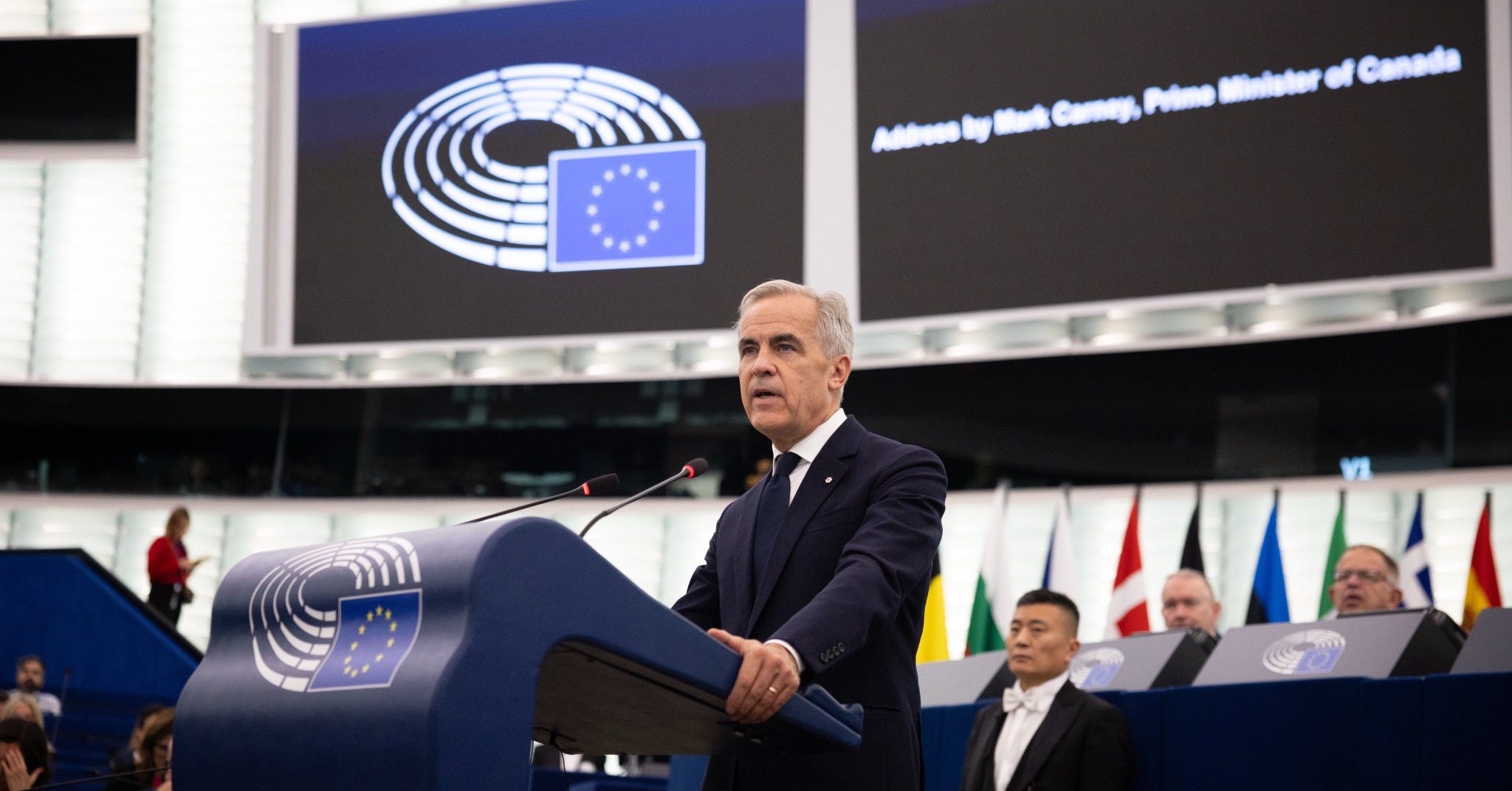
Prime Minister Mark Carney says Parliament will vote on his push for a deeper alliance with the European Union, including closer economic integration and allowing young Canadians and Europeans to “live, work and study where they want”.
Carney confirmed Thursday that the final structure of the proposed Canada-EU alliance will face parliamentary debate and a vote.
“Yes, we will have a series of debates, I’m sure, in Parliament, relevant committees, and ultimately there will be a vote in the Canadian Parliament for the final structure of the alliance that we’re working on,” Carney said in Strasbourg, France.
His comments followed an address to the European Parliament, one day after European Commission President Ursula von der Leyen opened the door to Canada becoming the EU’s first “associate member” — a status that does not currently exist.
Carney welcomed Von der Leyen’s ambition but said the exact structure remains to be determined.
“An alliance for the future is a unique, positive approach that we will define together,” he said.


Carney called for deeper cooperation in critical minerals, defence, artificial intelligence and energy security, along with greater integration between Canadians and Europeans.
“We should deepen our people-to-people ties, allowing our youth to live, work and study where they want on either side of the Atlantic,” he said.
Carney also proposed exploring an integrated Canada-EU financial services market and Canadian participation in European student exchange and research programs.
The next major step will be the Canada-EU Summit in Montreal on Oct. 29 and 30.

But U.S. President Donald Trump is warning the emerging alliance could amount to a “hostile act.”
“If it’s a good intention, that’s fine. If it’s a bad intention, we’ll put very heavy tariffs on Europe,” Trump told reporters Wednesday.
Trump dismissed the prospect of Canada becoming an EU associate member as “laughable,” called Canada a “terrible trade partner” and suggested Washington could stop trading with Europe in certain areas.
“If I think it’s at all a hostile act, I will put very serious tariffs or stop trading with Europe on many things,” Trump said.
The warning came amid mounting Canada-U.S. trade tensions.

Hours earlier, Trump signed a memorandum directing U.S. officials to identify Canadian goods that can legally be removed from the federal civilian procurement system.
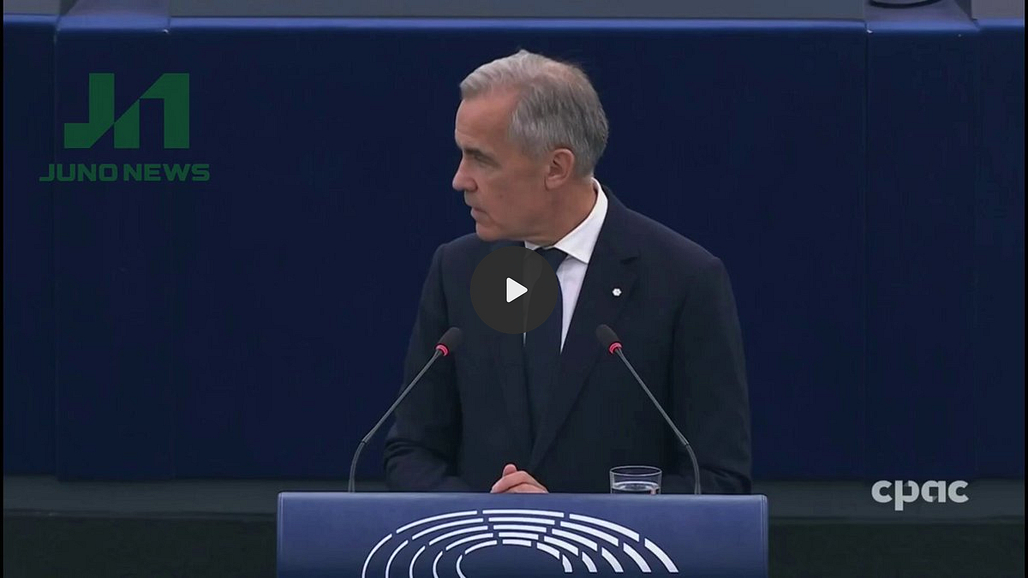
Carney did not name Trump during his European Parliament address but criticized the “weaponization of trade” and tariffs being used “as a means of pressure.”
He argued closer ties with Europe would make Canada a “better partner with the United States.”
Carney also rejected the idea that Canada and Europe were attempting to build a rival superpower.
“I am not proposing a third bloc in order to become a great-power rival — only with better manners,” he said.
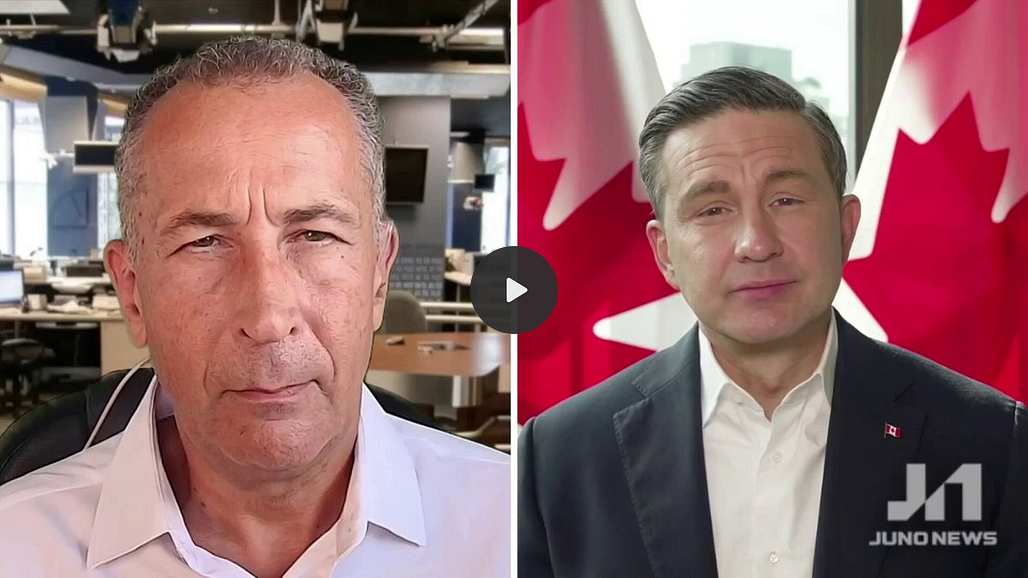
Conservative Leader Pierre Poilievre said his party supports free trade and NATO cooperation with Europe but opposes importing EU rules into Canada.
“Conservatives say no EU taxes, no EU laws, and no EU open-border rules on immigration in Canada,” Poilievre declared.
Canada has not agreed to become an EU associate member, and the terms of the proposed relationship remain undefined.
Joining the EU needs to be country-wide binding referendum. Can't just do Parliament. Each province should also have to agree, like amending the Constitution, and each province should do referendums, not just leave it up to politicians who were not elected to do that. But tyranny under the Westminister System is easy if you have a majority. Joining the EU should hasten the split up of Canada forever.
Listened to Winston Marshall guest say this is how the UK government is working, but it seems like Canada too:
Navigator: "Pilot, the bomber is going down. Do something!"
Pilot: (adjusts clock). "I fixed the clock."
Finding something to distract and get busy with. That's this, trannies, Ukraine, Iran, Israel, so many irrelevant issues. Immigration! Everything, and I mean everything, else is irrelevant. Yes, Trump too.
Year 1950 1975 2000 2025
White (%) 97 94 83 67
Non-White (%) 3 6 17 33