

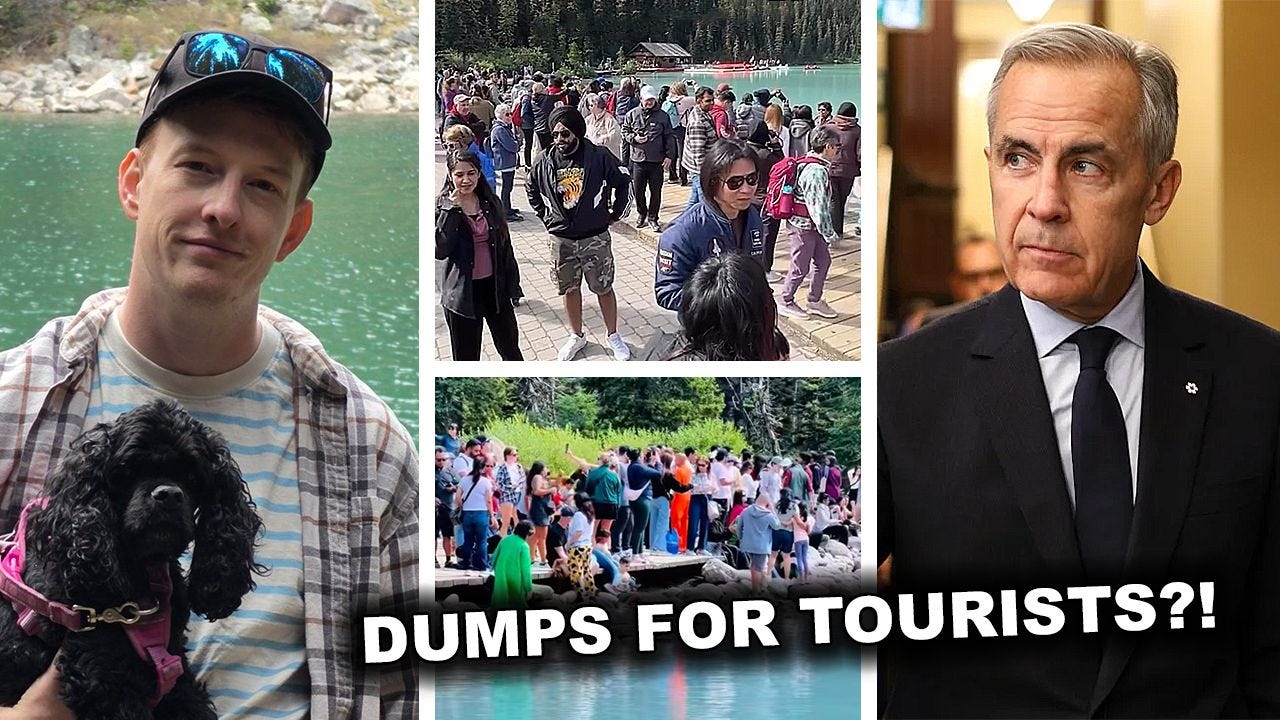
Note: On the drive home from a weekend hike in Banff, I fired off a tweet about packed tourist traps, degenerate behaviour, and Ottawa’s latest attempt to turn the Rockies into a conveyor belt for mass tourism. It promptly went viral. This is the longer version, with fewer spelling mistakes and slightly more thought put into it.
I spent a day in Alberta’s mountains.
I woke up at 7 a.m. and realized I had nothing on my calendar. No meetings. A press conference, I thought I could probably miss. A forecast that suggested I might actually need sunscreen.
I got in the car and headed west.
The sun was already up, but I figured I would beat the weekday crowds.
I was wrong.
By the time I reached Lake Louise, traffic was already backing up. Cars circled endlessly looking for parking. The entire place felt strained well before lunch.
Still, I arrived early enough to find a spot after circling for nearly an hour.
What I found that day convinced me that Ottawa is making a serious mistake.


Mark Carney’s new “Canada Strong Pass” is being sold as a way to help Canadians enjoy their national parks. In practice, it risks accelerating a problem that is already obvious to anyone who spends time in Banff: overcrowding, strained infrastructure, and diminishing access for the very Canadians these parks were created to serve.
The solution is not complicated. Canadians should receive priority access to their own national parks. Foreign visitors should pay more to help fund conservation, maintenance, and infrastructure. Instead, Ottawa is moving in the opposite direction.
Lake Louise has become the perfect example.
Even before I started hiking, one thing was impossible to miss. The crowds around the shoreline appeared overwhelmingly composed of foreign tourists, many of whom appeared to be from the Indian subcontinent. That observation matters later.
