
Stampede Grinches: City Hall aims to end Calgary nightlife
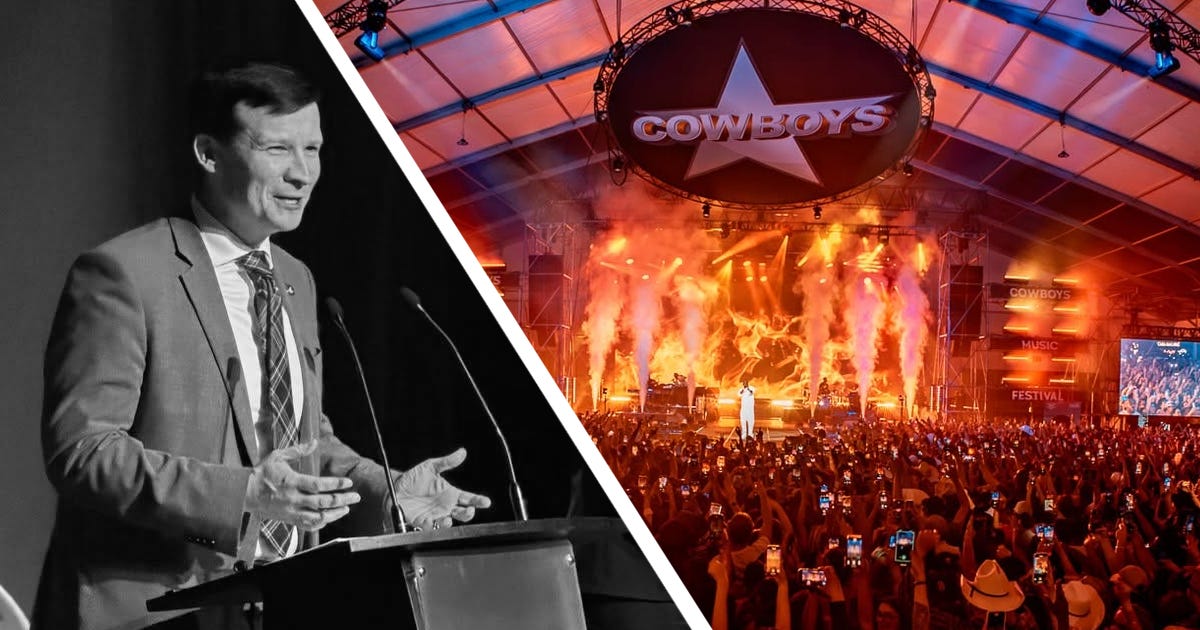
It would be functionally impossible to run a major outdoor music festival like the Stampede Cowboys event under Calgary's proposed noise bylaw restrictions.
By weaponizing Calgary’s noise bylaws, city officials are saddling the nearly 30-year-old Cowboys Music Festival tradition with new sound restrictions and time limits that has long-time festival organizers panicking.
The result is a regulatory squeeze that could make it impossible for the festivals like the world famous Cowboys Music Festival to run its full, star-studded lineup. If you were looking forward to seeing Jason Aldean, Sean Paul or Jason Derulo at the nearly sold-out event, you can thank City Hall for killing the vibe.
According to a Calgary city noise permit issued for the event, once midnight hits on the weekend, the current rules force volume limits down to 65 decibels, which is the volume of a regular, everyday conversation.
The restrictions get even tighter during the week, choking the music down to a microscopic 50 decibels, the volume of a quiet recording studio, at midnight, before forcing the speakers to unplug completely by 12:30 AM.
In an exclusive interview with Juno News, Penny Lane Entertainment CEO, Paul Vickers said the abrupt changes from City Hall came suddenly and gave them very little wiggle room.
“This is not something you do three weeks before Stampede,” Vickers said. “You give everybody time to digest it. Last year, we had a whole year to talk about this. We had a really smooth Stampede last year. We had a really good community effort with everyone.”
The city’s new permit effectively demands that a massive outdoor music festival be no louder than everyday city traffic before midnight, and eventually quieter than a normal face-to-face conversation after the clock strikes twelve. Under the strict new framework imposed by Farkas and his administration, sound cannot cross 70 decibels during the evening. For context, that is the same volume as baseline urban traffic.
Once midnight hits on the weekend, the volume is forced down to 65 decibels, which is the volume of a regular, everyday conversation.
The restrictions get even tighter during the week, choking the music down to a microscopic 50 decibels, the volume of a quiet recording studio, at midnight, before forcing the speakers to unplug completely by 12:30 AM.
It is functionally impossible to run a major outdoor music festival under these rules.
“Due to the impact on surrounding residences, event noise must not exceed 70(dBA) and 80(dBC) at any point before midnight,” reads the City permit approval. Noise exemptions fall under Community Standards Bylaw 32M2023.
On weekends, the city is forcing a minute-by-minute volume step-down until ordering a total shutdown at 2:00 AM. Compared to last year, when artists could pump up the bass and rock the crowd until 1:30 AM, these new rules represent a total administrative shutdown.
Bylaw 32M2023 sets quiet hours (10 p.m.–7 a.m. weekdays, 10 p.m.–9 a.m. weekends/holidays) and noise limits of 65 decibels by day and 50 decibels at night, subject to exemptions.
According to the audio and live event company, FM Systems, downtown sound levels already reflect multiple ambient urban sources independent of events, and the proposed 50 dBA/60 dBC limits fall within or below typical urban and residential background noise.
Jones says “source attribution” is key to assessing compliance, noting that crowd activity and ambient conditions can affect readings, which may combine event and background noise at measurement points.
FM Systems recommends baseline ambient measurements before events to distinguish background noise from event sound, using field calibration for compliance monitoring.
“Based on our preliminary review of the proposed… daytime and nighttime sound pressure limits would introduce material technical and operational challenges for outdoor events and organized gatherings within the City of Calgary,” FM Systems CEO Marlin Jones wrote in a statement sent to Juno News.
He says events may face “substantially more restrictive parameters,” creating major operational challenges for outdoor programming.
Meanwhile, Vickers explained that experience from hosting the festival in the past has shown that local businesses were more appreciative and understanding than the city lets on.
“(Last year) most of the towers around us and buildings around us thanked us for the business and thanked us for addressing all their concerns and trying to alleviate any problems they might have had. There’s a good community events team that goes out and cleans up the area and nobody else does it except us,” Vickers told Juno News.
Compared to last year’s exemption, which allowed 75dBA/85dBC before midnight and 65dBA/85dBC from midnight to 01:30, this year’s limits are even more restrictive.
Furthermore, the crowd activity alone, thousands of screaming fans cheering for a headliner, will easily cross the city's 65-decibel limit on its own, even if the speakers are completely muted.
A festival spokesperson was unavailable, while the City of Calgary said the approved noise “limits balance a safe festival experience with minimizing residential impact,” keeping sound audible on-site while reducing off-site noise.
Asked about the discrepancy, officials deflected and said noise exemption permits are assessed on a case-by-case basis to balance events and community livability.
The permit requires continuous sound monitoring and strict compliance with all conditions throughout the 2026 Cowboys Music Festival.
Sound must be continuously monitored and reduced immediately if requested by law enforcement, it says, with the organizer responsible for minimizing impacts to nearby residents, including mandatory advance notice via leaflet or other verifiable communication.
“Failure to comply with any Permit condition will result in enforcement action, including a formal review of this event and may lead to the denial, restriction, or revocation of future permit applications.”
City officials said non-compliance could lead to warnings, fines up to $10,000 per offence, and potential impacts on current or future permits under the Community Standards Bylaw.
On secondary and tertiary impacts, the spokesperson said, “The City continues to support festivals as an important part of Calgary’s economy while ensuring events operate responsibly and in compliance with bylaw requirements.”
According to Vickers, he’s sympathetic with people who might take issue with the noise levels, suggesting that instead of introducing a stringent bylaw, the festival would act on any complaints phoned in directly.
“I have empathy for anybody that we’re disturbing, don’t get me wrong and if they call us, we can adjust the sound to alleviate that problem. It is possible to eliminate it; we set up a hotline, call us, and we would be on it,” Vickers told Juno News.


I'm going to go out on a limb here and guess that if Muslims decided to blast their call to prayer at all times of the day and night there would be no repercussions because, you know, religious tolerance and the need to maintain community cohesion. Forget about maintaining Canadian culture and traditions if it means a bit of inconvenience for some people.
Then how come they are not fining motorcycles as very few are even close to 80 db, most are 100 dB, and several cars & trucks ca be added to that list as well. And yes I know all about noise or acoustics we called it.