

B.C.’s former chief coroner says province's drug policies should be “more woke”
On International Human Rights Day, B.C.’s Human Rights Commissioner hosted a virtual panel urging a shift to a so-called “human rights-based approach” to the province’s drug overdose crisis.
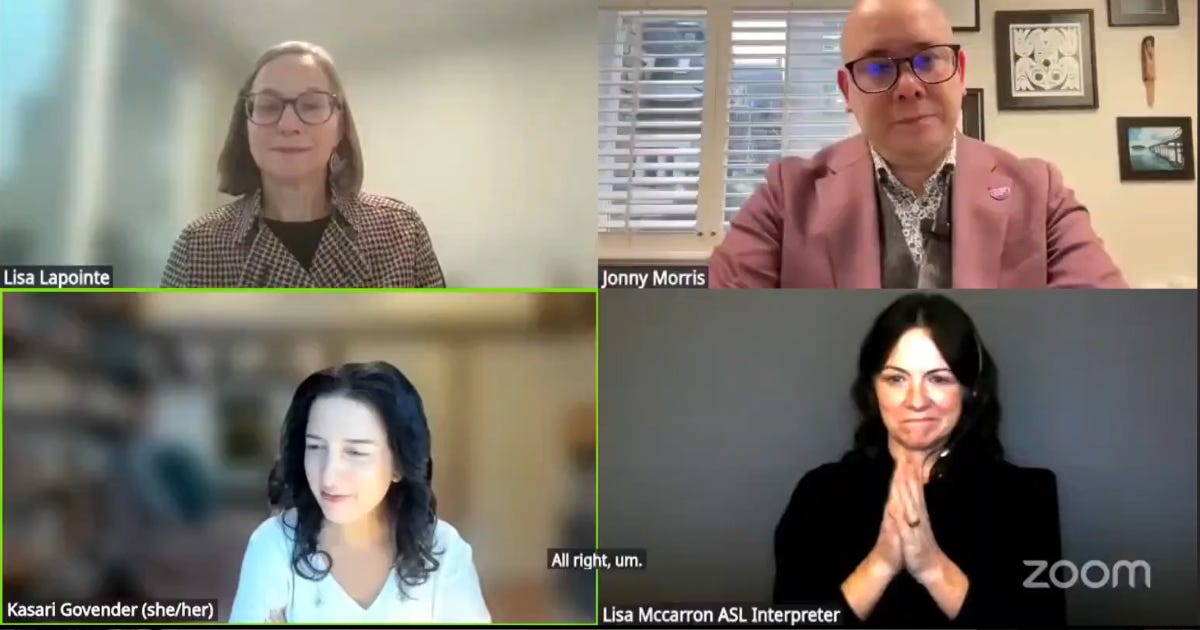
On International Human Rights Day, B.C.’s Human Rights Commissioner hosted a virtual panel urging a shift to a so-called “human rights-based approach” to the province’s drug overdose crisis, featuring former chief coroner Lisa Lapointe, who said the province’s policies need to be “more woke.”
The December 10 Zoom event, organized by the B.C. Office of the Human Rights Commissioner and titled “Beyond the Headlines: B.C.’s Toxic Drug Crisis, a human rights conversation,” opened with several land acknowledgments and emphasized the crisis as not only a public health emergency but also a “violation of human rights.”


Panelists included B.C. Human Rights Commissioner Kasari Govender, Canadian Mental Health Association B.C. CEO Jonny Morris, and Lapointe.
The group discussed reframing policies around so-called “safe supply” and “harm reduction” through a “human rights” lens – a reframing that extends beyond Zoom meetings.
A court case is currently underway, launched by Drug User Liberation Front (DULF) co-founders Eris Nyx and Jeremy Kalicum, who argue that denying drug users access to tested, less volatile substances violates their human right to life, liberty and security of the person from Section 7 of the Canadian Charter of Rights and Freedoms.
Incidentally, Lapointe, just minutes before the Zoom meeting began, found herself testifying at Vancouver’s B.C. Supreme Court in relation to the DULF case as an expert witness.
Lapointe, who held the province’s top coroner post for more than a decade despite not having a medical degree, is among the most vocal “public health expert” defenders of B.C.’s harm-reduction strategy.
During her witness testimony, Lapointe praised and lauded DULF for giving their “active drug users” a “deep sense of belonging and acceptance.”
Lapointe also pondered the idea of adopting something similar to a “liquor store model” when it came to the possibility of expanding safe supply policies.
“Would you consider yourself an activist?” asked B.C. Superior Court Justice Catherine Murray, while examining Lapointe as an expert witness in the DULF trial.
In response, Lapointe insisted she wasn’t an activist.
Just minutes after stepping down from the stand, however, Lapointe found herself at a Zoom meeting with the B.C. Human Rights Commissioner, where she passionately advocated for so-called “safe supply” and “harm reduction” reforms for dealing with the province’s overdose crisis.
In particular, Lapointe said that the government doesn’t provide enough “meaningful services.” When pushed for specifics on what services she felt needed more funding, Lapointe did not offer any services but instead pivoted to the issue of “stigma.”
Lapointe cited the recent changes to public health guidelines permitting the involuntary detention of at-risk youth as likely to cause more harm than good by “stigmatizing” drug use by “discouraging people from asking for help.”
This attitude, shared by many lawmakers in the B.C NDP government, was highlighted in the October rejection of B.C. Conservative MLA Steve Kooner’s private member’s bill, M213, or Drug Use Prevention Education in Schools Act.
The bill aimed to mandate clear anti-drug messaging in schools, emphasizing that drugs are dangerous to counter what Kooner described as confusing harm reduction rhetoric from the NDP government.

As noted by Kooner in a phone interview with True North, stigma has proven effective in reducing behaviours like tobacco use in the province.
“We stigmatise smoking, why not hard drugs?” Kooner asked rhetorically when speaking to True North two months ago.
But Lapointe disagrees. She calls such policies “disrespectful” to at-risk youth and “those already suffering.”
“Sadly, the ‘problem,’ and I put that word in parentheses,” Lapointe said to her fellow panelists when speaking of the province’s overdose crisis, “is that rather than mount the appropriate ‘woke,’ which in my mind is a really good word, response—meaning immediately addressing housing, poverty challenges, meals, medications, healthcare providers, those essentials that we need right away—instead, the government has pivoted to involuntary care.”
“I’m going to get on the bandwagon because I always do,” Lapointe finished excitedly, “for safer supply and pharmaceutical alternatives.”
Despite B.C. implementing a bevy of so-called “safe supply” and “harm reduction” policies since declaring the overdose crisis a public health emergency in 2016, overdose deaths have climbed significantly in the province, according to government data.
Society is allowed to expect members to pull their own weight. Maturity is an important goal in life, and brings more satisfaction in the long run. Laziness and dishonesty lead a society to dysfunction and collapse. Martin Luther King Jr. dreamed of a day when we should judge a person by the content of their character. Laziness, and disrespect of society, and dishonesty will lead to a failing grade.
a lot of 'Fancy' words for I don't know what the heck I am doing but I sound good.
we've all read it on the WEF programming site. the jig is up