

A new coalition of homeowners, builders, developers, businesspeople and residents has launched an advocacy campaign to defend private property rights in British Columbia and fight for clarity amid the uncertainty caused by land agreements with Indigenous tribes.
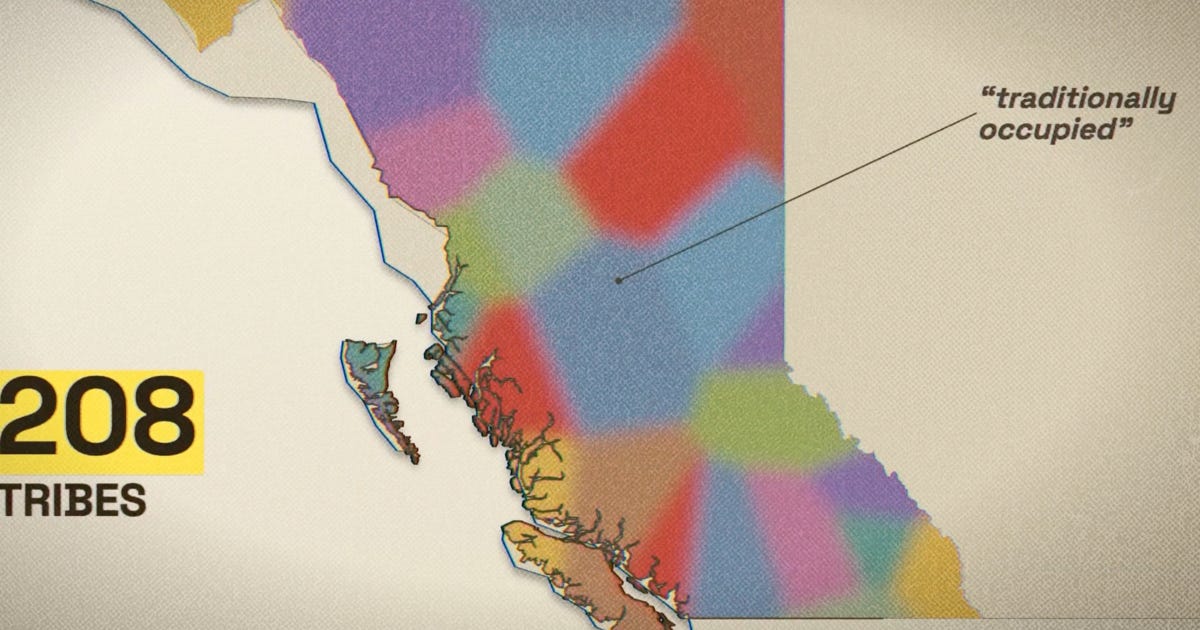
The Property Rights Defence Fund was officially launched Wednesday to fight for British Columbians’ rights to private property, as the BC NDP and federal government have left the door open for BC’s 208 Indigenous tribes to claim rights over the land where British Columbians hold title.
In an email, Ben Lawton, the executive director for the group, and Siavash Tahan, the group’s policy director, jointly told Juno News that the group’s leadership team consists of people with a range of experience including economic development, finance, real estate, public policy and politics.
Lawton and Tahan told Juno News that the Cowichan decision, which saw the BC NDP government grant aboriginal title to the Cowichan tribe over much of Richmond, put around 125 private properties at risk.
“You don’t get to vote on who runs the tribe the same way you can vote for a mayor. Only tribal members with Indigenous ethnic ancestry are allowed to vote,” Lawton said in a video posted to the Property Rights Defence Fund YouTube channel and website.
“That means your property is governed without your input and with zero accountability to you or the public.”

In the launch video, Lawton describes the Property Rights Defence Fund as the “first line of defence against the assault on property rights” in British Columbia.
“You shouldn’t accept that your title to your home is now called defective and invalid. You shouldn’t accept being treated like a second-class citizen,” he said. “In a democracy, five per cent of the population shouldn’t govern 100 per cent of the land.”
Lawton and Tahan told Juno News that the Cowichan decision, made possible through BC’s Declaration on the Rights of Indigenous Peoples Act (DRIPA), called into question “the very basis of the rule of law and private property rights” in the province.

In the video, Lawton notes that DRIPA allows any Indigenous tribe to claim title over land that was traditionally occupied by them. The problem, he says, is that any part of British Columbia can be claimed by one or more of the province’s 208 tribes.
“More concerning is that the ramifications from that decision and further actions by the provincial and federal government did not provide certainty or comfort to property owners, but in fact the opposite,” the organizers said in the email.
They said that several treaties and agreements have been signed over the last 12 months that “further erode” private property rights in BC, and the group hopes to draw attention to the issue and educate the public of what they stand to lose with the continuance of land back ideology and policies.

“It is unfortunate that the protection of private property rights in BC has fallen by the wayside during the trade war, and it represents as great a problem for the economic health of Canada, and especially BC, as the trade war,” Lawton and Tahan said.
“A secure system of private property ownership is the cornerstone of a strong economy. If a society is not operating with secure private property rights, it cannot have prosperity at all, no matter how many trade deals are signed or cancelled.”
They said the Property Rights Defence Fund, which already has over 1,300 supporters, despite officially launching Wednesday, is meant to build “a winning coalition” in support of “specific policy and legislative change” to “enshrine and defend private property rights.”
“The government at the BC and federal level have given verbal assurances to assuage the public, but have made absolutely zero legislative effort to shore up private property rights in BC,” Lawton and Tahan said.
“In fact, quite the opposite. The signing of the K’omoks treaty, the co-governance mandates, the Musqueam agreement, the continued implementation of DRIPA with no amendments or revisions all represent significant attacks on private property rights, and increase uncertainty over land title in British Columbia.”

“It’s time somebody stood up and pushed back against it.”
The group is pushing several policy changes on its website, including “immediately” repealing DRIPA, and for the government to pass a “Property Rights Clarification Act to enshrine fee simple property rights and extinguish aboriginal title on that parcel.
“There cannot be co-existence of aboriginal and fee-simple title anywhere in BC,” the website states. “The legal and constitutional principle guiding this will be the appropriate assertion of parliamentary supremacy against activist judicial rulings.”
The group also calls for an end to land acknowledgements, to prevent co-management of public lands, and to give “race-neutral” access to public land.
“No native tribe can have independent authority to regulate or veto improvements and operations on Crown land, nor on government-regulated assets tied to privately held property,” the group states.
The group also calls for no secret treaty negotiations and transparency from the government on how long treaty negotiations can take place. They also call on the government to ensure all treaties are conducted on a “fast, fair and final” basis.
“Join the Property Rights Defence Fund. Defend your home, your business, your farm, and your future from a reckless agenda,” their message reads.
Sad that it has come to this. Where is Democracy in Canada?