

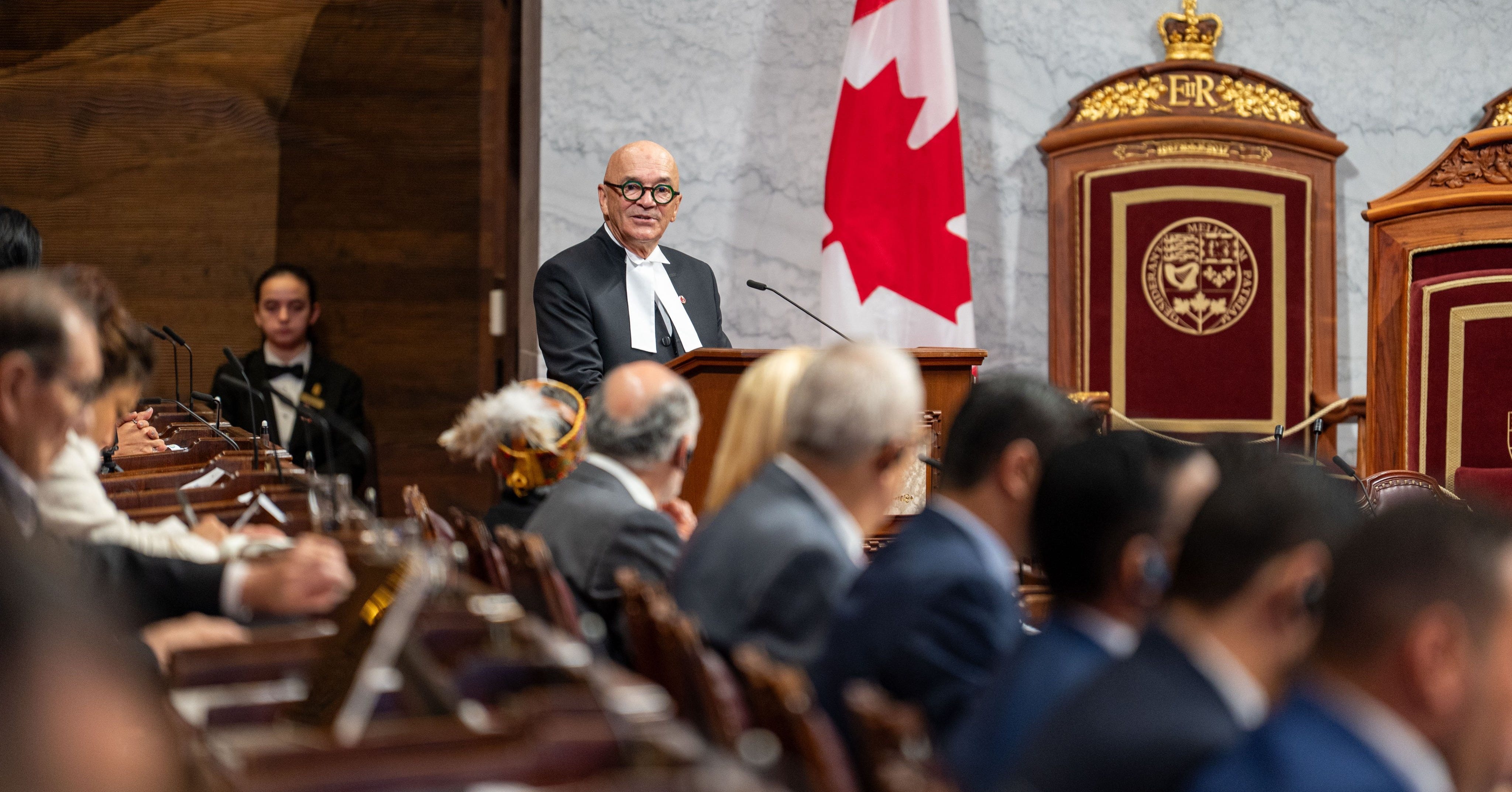
Canada’s unelected senators have racked up $1.85 million in international travel expenses, including trips where elected MPs were already representing the country and meetings that were also available virtually.
A Canadian Taxpayers Federation analysis of parliamentary financial disclosures found 65 senators spent $1,850,420 travelling abroad between January 2023 and March 2026.
Their annual international travel bill surged 88% in two years, from $391,095 in 2023 to $736,165 in 2025.
“Hardworking people never get to vote for a senator in Canada, but their taxes pay for the outrageous globetrotting travel bills,” CTF spokesperson Kris Sims said.
One frequent destination was Strasbourg, France, where senators attended Parliamentary Assembly of the Council of Europe meetings as observers.
Canada is not a member of the Council of Europe but holds observer status. Canadian parliamentarians participating in PACE can attend and speak with permission but cannot vote. Elected MPs were also present representing Canada.
Senators billed taxpayers $173,041 for seven trips to observe the meetings, which are also livestreamed online.
Sen. David Wells spent $7,030 travelling to France for a 2023 meeting, where he submitted two speeches in writing but did not deliver either from the floor.

Sen. Scott Tannas spent $4,545 travelling to Strasbourg in 2024 and did not deliver or submit a speech during the PACE meetings, although he asked one question at a separate meeting.
“It’s hard to imagine why senators had to spend thousands of dollars to attend a meeting in person when they didn’t even bother to stand up and deliver their speeches,” Sims said.
Other senators travelled to parliamentary meetings that were also available virtually.
Sen. Gigi Osler billed taxpayers $4,677 for two trips to New York in 2023 and 2024, despite the parliamentary group regularly holding meetings and workshops by videoconference. During her 2023 trip, Osler discussed the benefits of hybrid parliamentary sittings.
There were also trips where elected MPs were already part of the Canadian delegation.
Sen. Michael MacDonald billed taxpayers $2,869 to attend a Canadian Embassy event for U.S. President Donald Trump’s inauguration, despite Parliament sending three elected MPs.
The delegation watched the inauguration via livestream from the embassy while snacking on beaver tails.
Other trips featured sightseeing, receptions and hefty hospitality bills.
Former Saskatchewan senator Brent Cotter billed taxpayers $7,694 for a six-day European trip alongside three MPs. When the delegation arrived in Tallinn, Estonia, on a Sunday and no officials were available to meet them, they toured what Parliament’s report called “important landmarks in the city.”
Senators René Cormier, Percy Downe and Michael MacDonald joined an MP on a $76,236 trip to Argentina and Uruguay. While in Uruguay, Canada’s ambassador hosted the delegation at her residence, described as having a “privileged view of the sea.”
Quebec Sen. Clément Gignac billed taxpayers $41,317 for two five-day trips to China, where his delegation visited international schools and Alibaba, rode in a self-driving car, watched humanoid robot demonstrations and met with Cirque du Soleil China.
The bills extended to food.
A delegation including Senators Salma Ataullahjan and Mobina Jaffer spent $1,171 on lunch for 10 people at a Dominican Republic steak and lobster restaurant — about $117 per person.
Another delegation involving four senators spent $2,028 on dinner for 13 people in Brussels, or roughly $156 each.
Three senators were also part of a $61,400 Strasbourg trip that included $171 for “maple syrup and candies” from the Parliamentary Boutique.
Ataullahjan topped the Senate’s international travel spending at $131,706, followed by Wells at $120,389 and MacDonald at $85,025.
The spending comes as Prime Minister Mark Carney’s government has pledged to find savings across Ottawa.
“Our government will work relentlessly to cut waste and drive efficiencies,” Carney said ahead of Budget 2025.
Senators, meanwhile, had already spent another $197,006 on international travel by March 17, 2026, according to the CTF analysis.
“This is the definition of privilege: being unelected and unaccountable and blowing other people’s money,” Sims said.
Unpopular opinion: the senate is a really useful body in our politics and actually does a lot of important investigations in committee, but since it's less entertaining than Question Period in the Commons, the media doesn't cover it. I'm not defending the obvious abuse of the public purse; however, the amending formula for things only affecting Parliament needs only be passed by Parliament. A better way to deal with this is to pass legislation that sets out a basic Code of Conduct for Senators, including spending guidelines, setting maximums for the duration of a Senate vacancy, and creating a greivance/oversight comittee to lodge complaints with that is separate from the chamber itself. Parliament could do all of that with one bill. As much as people lambast the Senate, it does serve an important role in checking the majoritarian Commons, and though it does so sparingly, it does. This is one of those institutions where you'll miss it when it's gone.