
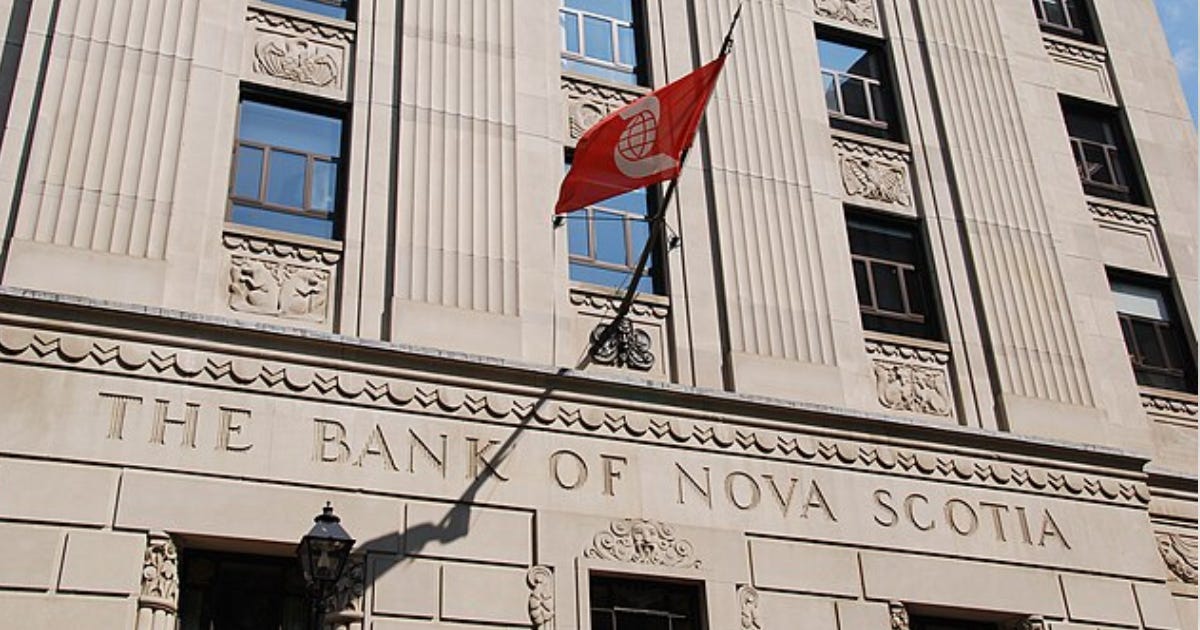
Scotiabank CEO praises ‘Trump Doctrine’, calls for more pipelines in Canada
On the heels of Venezuelan dictator Nicolás Maduro’s arrest by American special forces, Bank of Nova Scotia CEO Scott Thomson said U.S. involvement in Latin America is a “good thing.”
On the heels of Venezuelan dictator Nicolás Maduro’s arrest by American special forces, Bank of Nova Scotia CEO Scott Thomson said U.S. involvement in Latin America is a “good thing” over the longer term and that more right-wing governments in the region would promote stability.
Thomson made the remarks Tuesday at Royal Bank of Canada’s annual Canadian bank CEO conference, stating the Western Hemisphere is recovering from what he called a “bit of a lost decade” for growth.
“Longer-term, this is a good thing for the Western Hemisphere. It’s a good thing for the U.S. It’s a good thing for the Bank of Nova Scotia,” Thomson said.
He cited political shifts toward the right or centre-right in countries, including Chile, which recently elected a Conservative President, Colombia and Peru, as well as what he called a “very business-friendly administration” in Mexico, as supportive of stronger economic growth.
Argentina’s Javier Milei also secured a strong midterm election result in October last year.
Thomson also pointed to the “Trump Doctrine,” a modern interpretation of the 19th-century Monroe Doctrine outlined in a U.S. national security strategy late last year, which emphasizes American influence in the Western Hemisphere. He said the approach should be favourable for regional growth.
Toronto-based Scotiabank has the largest proportional international exposure of any Canadian bank. Thomson noted the lender exited Venezuela in 2014 but continues to operate in Mexico and holds a 20 per cent stake in Colombia’s Banco Davivienda.
Thomson’s comments follow major geopolitical developments in the region, including the recent removal of Venezuelan President Nicolás Maduro by U.S. forces. He said the reopening of Venezuela’s oil sector could create new competitive pressures for Canada.
Both Venezuela and Canada produce heavy crude oil processed by refineries in the U.S. Midwest. Thomson said increased Venezuelan supply could heighten competition, underscoring the need for additional Canadian energy infrastructure.
“Having another pipeline here for Canada, I think, is really important,” he said, adding he hopes the situation strengthens Ottawa’s resolve to advance major national infrastructure projects.


