

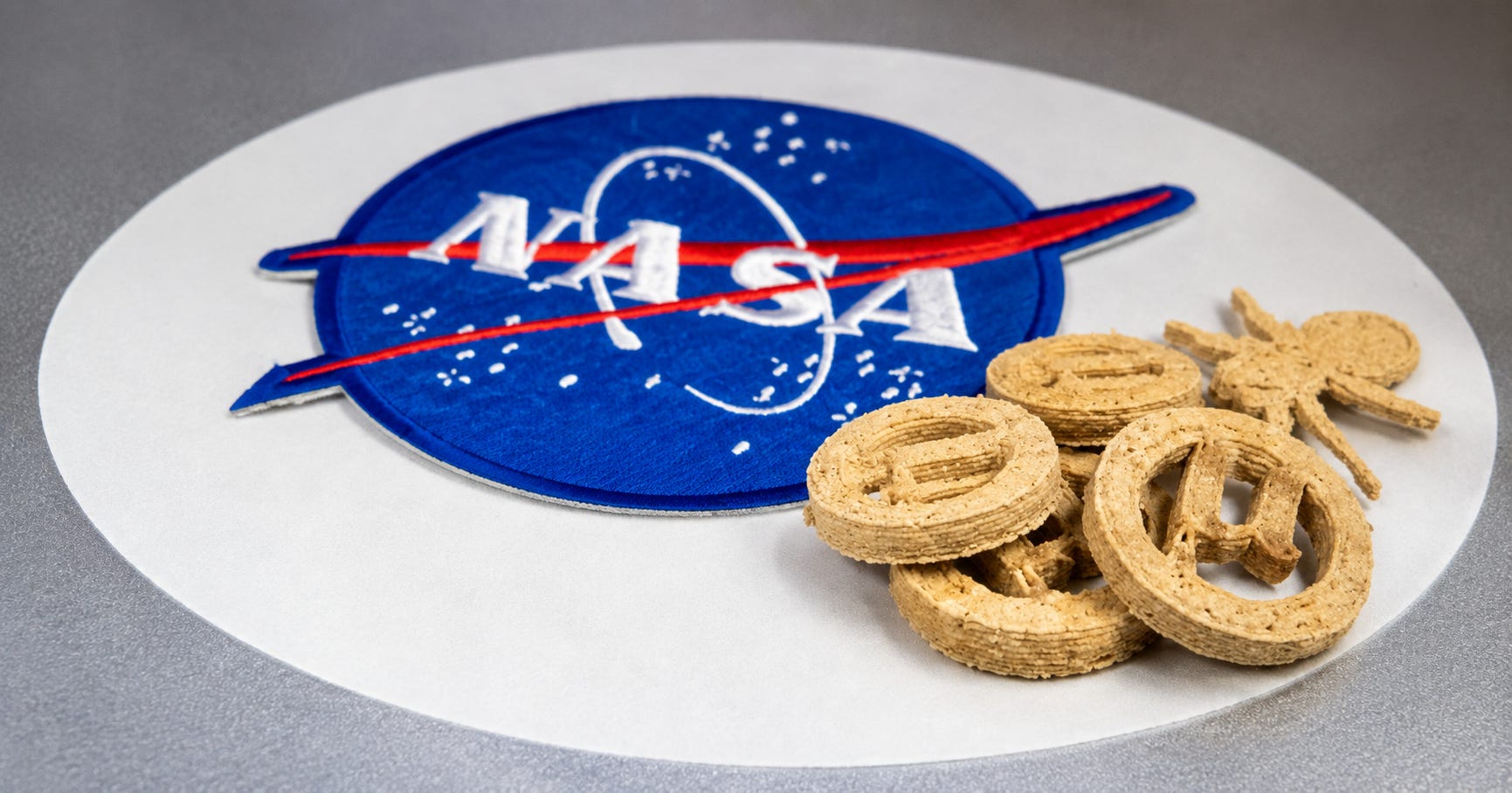
Researchers from Southern Illinois University have found a creative way of solving the issue of plastic waste — by turning it into the food you eat.
Researchers at Southern Illinois University (SIU) Carbondale have created bioengineered baker’s yeast to break down plastic waste into ingredients for the very food we eat, having now showcased 3D-printed cookies that originated from repurposed plastic garbage.
The project, now titled “µBites” after the “microbites” used to break down plastic, was initially financed through NASA’s Deep Space Food Challenge with the goal of recycling any potential waste and turning it into something edible, which may very well be needed for extended space travel.
However, while solving food insecurity in space may have been the initial goal of the project, many have their sights set closer to home for its immediate use. And according to SIU associate professor Lahiru Jayakody, the biggest hurdle now that the product exists will be getting consumers to accept it before it hits markets.
This may even involve “enacting policies aimed at transitioning people to novel, sustainable diets”, according to an article released by SIU in 2024.
“Food insecurity is a global and severe problem that affects millions of people… And it will increase as climate change becomes more severe,” Jayakody said. “µBites is a transformative technology for treating world hunger and plastic pollution, creating a sustainable world for future generations.”
In terms of consumer acceptance, researchers say they’re updating their recipe to increase its palatability by incorporating baker’s yeast and simulating vanilla flavouring, making it even harder to detect the inorganic plastic beneath the crust.
According to Jayakody, “We also want to conduct public awareness and educational programs on µBites technology, since social changes are needed for consumer acceptance of this new product.”