

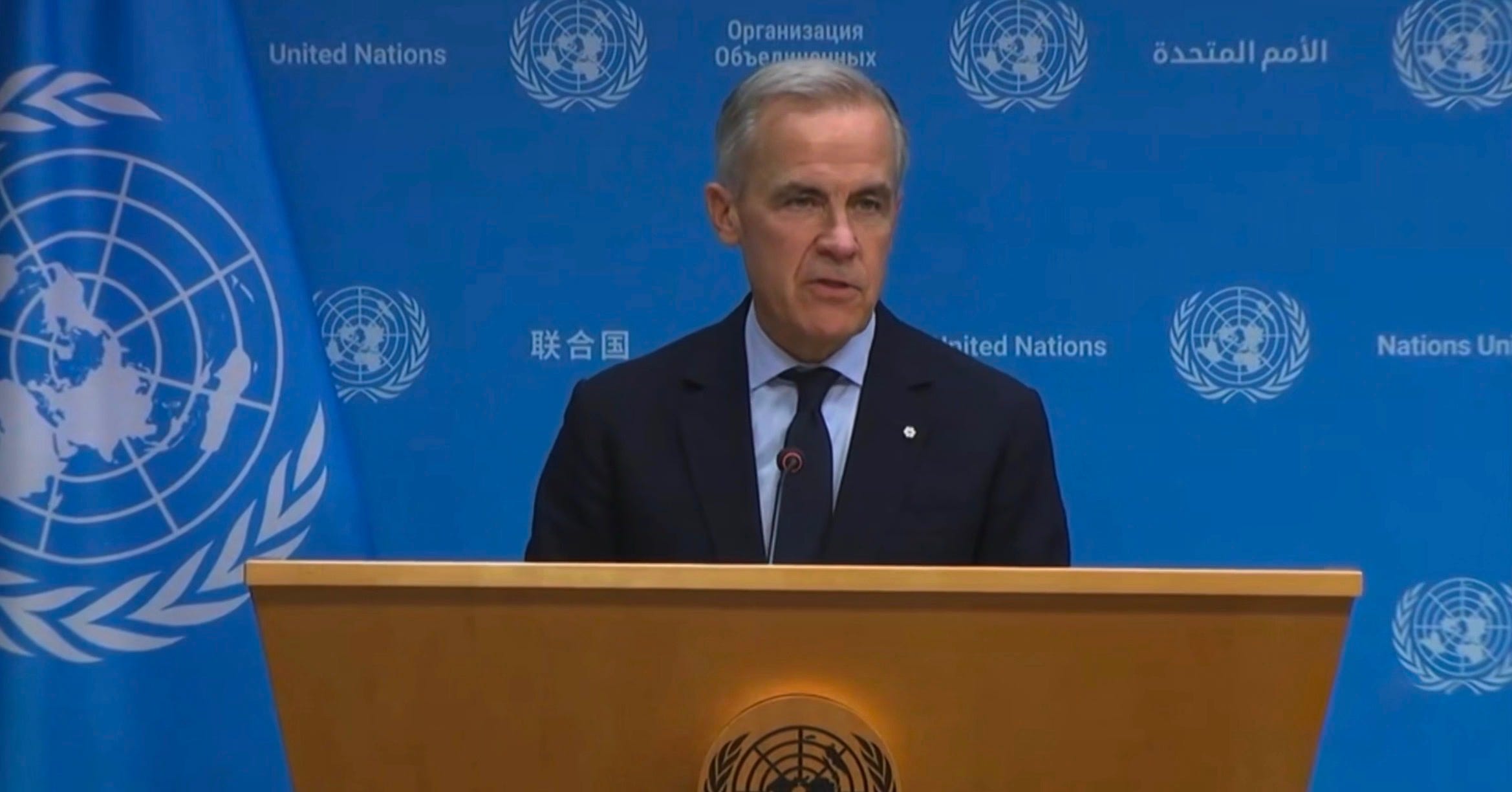
Prime Minister Mark Carney says the world is entering a once-in-a-century upheaval, declaring the “post-war world is ending” as a “climate emergency,” artificial intelligence, pandemics, economic shocks and wars strain the international order.
Speaking in New York during the United Nations General Assembly, Carney argued that the multilateral system must evolve to reflect a rapidly changing world.
His government has made strengthening multilateral cooperation a central theme of its UN visit, including joining Australia, Barbados, Brazil, the European Union, India and Kenya in launching the Partners for Multilateralism coalition.

“We have a multilateral system that, if it fails to reflect the realities of the time, won’t stand the test of that time,” Carney said.
“But at the same time, the need for multilateral cooperation is very much alive.”
Carney said the international system built following the Second World War is reaching its end, while arguing that the rationale behind international cooperation has become more important.
“The post-war world is ending, but the underlying logic of that post-war world that justified multilateral cooperation is more compelling than ever,” he said.
Carney pointed to a series of global challenges he argued no country can tackle alone.
“Climate emergency is intensifying, AI advancing faster than our capacity to control it,” Carney said. “Pandemics spreading across continents in weeks.”
He also cited financial shocks, armed conflicts displacing millions and global “chokepoints” capable of paralyzing supply chains.
“And no country, no one country, no matter how powerful, can manage these challenges alone,” Carney said.
“Cooperation therefore is not an act of idealism. It is a practical necessity, and the question is not whether multilateralism can survive, but how it must evolve to meet the challenges of the moment.”
Carney characterized the upheaval in sweeping historical terms.
“This is in many respects a time that comes once or twice every century,” he said.
“A moment in which our collective prosperity is defined by what we choose to build and how we build it.”
The message echoes a joint statement Canada and six other founding members of the new multilateralism coalition issued this week, which warned of “profound global transformation,” increasing conflict, protectionism and coercion while calling for stronger international cooperation on climate and emerging technologies.
The Prime Minister’s Office used similarly sweeping language on Wednesday, declaring that “as the international order faces a rupture, Canada is stepping up to build and shape a new one.”
Carney paired that push for greater global cooperation with new spending commitments, announcing another $100 million for Palestinians, $82 million for global ocean observation and more than $16 million for global biosecurity.
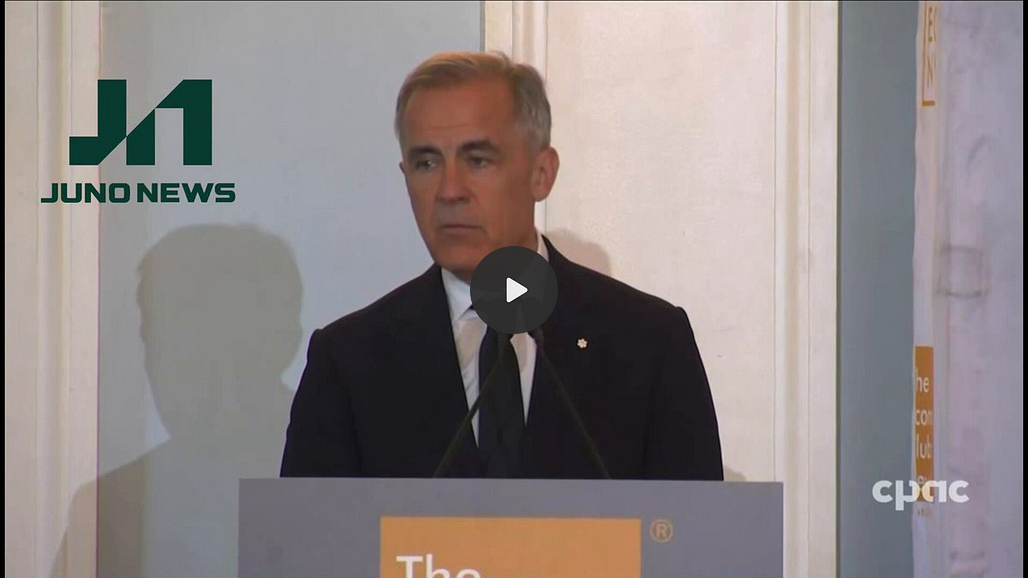
The comments come months after Carney used another New York appearance to emphasize Canada’s deep economic relationship with the United States.
Speaking to the Economic Club of New York on May 28, Carney said Canada was becoming “stronger, more resilient, more independent” by diversifying its international partnerships, while arguing that a stronger Canada would also benefit the United States.
“Canada is America’s largest customer,” Carney said, noting that 70 per cent of Canadian exports are inputs into American finished goods and pointing to Canada’s role as a major supplier of U.S. energy imports.
“Let’s be absolutely clear,” he added. “Canada Strong will help make America great again.”
That message echoed Carney’s broader argument that the international order is undergoing a “rupture” and Canada should diversify its partnerships.
His government is now carrying that approach into the United Nations. In announcing Carney’s September visit, the Prime Minister’s Office said Canada would seek to build a “dense web of new connections with reliable partners” and pursue “flexible coalitions” to address shared challenges.