

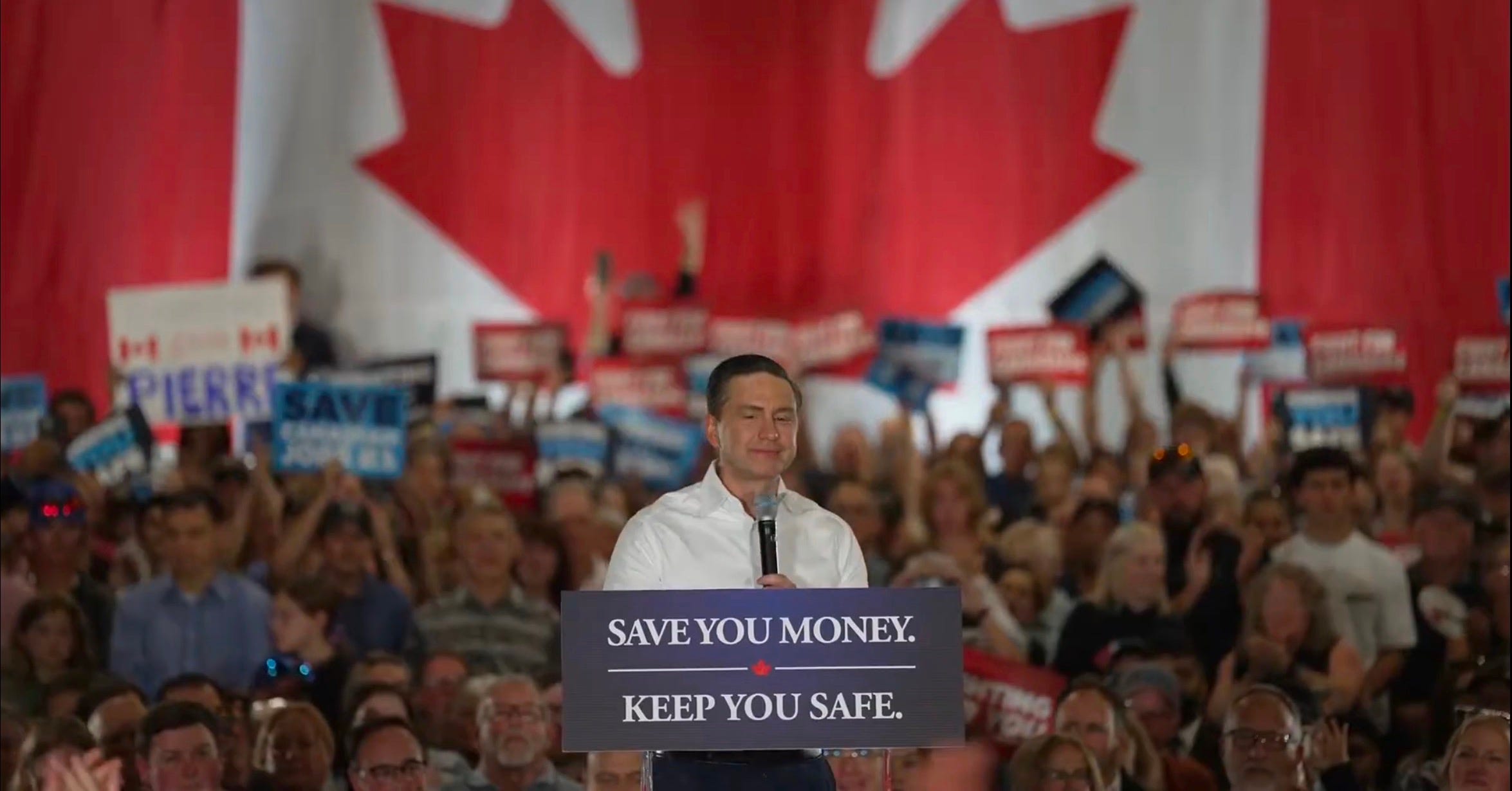
Conservative Leader Pierre Poilievre is drawing a red line against Prime Minister Mark Carney’s push for deeper ties with Europe, declaring that Canada will “never be the 28th state” of the European Union.
Speaking at a Conservative rally in Brantford, Ont., on Sunday, Poilievre doubled down on his objections to the proposed Canada-EU arrangement.
“We will never be the 28th state” of the EU, Poilievre told supporters.


His comments come days after European Commission President Ursula von der Leyen proposed Canada become the EU’s first “associate member” — a status whose terms remain undefined.
Carney welcomed the ambition behind von der Leyen’s proposal during his visit to the European Parliament last week but has stressed that Canada is not seeking full EU membership.
The prime minister has said the eventual arrangement will be debated and voted on by Canada’s Parliament. He has made no mention of consulting the Canadian people via referendum.
Poilievre argues Canada already has strong economic and defence ties with Europe through the Canada-European Union Comprehensive Economic and Trade Agreement and NATO.
But he said he opposes bringing European taxes, laws or what he called “reckless European-style immigration” to Canada.
“Canada must be independent and sovereign. Period,” Poilievre previously told Juno News.
“Conservatives say no EU taxes, no EU laws, and no EU open-border rules on immigration in Canada.”
Carney, meanwhile, argues closer European cooperation would strengthen rather than diminish Canadian sovereignty.

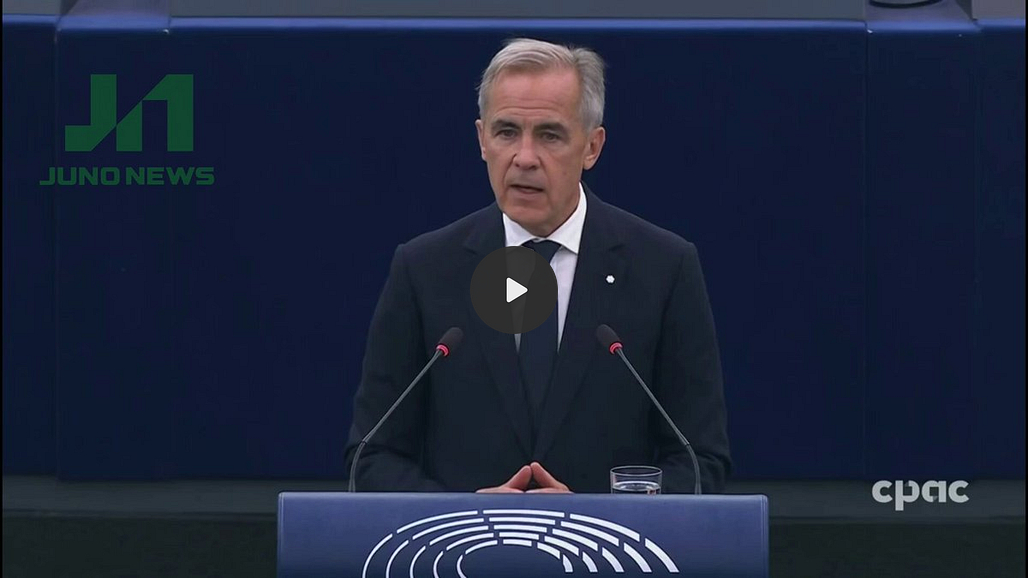
Asked Sunday about U.S. President Donald Trump’s warning that a Canada-EU associate arrangement could be considered a “hostile act,” Carney defended his government’s approach.
“Deeper ties between NATO allies makes those NATO allies stronger, makes NATO stronger, and helps to achieve the common goals of all NATO members, very much the United States included,” Carney said.
“We very strongly believe that Canada is a better partner if our economy is stronger, if we’re more independent or more resilient, we have a deeper web of ties around the world.”
The political fight comes as polling suggests Canadians draw a distinction between closer economic ties with Europe and outright EU membership.
Pollster Nik Nanos told CTV News that polling conducted earlier this summer found roughly eight in 10 Canadians supported strengthening economic ties with the EU.
Support dropped to roughly 5 in 10 when respondents were asked about EU membership itself.
“Canadians are just not interested in exchanging dependence on the United States with dependence on another part of the world,” Nanos said.
Associate membership would fall short of full EU membership, but with no precedent for such a status, its rules and obligations remain unclear.
Carney has proposed deeper cooperation in areas including financial services and opportunities for young Canadians to live, work and study in Europe.
Poilievre said Canadian decisions should remain firmly under domestic control.

Decisions for Canada “must not be made in Washington, Beijing or Brussels, but by Canadians here at home,” he said.