

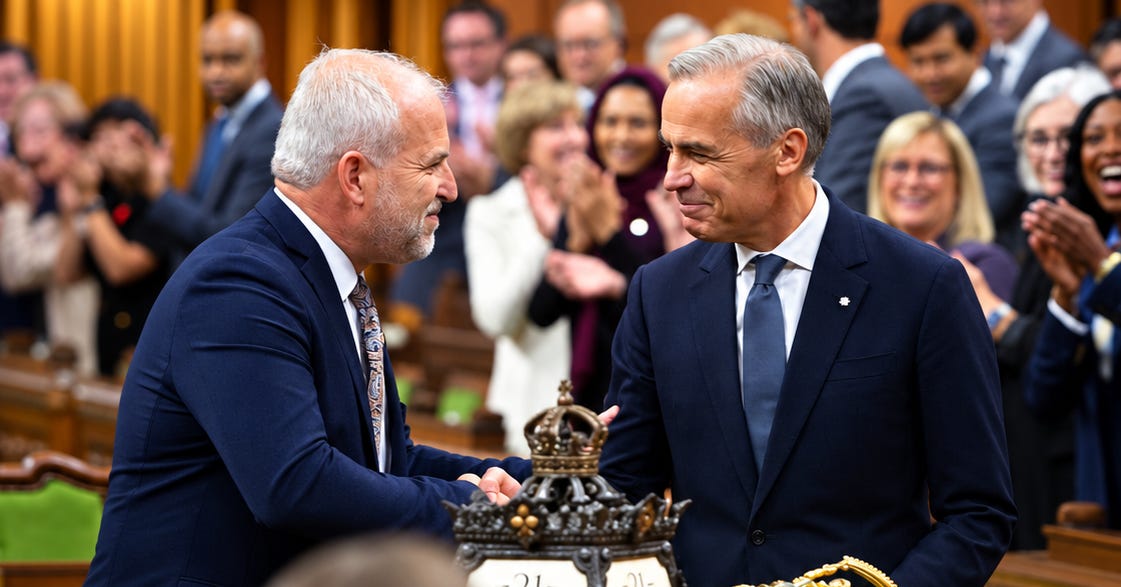
Prime Minister Mark Carney says Ottawa is ahead of schedule in balancing its operating budget. However, Canada’s parliamentary budget watchdog projects the government will instead miss its original target by a year under its current outlook.
A new Parliamentary Budget Officer report projects the federal operating budget will not be balanced until 2029-30 — one year later than the government’s 2028-29 target.
The PBO projects the shortfall will be relatively small, however, and says $500 million in targeted operating restraint would be enough to meet the original deadline.
“I can announce today that we are on track to balance the operating budget next year, one year ahead of schedule, while maintaining the lowest overall deficit in the G7,” Carney told the Canada Investment Summit last week.
The PBO says it cannot yet assess what is driving Carney’s newer 2027-28 projection, with Budget 2026 expected to provide the information needed to evaluate it.
Balancing day-to-day spending was a central Liberal campaign promise in 2025. But the PBO says whether Ottawa meets that target depends heavily on what the government classifies as operating versus capital spending.
Spending classified as capital does not count against the operating budget target, meaning Ottawa could balance its operating budget while continuing to run overall deficits and add to the federal debt. The government has not set a deadline for balancing the traditional federal budget.
Ottawa also dropped its previous fiscal anchor requiring a declining debt-to-GDP ratio.
“Thus, there is not a similar constraint on total debt accumulation,” the PBO said.

The watchdog has repeatedly questioned what Ottawa counts as capital.
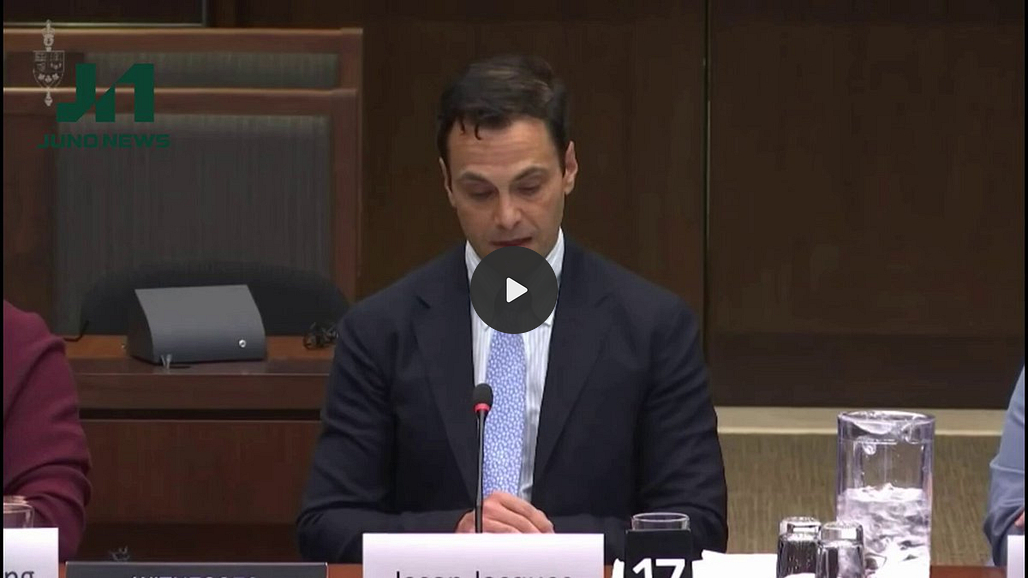
Then-interim PBO Jason Jacques previously concluded that 30 per cent — or $94 billion — classified as capital spending in Carney’s first budget would instead be considered operating spending under the PBO’s methodology.
Testifying before a House committee in January, Jacques said Ottawa’s definition was unusually broad.
“We are unaware of any advanced jurisdictions that would define capital in that way,” Jacques said, pointing to corporate income tax credits and operating subsidies.
The latest report similarly notes that Ottawa’s definition extends beyond traditional public accounting and international practices.
The PBO also acknowledged benefits to the framework, saying it provides greater transparency into which spending Ottawa considers investment and avoids incentives to redesign programs simply to fit traditional accounting definitions.
However, the watchdog described some classifications as contradictory and called for a clearer, more formal methodology.
“For example, film tax credits are included as capital while journalism tax credits are not,” the PBO said.
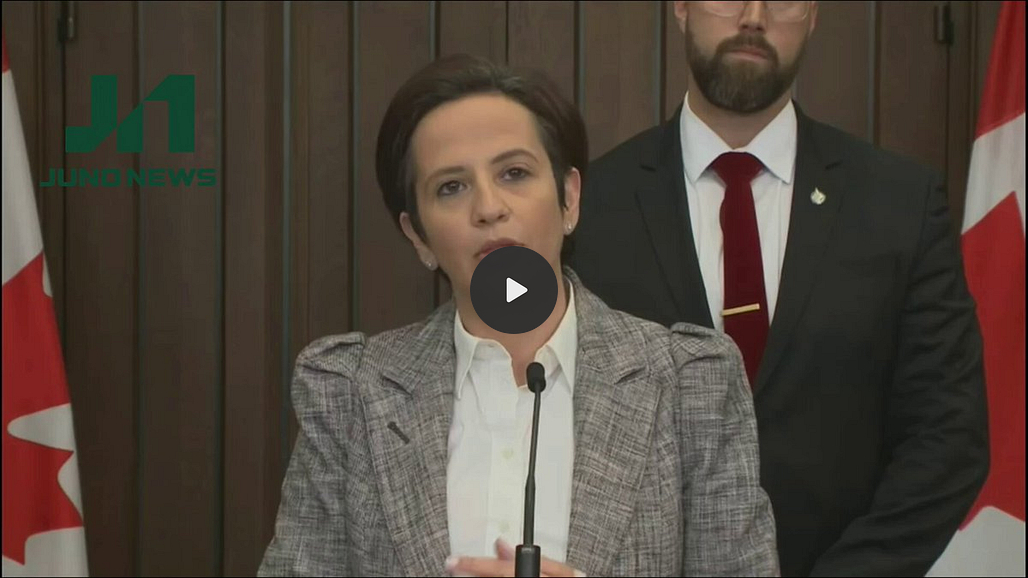
Ottawa disputes the PBO’s timeline.
John Fragos, spokesperson for Finance Minister François-Philippe Champagne, said the fall budget will show the operating budget being balanced one year earlier than originally promised.
“This is in keeping with our plan to spend less on operating expenses, giving us more to invest in capital expenditure that will support the economy, draw investment, spur innovation, and advance our growth and competitiveness agenda,” Fragos told The Globe and Mail.
Conservative finance critic Michael Chong called Ottawa’s operating-versus-capital distinction a “smoke screen.”
“The Carney government’s nonsensical definition of operating vs. capital is a smoke screen and creates confusion about what actually is going on with federal finances,” Chong said.


The Canadian Taxpayers Federation also called on Carney to cut spending.
“Carney is continuing on a course of unaffordable borrowing, and the PBO report raises serious questions about the prime minister’s own promise to stop borrowing money to cover operational spending,” CTF federal director Franco Terrazzano said.
The CTF noted Ottawa is projected to spend $58.7 billion on debt interest this year — more than the $57.4 billion in federal health transfers to provinces.
“Carney needs to put down the credit card because taxpayers can’t afford to pay more than $1 billion every week to cover interest on the debt,” Terrazzano said.
The dispute comes as PBO projections point to continued deficits and rising debt-servicing costs.
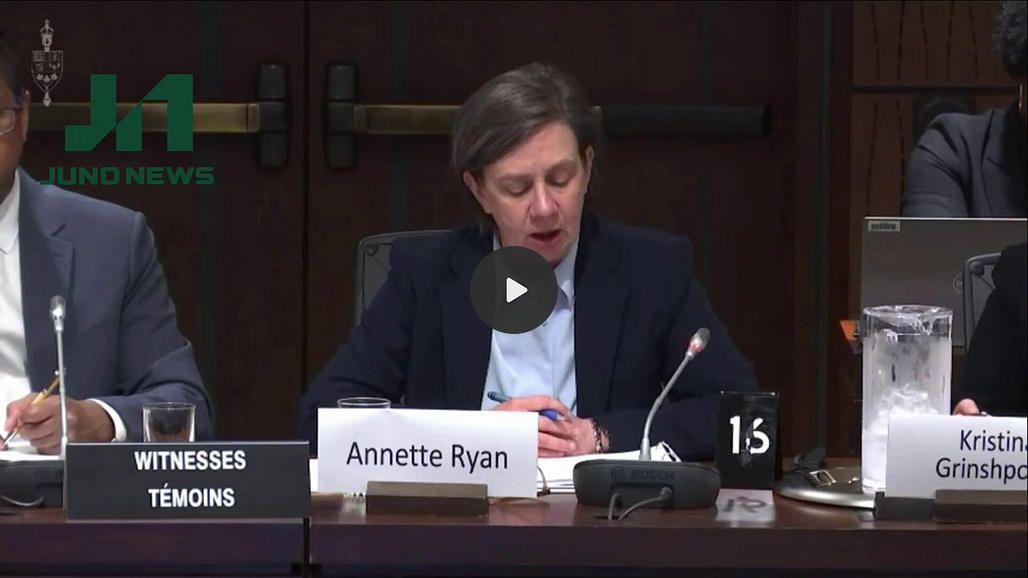
Current Parliamentary Budget Officer Annette Ryan told a House committee in March that “a rising debt-to-GDP ratio is of concern,” also stressing that the level of debt must be considered and saying she did not believe the PBO had concluded Ottawa’s fiscal track was unsustainable.
Her office projected in June that federal deficits would average roughly $64 billion annually over five years.
Separate PBO projections show debt service costs rising from 10.6 per cent of available federal revenues to 13.1 per cent by 2030-31, or from roughly $1,300 to nearly $1,900 per person.
I would believe almost anyone, up to and including Paul Bernardo and Clifford Olson, before I would believe anything Mendacious Mark Carnochio has to say about anything.
Carney's fudge-it budget is a Liberal fiction. So far his accomplishments have added up to Net Zero.