

Ottawa police lawyer moves to dismiss support for embattled detective Helen Grus
OPS lawyer Jessica Barrow argued the disciplinary tribunal should discount dozens of supportive letters, including one containing evidence health officials knew novel COVID vaccines were causing harm.
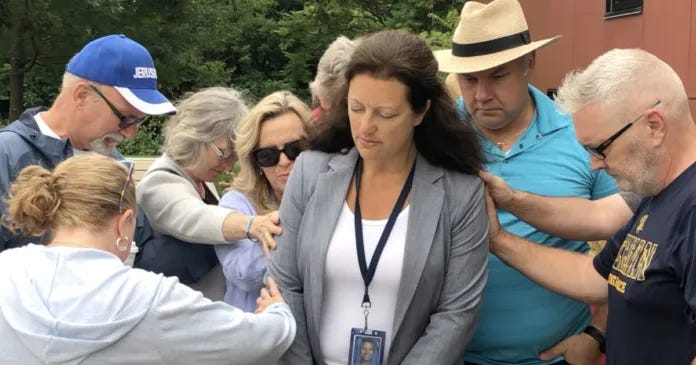
Author: Jason Unrau
As the Ottawa Police Service’s three-and-a-half-year prosecution of detective Helen Grus grinded through another penalty phase hearing day on Dec. 18, OPS lawyer Jessica Barrow argued the disciplinary tribunal should discount dozens of supportive affidavits and letters, including one containing evidence health officials knew novel COVID vaccines were causing harm but failed to inform the public.
“It’s not open to the parties to use (this) portion of the hearing, the sanction or penalty hearing, to attack or relitigate or undermine the findings that were already made,” she told the tribunal.
“This hearing…has never been about the efficacy or dangers of the vaccine (or) what the government did and did not know and did and did not communicate about the efficacy or dangers of the vaccine. It’s always been about the manner detective Grus went about her investigation.”
Grus was charged with discreditable conduct in July of 2022, related to actions she took probing a link between experimental COVID drugs and a cluster of infant deaths between May 2021 and January 2022. Grus maintains her inquiries were probative, one involved calling the father of a deceased child to ask about the COVID vaccine of the mother.
Renwick’s decision describes Grus as driven by “the beliefs and conclusions (she) formulated were based on self-researched, personal convictions unrelated to her investigative responsibilities with SACA…and was not tasked with any responsibility to review any of the investigations for any such linkages.”
Grus worked seven years in the child abuse and sex assault (SACA) unit, whose function included investigating deaths of children five-and-under. Prior to COVID, her reputation was stellar. Performance reviews testified to this. In 2019 she garnered enough evidence to put a serial child rapist behind bars and was feted by local media for it. Superiors encouraged her to take the sergeant’s exam and Grus was also asked to assist with an audit of hundreds of unsolved SACA cases. She was a rising star in the police force.
But as government COVID edicts would ruin businesses and turn neighbours against neighbours and family members against one another, so too was their deleterious effects in the workplace, including OPS and would forever change Grus’ personal and professional life.
In a written decision released last March of this year, tribunal officer Chris Renwick found Grus guilty for her inquiries and is now tasked with deciding punitive measures.
Ottawa Police have asked for a two-year demotion and pay cut while Grus’ lawyer Bath-Sheba van den Berg wants the tribunal to waive the penalty, bolstered with 23 affidavits and 30 reference letters backing Grus and her short-lived probe, some critical of OPS for its treatment of the 23-year veteran and the entire prosecution.
“The tribunal decision sets a precedent that frightens me as both a citizen and a former police officer,” van den Berg read aloud from one missive. “That an investigation can be halted or an officer punished, not because of misconduct, but because the answers might be politically inconvenient.”
Van den Berg continued to read to the tribunal other similar statements in support of Grus, some citing the “chilling effect” of these proceedings, many of which were provided by active and retired police officers some of whom formerly worked for OPS.
“Whether or not OPS is aware, detective Grus’ case has an international following,” wrote another Ontario police officer. “In 2023, I attended a conference in the United States (where) detective Grus was discussed by American law enforcement officers…(who) expressed bewilderment over the reality that a Canadian police agency had stopped an officer from investigating deaths of children and instead investigated the officer.”
Grus’ lawyer spoke to the vexing nature of tribunal proceedings in which her client was charged, tried and found guilty of discreditable conduct related to subject matter that neither Renwick nor OPS want to confront.
“That’s a bit of a conundrum, to state on one hand this hearing is not about the COVID-19 vaccinations, but it is all about the COVID-19 vaccinations,” said van den Berg, who would later challenge Renwick to recuse himself from the penalty phase “because we don’t have the confidence the tribunal can make an unbiased decision.”
In the fall of 2023, when Grus’ disciplinary hearings were in relative infancy, Renwick declared the tribunal would not “be a venue for opinions and theories linking the vaccine to child deaths.” In a written decision, Renwick denied Grus in-person testimony of medical experts who shared her concern and even halted Grus’ own testimony in her own defence when she tried to cite one manufacturer’s data about post-COVID vaccine miscarriages.
Even Health Canada acknowledges 96 miscarriages related to the experimental drugs and between December 2020 and December 2022, received more than one million serious adverse event reports from COVID vaccine makers, as per food and drug act regulations.
Responding to the defence’s cache of mitigating affidavits and letters, Barrow not only accused van den Berg of trying to relitigate the case but for repeatedly questioning “the integrity of the tribunal, (Renwick’s) integrity and mine”. Barrow then argued that Renwick should only consider affidavits and letters given by those who had “a close personal or professional relationship” with Grus.
Barrow took particular aim at the affidavit submitted by Donald Best, characterizing it as unverifiable second-hand information. Best is a retired Toronto police sergeant and undercover cop-turned-journalist whose reporting on Grus’ case and commentary on Renwick’s performance as tribunal officer, has been thorough albeit scathing.
“(Best’s affidavit) contains various references to conversations he says he’s had with unnamed members of the public or members of the policing community on their perceptions of this case,” she said.
“Which speaks to the dangers of admission of hearsay evidence where the source of that hearsay evidence is either unknown or not credible. We have been provided no evidence as to who any of these people are, what they did know or didn’t know about this case.”
Barrow also discounted the affidavit of Natasha Gonek, a former investigations officer with the College and Association of Registered Nurses of Alberta. According to Barrow, accompanying material contained in Gonek’s affidavit and obtained via access-to-information, fell outside the scope of the disposition, or penalty phase.
“(Gonek) notes in her affidavit that she does not think that detective Grus got a fair hearing and attaches 54 government documents about vaccines which I say are not relevant,” Barrow told the tribunal.
“(They) must be considered irrelevant based on your previous rulings in respect of the irrelevance of data relating to the vaccines.”
In a previous interview with True North, Gonek would not speak directly to her affidavit but said her access-to-information requests elicited government documentation showing public health officials were aware of serious COVID vaccine adverse events and acknowledged they had no safety data for “special interest groups not included in the clinical trials… immunocompromised people, pregnant women, breastfeeding children.”
OPS is totally corrupted at the top, as are most police services in Canada. Grus deserves a medal for her bravery to stand up to the corruption.
“This hearing…has never been about the efficacy or dangers of the vaccine (or) what the government did and did not know and did and did not communicate about the efficacy or dangers of the vaccine. It’s always been about the manner detective Grus went about her investigation.”
That is exactly what it has been about! What a moron.