
Author: Dotan Rousso
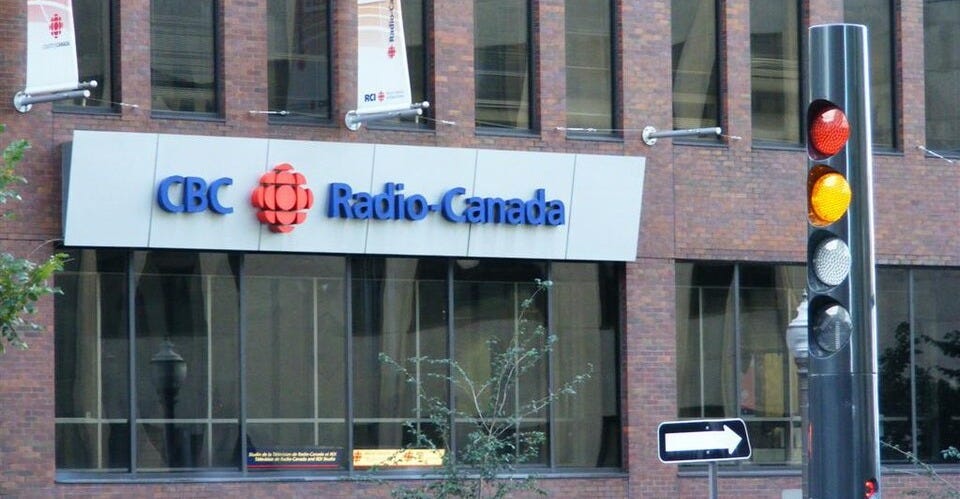
On Friday, August 28, CBC News made an announcement that should embarrass every senior editor at the public broadcaster: Basem Boshra, its Senior Director of Journalistic Standards and Public Trust, published an editor’s blog post stating that CBC journalists would now be permitted to describe the September 11 attacks as terrorism without attributing that description to another source.
The decision was presented as an effort to remove an “impediment to clarity and public understanding,” yet it is astonishing that, twenty-five years after al-Qaeda murdered nearly 3,000 people in the most infamous mass-casualty attack of the modern era, a major public broadcaster needed a special policy review before allowing its journalists to state the obvious.
The CBC’s previous guidance had instructed reporters not to describe 9/11 directly as a terrorist attack, but rather to refer to the hijackings and the resulting crashes, unless the word “terrorism” was attributed to someone else. This was not a minor matter of style, and it was not a harmless effort to avoid loaded language, because language is precisely how journalists tell the public what has happened and what it means. When a newsroom treats the deliberate mass murder of civilians as something that cannot be identified plainly without compromising its neutrality, it has confused moral evasion with professional integrity.
That same policy was applied, with devastating consequences, after Hamas’s massacre in Israel on October 7. CBC’s director of journalistic standards instructed journalists not to refer to “militants, soldiers or anyone else” as terrorists, while also directing them that, even when quoting governments or other sources using the term, they should add context to make clear that this was “opinion, not fact.” In other words, after Hamas terrorists invaded Israeli communities, murdered families in their homes, slaughtered young people at a music festival, abducted children and elderly people, and committed acts of sexual violence, CBC’s concern was not whether Canadians understood the nature of the atrocity, but whether the perpetrators might be called by the name that accurately describes them.
This is not journalism. It is a complete moral collapse.
The purpose of Hamas’s assault was not a conventional military objective, nor was it an attack on military targets accidentally accompanied by civilian casualties. Its purpose was to murder civilians, terrorize an entire society, take hostages, spread fear, and demonstrate that no Israeli home, family, or child was beyond its reach. The word terrorism exists for precisely such acts, and a broadcaster that insists this word is merely an opinion does not become objective; it simply abandons its duty to describe reality honestly.
CBC’s new 9/11 exception exposes the contradiction that its editors can no longer avoid. The broadcaster now acknowledges that there are attacks so clearly directed at civilians that describing them as terrorism is not an act of political advocacy, but an accurate statement of fact; October 7 was plainly one of those attacks. CBC did not lack the evidence, the context, or the vocabulary to say so. What it lacked was the courage to apply the same moral and journalistic standard when the victims were Jews and Israelis.


