
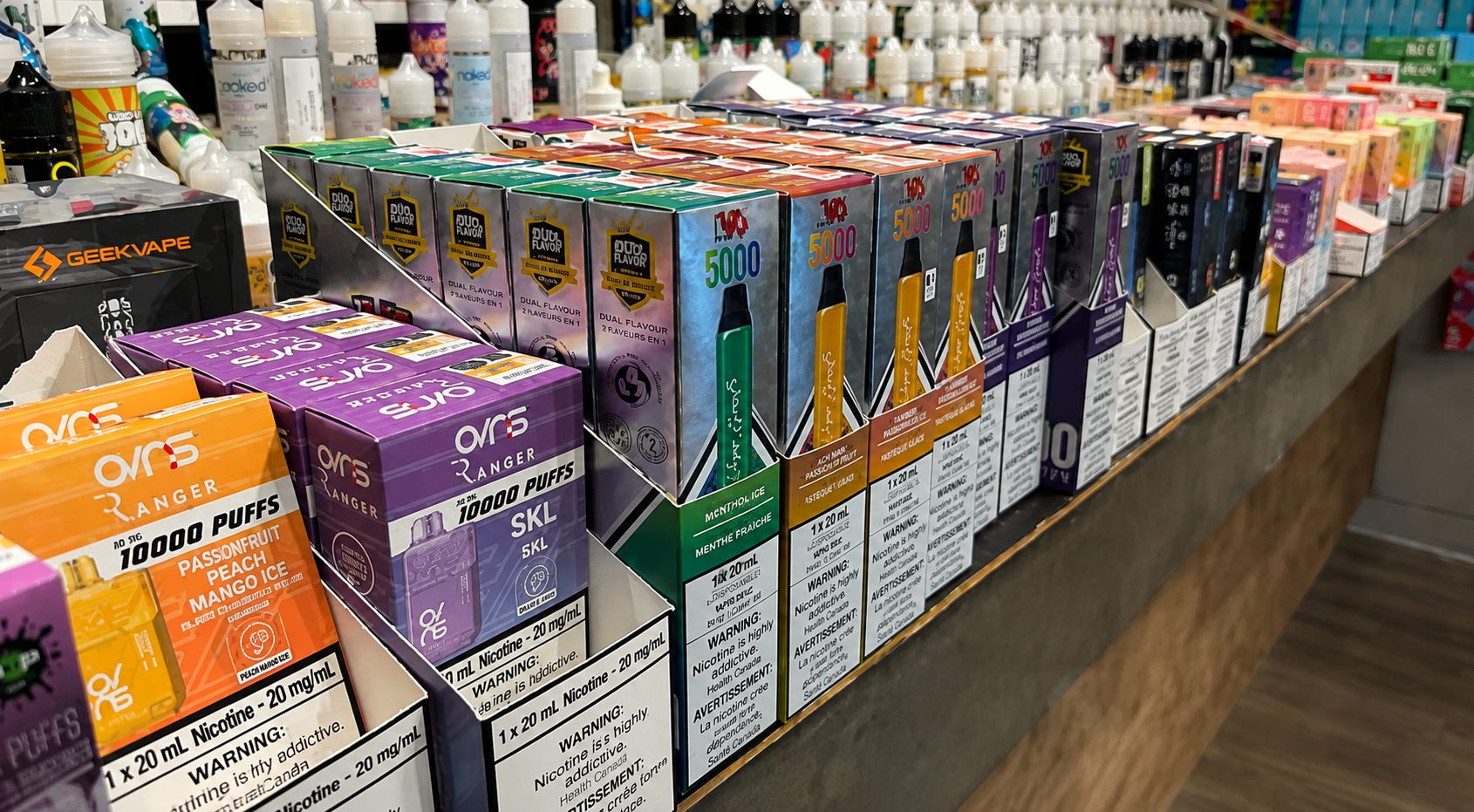
OP-ED: Why Ottawa should not ban flavoured vaping products
"Why would Ottawa base a new policy on 2019 figures when the 2024 results demonstrate that the current approach is working?"
Author: Sam Tam, President
The Canadian Vaping Association
Five years ago, the federal government drafted a proposal to ban flavoured vaping products across Canada. Five years later, after Health Canada consulted with all stakeholders, that draft remains on the shelf, and Canada’s tobacco-control lobby is furious that it is still there.
Their anger is not primarily about the evidence. It stems from the fact that the government examined the evidence, consulted the people and small businesses the policy would affect, and has decided not to proceed with the proposed flavour ban. This is not bureaucratic delay. It is the system functioning as intended, while also protecting an industry that employs tens of thousands of Canadians.
Here is what the tobacco-control lobby rarely acknowledges. According to the government’s own survey data from the 2024 Canadian Health Survey on Children and Youth, past-30-day vaping among Canadian youth aged 12 to 17 fell from 13.2% in 2019 to 5.8% in 2024, a decline of nearly 60%. This reduction occurred under the rules already in place: age verification at retail, restrictions on marketing to minors, and packaging requirements designed to make these products unappealing to youth.
This is neither a coincidence nor a minor development. Health Canada met its youth-vaping target a full year ahead of schedule. That is a genuine public health success. Rather than building on it, tobacco-control groups are urging Ottawa to reverse course and impose bans based on data from over five years ago.
A better question than the one the lobby repeatedly asks is this: Why would Ottawa base new policy on 2019 figures when the 2024 results demonstrate that the current approach is working? Rapidly declining youth vaping rates are an argument for maintaining and refining existing measures, not abandoning them.
No one defends youth vaping. Flavours, however, are not solely a youth issue, and treating them as such produces flawed policy. Roughly one in ten adult Canadians still smoke. For many of them, flavoured vaping products are among the most effective tools available to quit cigarettes. Smoking kills more than 46,000 Canadians every year.
Removing flavours from the legal, regulated market does not eliminate demand. It simply worsens outcomes. Adult vapers do not switch en masse to unflavoured products. Many return to cigarettes or purchase flavoured products from unregulated sources that lack age verification, quality controls, and oversight. That is not a public-health improvement; it transfers the legal market to illicit suppliers willing to meet demand.
This is not merely an industry position. A growing body of peer-reviewed research on adult smoking cessation shows that flavour variety is a key reason people who switch to vaping remain rather than relapse to cigarettes within days or months. Removing flavours undermines a practical pathway out of cigarette addiction.
The Canadian Vaping Association has consistently supported the measures that produced the youth decline now underway: strict age verification, effective marketing controls, and enforcement against retailers who sell to minors. Public policy should be measured by results, not by the assumption that every new restriction is an improvement. That’s where the case for a flavour ban falls short.
Five years ago, when youth vaping rates were rising, a flavour-ban proposal may have appeared reasonable to policymakers, but even then, the unintended consequences were substantial. Today, with youth vaping reduced by more than half over the same period, the responsible course is to identify what is working and strengthen it.
Before Parliament considers any new regulations, Canadians deserve an honest assessment of the evidence available today, and it shows youth vaping rates declining. The anti-vaping lobby is happy to cite 2024 data, but only the fragments that suit them; a single age group, a single region, carefully chosen to obscure the trend. What they won’t discuss is that youth vaping is down in every survey that has measured it.
The numbers show a regulatory approach that is succeeding. Ottawa should build on it rather than dismantle it. It should not undermine an industry that employs Canadians and offers adult smokers a less harmful alternative simply to claim a symbolic victory.
Canadians deserve the freedom to choose.


