
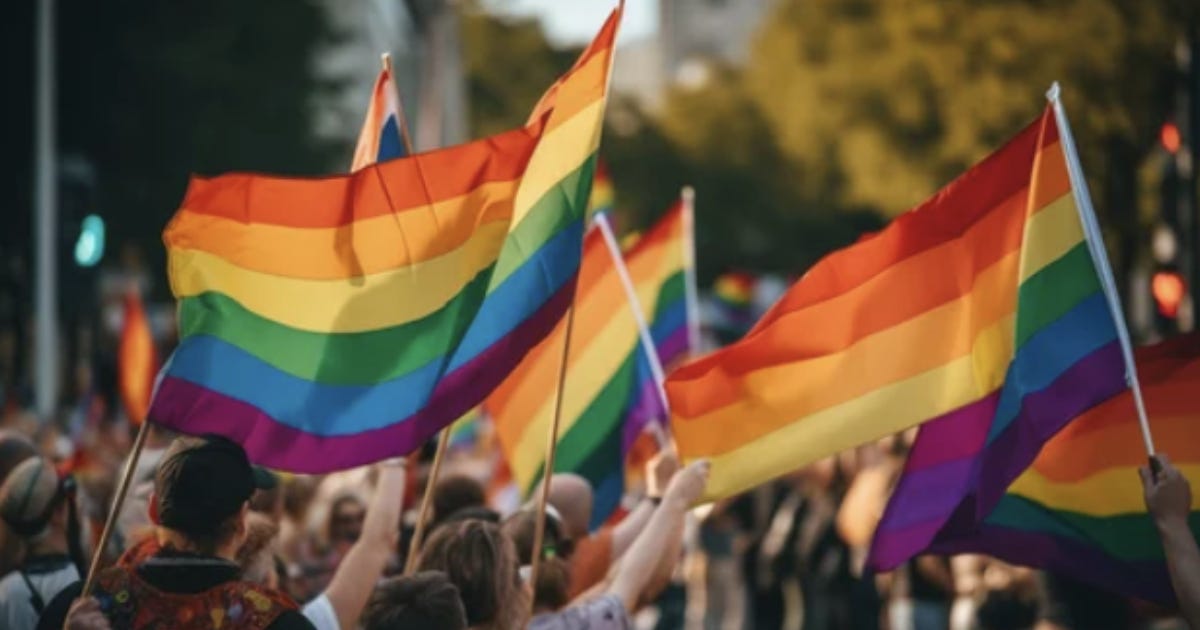
OP-ED: When “hate” becomes a form of imperialism
"For more than a decade, Western political discourse has been dominated by a single all-purpose accusation: hate."
Author: Collin May
For more than a decade, Western political discourse has been dominated by a single all-purpose accusation: hate. Those who question prevailing orthodoxies on identity, gender, nationhood or merit are not merely wrong; they are hateful. This reflexive charge has become one of the most powerful weapons in our public life.
The irony is stark. The same woke leaders, activists and bureaucrats who sermonize endlessly about inclusion and empathy devote extraordinary energy to uncovering and condemning hatred. But they often define it so broadly that patriotism, religious conviction, merit, scientific rigour and even equality itself – things that for centuries nearly everyone thought of as good – are swept into the net. In this environment, equality has been displaced by amorphous “equity”, objectivity by “lived experience”, and debate by denunciation.
We are told there is “no room for hate.” Yet increasingly there is no room for disagreement either.
Even the late Pope Francis – hardly a culture warrior of the right – warned in a 2022 address to diplomats that a “divisive” mindset had taken hold in public institutions, driven by a movement that rejects “the natural foundations of humanity” and amounts to a form of “ideological colonization”. The Roman Catholic pontiff explicitly linked this to “cancel culture”, a key tactic of a movement that “leaves no room for freedom of expression.”
That phrase “leaves no room” is revealing. Cancellation does not argue; it excludes. It does not persuade; it silences. It does so in the name of diversity while enforcing a rigid uniformity of thought.
This impulse has deep roots. For centuries Western philosophy wrestled with the tension between universal truths and particular goals and passions. The Greek philosophers sought to balance competing visions of the good within the city-state. Medieval Christianity distinguished between spiritual and temporal authority – recall Jesus’s famous dictum “Render unto Caesar the things that are Caesar’s, and unto God the things that are God’s.” This distinction, unknown in other religions, ultimately opened space for modern political rights and pluralism.
But even as these ideas were becoming embedded in the Western consciousness, modernity started to change this equilibrium. Beginning with Niccolò Machiavelli in 16th-century Florence, Italy, political thought shifted from contemplating what ought to be, to analyzing politics and power as they are. Conflict and domination moved to the centre of political theory. Taking their cue from Machiavelli, later thinkers from Marx to Nietzsche and their postmodern heirs recast history as a struggle between oppressor and oppressed.
This narrative hardened into dogma, bringing us today’s progressive politics. It reduces all history to a narrative of oppression/domination by the West; all dissent from this framework is evidence of moral failure. Perhaps worst of all, the primitive tribal idea of “identity” has been revived and repurposed to push aside the enlightened concept of individual equality.
Those who resist the new orthodoxy are labelled racist, transphobic or otherwise hateful. Hatred becomes not a moral category describing conduct, but an accusation deployed against disagreement.
The result is a paradox. While denouncing the old focus on “essentialism” and the past habits of imperialism, today’s radical progressivism practises both. It advances an uncompromising theory of history and morality that admits no rival accounts. It seeks to impose this vision across institutions – universities, corporations, professional bodies and governments – through codes of conduct, speech restrictions and public shaming. In short, today’s anti-colonial progressivism colonizes.
Nowhere is this clearer than in the growing obsession with “hate speech.” The concept has expanded far beyond incitement to violence. It increasingly encompasses viewpoints that were, until yesterday, ordinary features of democratic debate. The cumulative effect is to chill speech and narrow permissible opinion.
This ideological expansion is often accompanied by hostility toward the nation-state itself. Yet it was within the nation-state that liberal democracy developed, nurturing and balancing freedom, representation and the rule of law. Supranational institutions and global governance structures, by contrast, tend toward managerial rule insulated from democratic accountability. When paired with expansive “hate” doctrines, they risk transforming politics from persuasion into prosecution.
Canada has not been immune. Quite the opposite. From academics and professionals to school trustees and elected officials, individuals who question prevailing orthodoxies have faced investigation, sanction or social ostracism. One need not agree with every target to see the pattern: dissent is pathologized, disagreement becomes moral deviance.
None of this is to deny that real hatred exists. Violent bigotry and genuine malice remain evils. But when the term “hate” is inflated to encompass ordinary political disagreement, it loses moral clarity. Worse, it becomes a tool of coercion.
A healthy liberal democracy depends on something more demanding than compulsory affirmation of every identity claim. It depends on freedom of expression, on the ability to dispute prevailing theories, and on the humility to accept that no faction possesses a monopoly on virtue.
When “hate” becomes an ideology, deployed to silence rather than to protect, it corrodes the very pluralism it claims to defend. The defence of liberal democracy therefore requires not only vigilance against genuine hatred, but also resistance to the imperial temptation to label all dissent as such.
The original, full-length version of this article was recently published in C2C Journal.
Collin May is a lawyer, adjunct lecturer in community health sciences with the Cumming School of Medicine at the University of Calgary, and the author of a number of articles and reviews on the psychology, social theory and philosophy of cancel culture.


