

OP-ED: What the Islamabad collapse tells us about Iran's real intentions
Avideh Motmaen-Far writes, "The 21-hour marathon in Pakistan ended without a deal — and that tells us everything we need to know about the Islamic Republic of Iran."
By: Avideh Motmaen-Far
Avideh Motmaen-Far is the President of the Council of Iranian Canadians and writes on U.S. foreign policy and Middle East security. Analysis reflects events as of April 12, 2026.
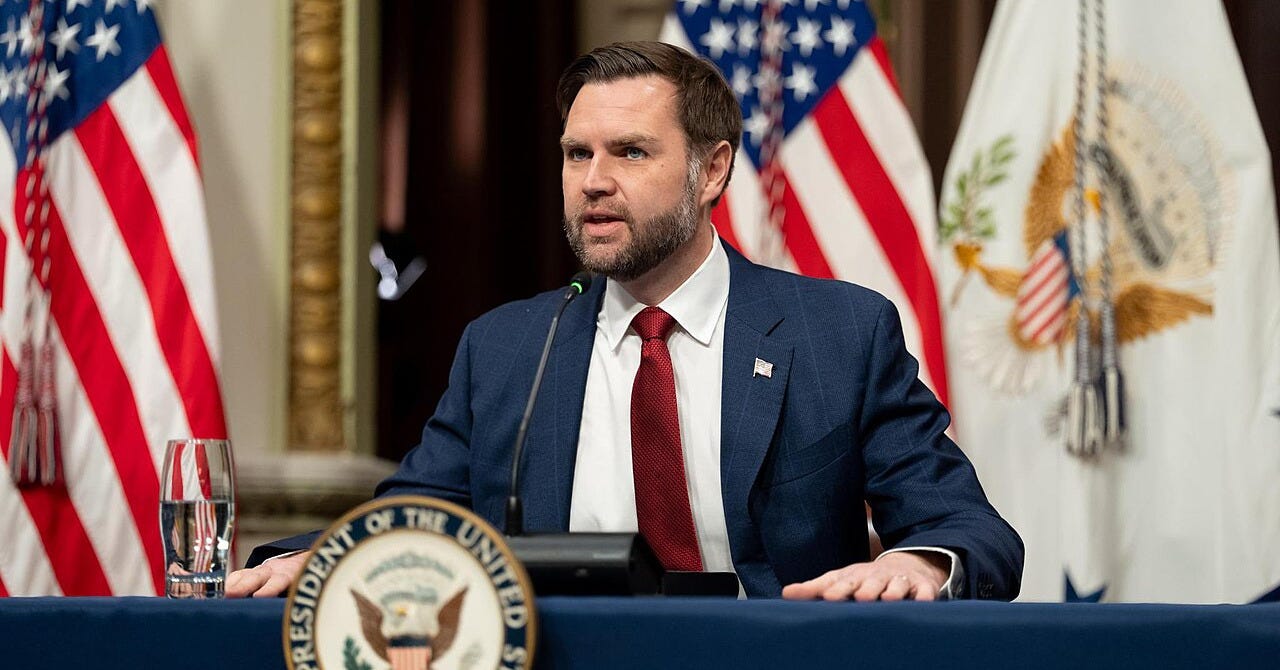
When Vice President JD Vance flew to Islamabad this week alongside Special Envoy Steve Witkoff and Jared Kushner, the Trump administration handed Tehran one of the most generous diplomatic off-ramps in modern American foreign policy history. Iran’s leadership rejected it. After 21 exhausting hours of negotiation, Vance departed without an agreement, and the fragile ceasefire that had paused six weeks of conflict now hangs by a thread. The failure wasn’t a setback for American diplomacy — it was a clarifying moment about the nature of the regime in Tehran and the futility of expecting it to act in good faith.
The collapse in Islamabad did not happen in a vacuum. It is the direct consequence of nearly five decades of American foreign policy that treated the Islamic Republic as a legitimate negotiating partner capable of being incentivized into responsible behaviour. From the 1979 hostage crisis — when Carter’s dithering emboldened the mullahs from day one — through Reagan’s arms-for-hostages scandal, the Khobar Towers bombing under Clinton, the IRGC killing American soldiers in Iraq under Bush, and the catastrophic nuclear appeasement of Obama and Biden, every administration contributed to this catastrophe.

Obama’s 2015 Joint Comprehensive Plan of Action (JCPOA) did not dismantle Iran’s nuclear ambitions; it subsidized them. The deal lifted sanctions, flooded the regime with cash, and built in sunset clauses that guaranteed Iran would eventually be free to develop a nuclear weapon legally. The billions that flowed into Tehran went not to schools or hospitals, but to Hezbollah’s missile arsenal, the Houthis’ drone programs, and the IRGC’s regional terror network. Biden compounded the error by seeking to revive the deal even as Iran’s proxies killed American soldiers and destabilized the region. President Trump’s first term broke from this pattern. Withdrawing from the JCPOA and reimposing maximum pressure sanctions were the right calls — economically strangling a regime that had never demonstrated genuine willingness to abandon its nuclear ambitions. But the window to act decisively narrowed, and when the 2026 conflict began on February 28 with coordinated U.S.-Israeli strikes that eliminated Supreme Leader Khamenei and the IRGC’s senior leadership, it represented — for better or worse — the moment the decades-long reckoning arrived.
The April 8 ceasefire, brokered by Pakistan, gave Iran two weeks of breathing room in exchange for reopening the Strait of Hormuz to safe passage. It was a pragmatic arrangement that served American economic interests while creating space for diplomacy. The Trump team took that space seriously, dispatching the Vice President himself to lead talks — an extraordinary show of seriousness. What did Iran bring to the table? A 10-point proposal that reads less like a peace overture than a wish list from a regime that still doesn’t grasp its strategic situation. Tehran demanded the complete cessation of Israeli operations in Lebanon, the release of $6 billion in frozen assets, sanctions relief, the right to charge tolls on Hormuz shipping, and — most revealingly — guarantees regarding its nuclear program that fell far short of any credible commitment to abandon weapons development.

Vice President Vance was direct in his assessment after the talks collapsed: “The question is, ‘Do we see a fundamental commitment of will for the Iranians not to develop a nuclear weapon — not just now, not just two years from now, but for the long term?’ We haven’t seen that yet.” That sentence deserves to be read slowly. The regime that has spent four decades chanting “Death to America” while secretly spinning centrifuges, that has provided Hezbollah with precision-guided missiles aimed at Israeli cities, that has armed Houthi rebels who attacked commercial shipping and murdered American servicemembers — that regime came to the table in Islamabad still refusing to make a credible, long-term commitment to non-nuclearization.
Three strategic angles explain why this failure runs deeper than one failed negotiating session. First, Iran’s nuclear ambitions are existential to the regime, not negotiable. The Islamic Republic’s leadership views the bomb as regime insurance — the ultimate guarantor that no American administration will ever again attempt what Trump and Netanyahu executed in February. Every round of negotiations since 2003 has confirmed this. Iran stalls, extracts concessions, and uses diplomacy as a delay tactic. The Islamabad talks fit this pattern perfectly. The 10-point proposal wasn’t a peace plan; it was a bid to run out the clock on the ceasefire while extracting sanctions relief. Second, European and multilateral frameworks have no role to play here. Britain, France, and Germany — the so-called E3 — have spent two decades trying to negotiate a “diplomatic solution” with Tehran. Their efforts produced nothing except time for Iran to advance its enrichment program. The UN Security Council, which Russia and China have used as a veto shield to protect Iranian interests, is equally irrelevant. Secretary Rubio’s strategic doctrine rightly centres American resolve and the U.S.-Israel alliance as the core of any realistic approach to the Iranian nuclear threat. Outsourcing this to Brussels or Geneva is not multilateralism — it is abdication. Third, the Houthi and Hezbollah variables are not peripheral. Even during the ceasefire, Hezbollah continued firing rockets into northern Israel. Houthi forces continued launching missiles coordinated with Tehran. Iran, reportedly, closed the Strait of Hormuz again in response to Israeli strikes in Lebanon — a clear violation of the ceasefire terms. These aren’t coincidences. They reflect the fact that the Islamic Republic views its proxy network not as a bargaining chip to trade away but as a strategic asset central to its regional power. Any deal that doesn’t address the IRGC’s proxy infrastructure isn’t a deal — it’s a time-out.
The implications for American allies are equally stark. Israel has reportedly signalled it is prepared for a “forever war” with Iran — a serious statement from a serious ally that has absorbed Iranian missile attacks, proxy assaults, and decades of existential threats. The United States cannot moralize to Israel about proportionality when Tehran’s stated goal remains the Jewish state’s destruction. For Gulf Arab states — Saudi Arabia, the UAE, Bahrain — the Islamabad failure is a sobering reminder that their security ultimately depends on American resolve, not on diplomatic frameworks Iran will exploit. The Abraham Accords framework, championed by the Trump administration, remains the most consequential regional architecture of the 21st century. Preserving and extending it requires a secure, deterred Iran — not a nuclear-threshold Iran emboldened by a bad deal. For Pakistan, which brokered the ceasefire and hosted the talks, the failure puts Islamabad in a difficult position. Pakistan cannot be seen as Tehran’s diplomatic lifeline while simultaneously seeking deeper ties with Washington.
President Trump has already signalled what follows a failed diplomatic track. Reports indicate he is considering a naval blockade of Iran — a kinetic escalation that would put severe additional pressure on the regime’s already-strained economy and signal that the post-ceasefire status quo is not acceptable. This is precisely the kind of bold, credible pressure that the Obama and Biden years conspicuously lacked. The right path forward is not to lower demands in pursuit of a deal. It is to maintain maximum economic and military pressure until Iran makes a verifiable, comprehensive commitment to abandon nuclear weapons development — not a two-year freeze, not a temporary enrichment cap with sunset clauses, but a durable, inspectable, enforceable end to the program. Anything short of that is a repeat of every failure that brought us to this moment.
The Islamic Republic has had forty-seven years of off-ramps. It has rejected each one because regime survival, in the mullahs’ calculus, depends on the bomb. The Trump administration is the first in decades to take that reality seriously and respond accordingly. The Islamabad collapse isn’t a failure of American diplomacy. It is proof that American resolve was the right strategy all along.

Please write or call your Member of Parliament and ask him or her if Carney’s New World Order includes or excludes Iran developing a nuclear bomb?
The stupidity of previous Administrations cannot be forgotten. Diplomacy will not work with Iran because they are determined to get a nuclear weapon so they can raise hell on America, Europe & destroy Israel. It seems previous Administrations were clueless & uninformed when dealing with these terrorists who are DETERMINED to "wash the world in blood" which is why they want the bomb.