
OP-ED: Understanding Canadian identity — the process of forging a nation
Daniel Tyrie writes, "Canada is not just a multicultural economic-zone. We are a nation forged through generations of struggle and sacrifice."
Daniel Tyrie is the Founder and Chairman of the Dominion Society, an advocacy group promoting Canadian nationalism and immigration reform. He previously served as the Executive Director of the People’s Party of Canada.
Opinions expressed in op-eds are those of the authors and do not necessarily reflect the views of Juno News, its editors, or staff. We publish diverse perspectives to foster open public debate on issues important to Canadians.
If you ask your average citizen to describe Canadian identity you can expect to receive a laundry list of vague liberal values.
Equality, rule of law, tolerance, multiculturalism.
But these liberal platitudes are true of countries across the Western world. If Canadian identity can be reduced to modern liberal values, what differentiates Canadian identity from that of America, England or Germany?
Obviously each of these countries each have distinct identities, defined by hundreds if not thousands of years of unique history. Their people have unique cultures, temperaments, and attitudes forged over generations.
Canada is no different.
Over the last 50 years political, media, and academic elites have worked in tandem to erase Canadian history, and redefine our identity.
But identity is not dictated from above. A nation is a living collective organism. Identity is developed through a sort of intergenerational evolution defined by shared experiences and geography to create a unique culture.
To properly understand Canadian identity, we must reflect upon where we came from. We must look deeper than the cultural revolution of Lester Pearson and Pierre Trudeau.
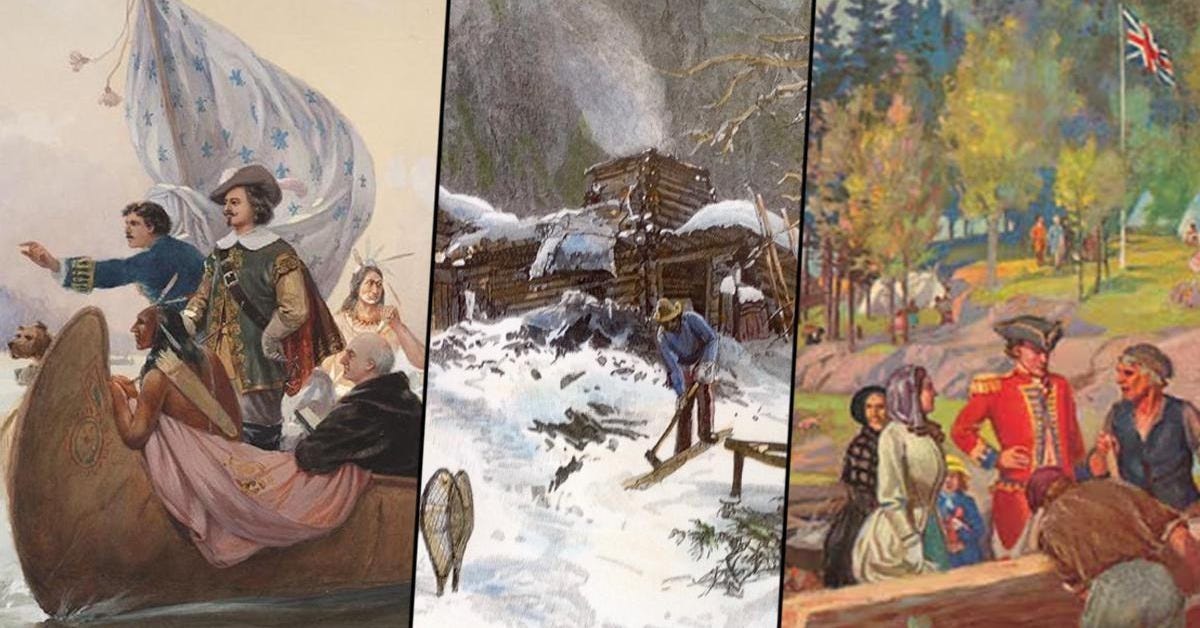
Canadian identity was forged through hundreds of years and three key nation-building moments: Settlement, Survival, and Sovereignty.
The first event was the process of settlement. Canada was not created by a random assortment of immigrants. Canada was first established by brave pioneers.
This founding stock did not just show up to Canada to sign up for benefits. They risked everything to cross the open ocean in rickety ships. They carved civilization out of a harsh wilderness. They had no guarantee of success or even survival. Just the vague hope of a better life for their descendants.
This process naturally selected for a certain set of characteristics that persist in our society today. Risk taking, ambitious, aspirational.
The people who prioritized stability and security stayed at home in the Old World. Those ready to gamble on something greater risked everything and set sail for the New World.
The second nation building moment was survival.
It was not an easy life to be a pioneer, least of all in Canada with our harsh climate and rough terrain. It was not for the weak or the faint of heart. Many of the earliest pioneers died through the harsh winters. Many of those who survived chose to return home or move further south.
Only the strongest and most determined endured. This selection forged a people that were rugged, gritty survivors. It also cultivated a culture of communitarianism — where individualism meant death and communities ensured survival — and noblesse oblige, where leaders suffered alongside their men.
The final nation building moment was sovereignty, the rejection of the American experiment in pursuit of a distinct society on the northern half of the continent.
People often claim that Canada was not a country born of war, but that is not entirely true. While we did not fight for our independence from our colonial parents, Canada was defined by important conflicts like the American Revolutionary War of the War of 1812 — both resistances against America.
Prior to the Revolutionary War, the territory now recognized as Canada was populated almost entirely by French pioneers. The founding stock of English Canada came from United Empire Loyalists, those that fought against American revolutionaries in defense of the Crown.
After their defeat, these men and their families were often ostracized from American society. Some returned to Britain, many migrated north to settle what would become Upper Canada and, eventually, Ontario.
This produced a final selection. Those who favoured revolution and liberalism remained in the south. Those with a more conservative and traditional outlook — those who valued hierarchy and order — moved north and helped establish Canada.
A rejection of “life, liberty, and pursuit of happiness” in favour of “peace, order, and good governance.”
Many people lazily call Canada a “left-leaning country”. But if you look beyond voting patterns, you’ll find that these deeper cultural tendencies persist: skepticism toward rapid change, a preference for order over unchecked liberty, and a greater acceptance of hierarchy.
What Canadians tend to reject is individualist, right-liberal ideology — more American in character — but that is a discussion for another time.
This is who we are: bold, adventurous risk-takers; tough, resilient survivors; community-oriented and orderly people. These are more than just values anyone can adopt. They are characteristics forged into our being, passed down through generations.
Modern Canada is suffering from an identity crisis. We define ourselves largely as “not American,” because we have forgotten our own history — or worse, been taught to view it as shameful.
Many of the problems facing modern Canada stem from this culture of shame: demographic transformation, the removal of historical symbols, the renaming of streets, and even the visible decline of our communities — littered with garbage, needles, and crackpipes.
We must restore self respect.
A new generation of Canadians is emerging — one that refuses to apologize for our history. We are proud of our ancestors, and we will defend their legacy.
We must know where we came from if we are to understand where we are going.
Long Live Canada.


