OP-ED: The water that comes out of the tap
"U.S. Students for Life president Kristan Hawkins gave the findings a provocative description: 'some of us are drinking other people’s abortions.'"
Author: Richard Dur
Richard Dur is the volunteer Executive Director of Prolife Alberta and an award-winning political consultant with experience on campaigns across Canada.
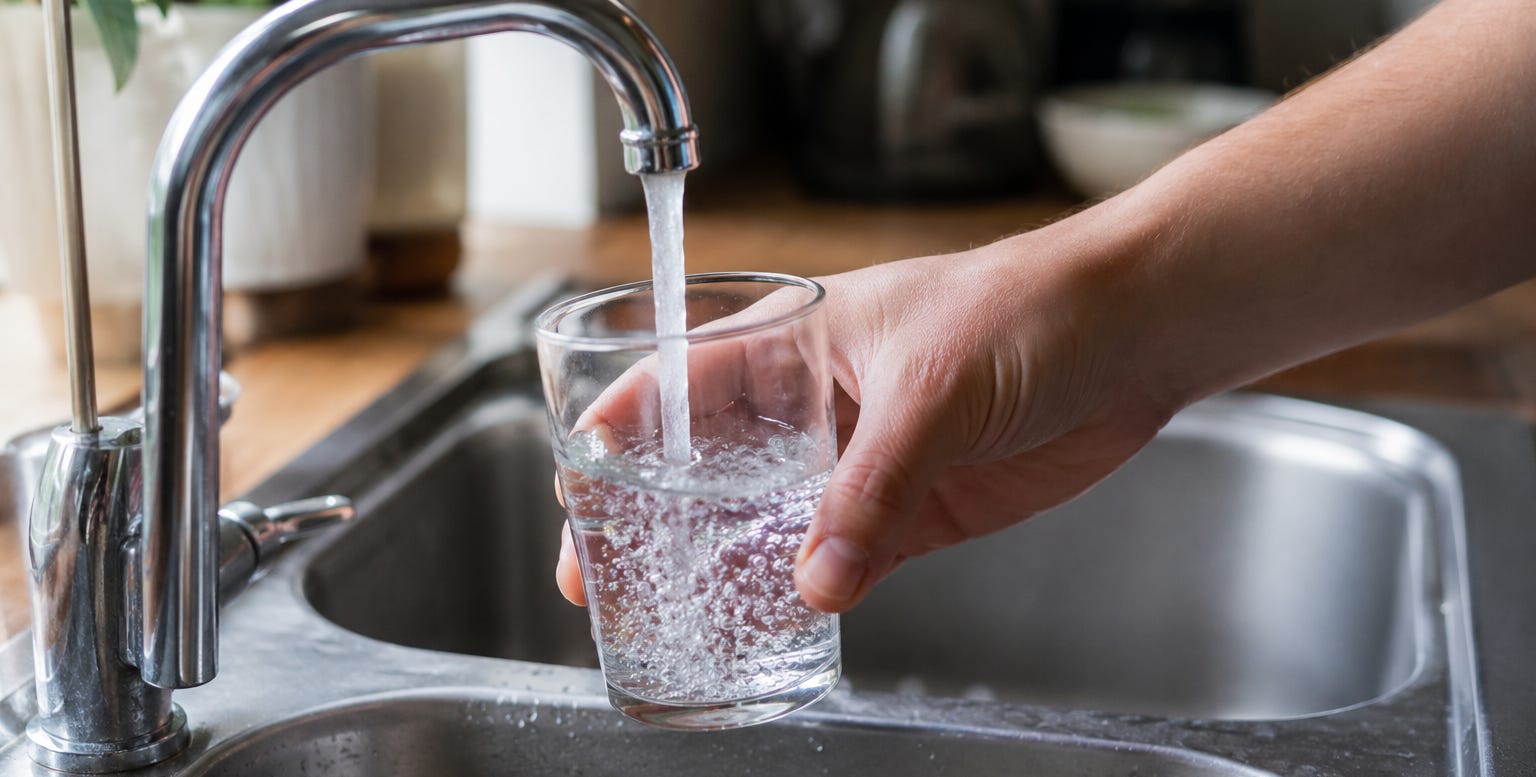
She turned the handle as she held the glass beneath the kitchen tap. Water struck the bottom. There was no discolouration, no smell. Just water, clear and cold, climbing toward the rim.
But some things give no warning at all. She drank.
Across the city, thousands of other people did the same. They filled coffeemakers. Swallowed vitamins. Washed vegetables. Filled the dog’s bowl. Children stood on stools and held plastic cups beneath bathroom faucets before bed.
Nobody thought about where the water had been. Why would they? Clean water is one of those quiet assumptions of ordinary life: turn the handle, trust what comes out.
Miles away, another woman – a mother, really, though she did not think of herself that way – swallowed a pill.
It was small enough to disappear beneath her tongue. Later, another pill followed.
The instructions told her what to expect in the hours ahead. They did not tell her to think about what would happen afterward – about what her body would excrete, where it would go, or whether traces of what she had taken might travel beyond her home.
Why would they?
She had been told what the pills would do to her pregnancy. That was where the instructions ended, so she didn’t think about what came next…
Chemical abortions have brought abortion into the home. The pills are taken there. The child in the womb is expelled there. The toilet is flushed. But that is not where the story ends. Whatever abortion-drug-related compounds leave the woman’s body enter the wastewater system and begin a journey almost no one taking the pills – or prescribing them – has been asked to consider.
The abortion may occur in private. Its aftermath does not necessarily remain there.
Researchers have begun asking what might ultimately be making its way into the water from abortion pills.
In a recently published, peer-reviewed study, researchers collected water samples in three American cities: upstream water, downstream water, and household tap water. They were looking for anti-progesterone activity – evidence of substances capable of interfering with progesterone. Progesterone is essential to fertility and the continuation of a pregnancy; the first chemical abortion pill, mifepristone, works by blocking its effects. The second abortion pill, misoprostol, is then used to cause powerful uterine contractions that expel the dead or dying fetus from the woman’s uterus. For an abortion taking place at home, that expulsion often occurs into an ordinary household toilet.
Researchers detected anti-progesterone activity above its controls in most of the groups tested. The assay expressed that activity in mifepristone equivalents, with the highest individual measurement reaching the equivalent of 0.041 micrograms per litre.
Forty-one parts per trillion. A number so small it sounds comforting.
But hormones operate at extraordinarily small concentrations. The National Institute of Environmental Health Sciences notes that hormones act in extremely small amounts and that endocrine-disrupting compounds – substances capable of interfering with the body’s hormonal signals – can affect processes involving reproduction and development. The smallness of a number, in other words, is not by itself an answer to the question of significance.
And then there is another question: What happens when exposure is not a single prescribed dose, but a trace environmental exposure repeated over time – day after day, glass after glass?
We don’t know.
If something capable of interfering with hormone signalling is appearing in drinking water, surely the question should be answered before anyone is told there is nothing to worry about. At the concentrations reported in this study, there is no reassuring answer yet.
U.S. Students for Life president Kristan Hawkins gave the findings a provocative description: “some of us are drinking other people’s abortions.”
It is an ugly phrase. It is supposed to be.
But strip away the provocation and the questions underneath remain: What, exactly, are we allowing into the water, and what does repeated exposure mean for people who never chose to be exposed to it?
Back in the kitchen, the glass sat where she had left it. Clear. Cold. Ordinary.
The woman at the kitchen sink didn’t know any of this.
They had been trying for a baby. Eleven months now.
She knew the calendar better than she knew some of her friends. She knew temperatures, dates, test strips and the peculiar monthly mathematics of hope.
She knew that little pause before looking at a pregnancy test. She knew disappointment. Perhaps next month would bring the two lines they had been waiting for.
What she didn’t know was why they hadn’t appeared yet; what she didn’t know was what had come out of the tap.


