
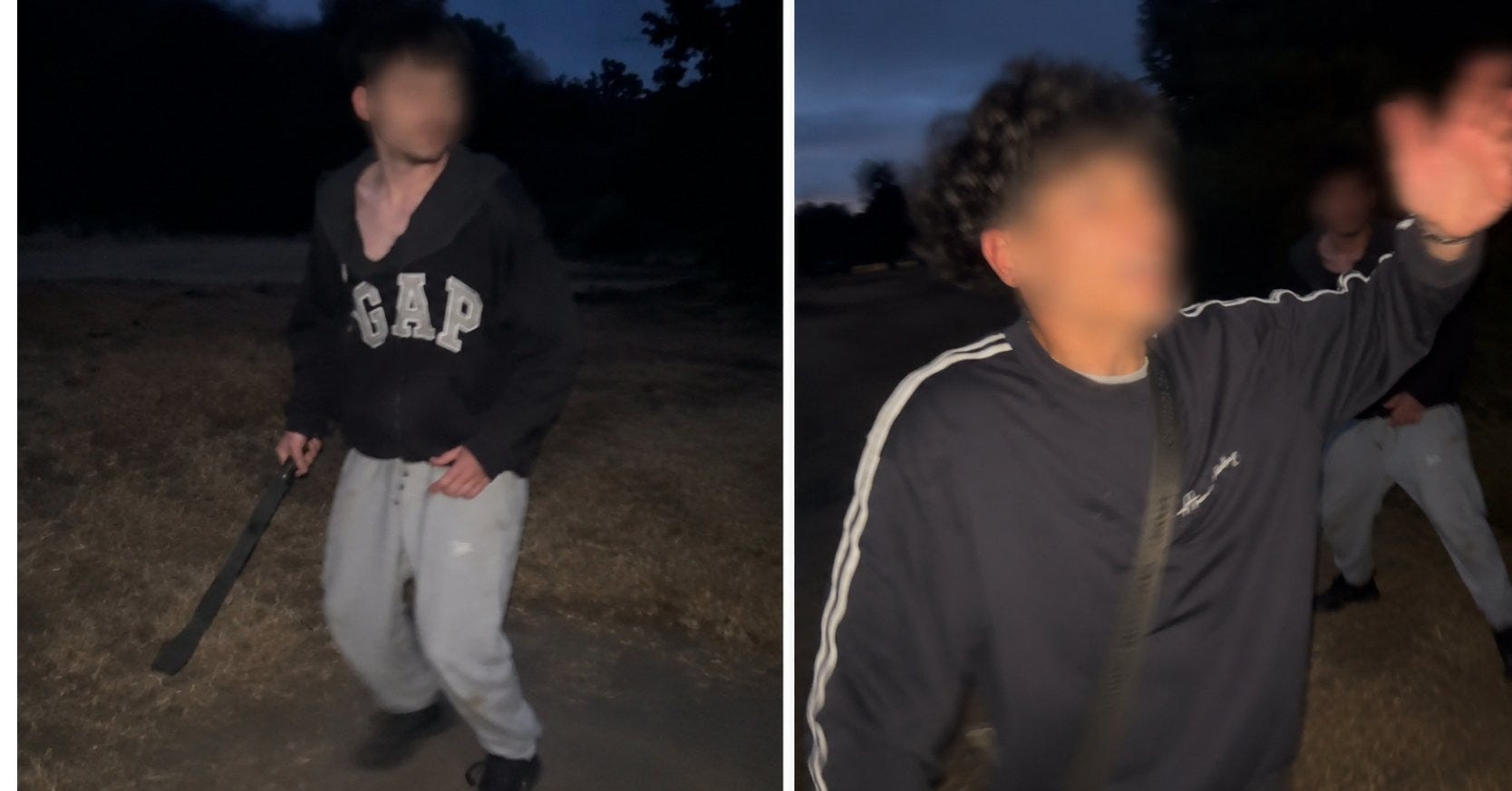
OP-ED: The Victoria Machete Attack and the Cost of Official Silence
"Police have charged 20-year-old Hussein Saadedeen with aggravated assault and two counts of assault with a weapon, while a second accused, a youth, faces similar charges."
By: Dotan Rousso
Dotan Rousso is an academic and legal scholar specializing in criminal law, privacy, and the intersection of technology and legal ethics.
The violent attack near Victoria’s Beacon Hill Park has left Canadians with more questions than answers. Police have charged 20-year-old Hussein Saadedeen with aggravated assault and two counts of assault with a weapon, while a second accused, a youth, faces similar charges. Three people were injured, and the investigation remains ongoing. At this stage, police have not publicly identified a motive.
That is understandable. Investigators should follow the evidence wherever it leads, not rush to conclusions because the public demands immediate answers. But while police investigate, something else happens just as quickly: millions of Canadians begin conducting an investigation of their own.
Within minutes, social media fills with theories. Was this a random act of violence? A gang-related incident? A hate crime? An ideological attack? Every publicly known detail is examined, debated, and often interpreted as evidence supporting one narrative or another. By the time investigators establish the facts, many people have already reached conclusions.
This reality presents a challenge that modern policing has not fully adapted to. Police communication is still largely designed for an era in which official statements were the primary source of information. Today, they compete with thousands of online commentators, anonymous accounts, influencers, and partisan media outlets. Silence no longer leaves an empty space. It leaves a space that someone else will immediately fill.
None of this suggests that police should speculate or release evidence before it has been verified. Canadian investigators have legal and ethical obligations to protect the integrity of their investigations and the fairness of future court proceedings. Those responsibilities must remain paramount.
But protecting an investigation and communicating effectively are not mutually exclusive. There is a significant difference between withholding evidence and explaining uncertainty. When investigators know that key questions remain unanswered, they should say so plainly. When they cannot disclose certain information, they should explain why. When they are actively investigating multiple possible motives, they should consider saying that instead of allowing the public to assume that no work is being done.
Most importantly, police should recognize that some cases are more likely than others to generate intense public speculation. The objective should not be to shape public opinion but to reduce the spread of misinformation by providing as much verified context as responsibly possible. Communication should become a tool for preserving confidence in the investigative process, not merely a means of announcing charges.
Consistency matters just as much. Canadians are far more likely to trust law enforcement when they believe the same communication principles apply regardless of the identities of the people involved or the public attention surrounding a case. Whether a crime ultimately proves to be ideologically motivated, entirely personal, or something else altogether, the standard for communicating with the public should remain the same.
Good policing is about more than solving crimes. It is also about maintaining public confidence while those crimes are being solved. In the digital age, that requires a simple but important shift in thinking: communication is no longer separate from the investigation. It is part of the investigation itself.


I have no quibble whatever with the content of this article. Police have a difficult job to do and are continually under public scrutiny. What I, and I daresay many other Canadians, have a problem with, is the documented, rampant and social justice performance of our judicial system. The left leaning, activist courts abetted by and to a large extent seemingly instructed by the federal government have made a mockery of effective policing and actual justice in this country. Note that I said justice. This does not include the federal lawfare against Canadian citizens, which has been well documented and is apparent to almost all citizens, who are paying attention. Those of us on the conservative side are often aghast at the petty, mean, punitive actions of the federal government. Many on the other side seem to be quite happy, as the lawfare can be used to justify their left leaning beliefs. But we all know, it is happening. How do police view the results of their hard work, trying to enforce long time existing laws, when lieberal judges say in effect, I don't care about the law, I'm a judge and I can just impose new rulings to change the laws to what I (the lieberal government) want? As the saying goes, "---- runs downhill." What the federal judicial cabal sets in stone affects provincial and municipal courts to some degree. I would like to hear Dr Bruce Pardy's take on this.
I would suggest that this is a simple case of allowing thrid world crimimal prone miscreants into our country without properly vetting such foreign applicants in the first place...Once arrived these people have a nagging and constant anger and likely ideological hatred towards what is left of the Canadian "culture", namely local social norms and then they simply strike out in contempt, anger and hatred....Its not really that complicated but the authorities, police and government always try to bend like pretzels to accomodate and defend these low lifes......All of these attackers should immediately be returned to the third world shit hole of which they were spawned......This Canadian thrid world shit hole already has enough violent criminals and repeat offenders of its own to deal with......