

Author: Brock Schnurr
In 1917, as the First World War raged, British soldier Wilfred Owen drafted a poem that would be published posthumously. Entitled Dulce et Decorum Est, it condemned the ancient Roman poet Horace’s celebrated line, “It is sweet and fitting to die for one’s country.”
For Horace, loyalty to the homeland – even unto death – had been sacred. For Owen, the old phrase was a cruel lie.
The line became a kind of Rorschach test. To some, the horrors of war call for reflection but do not change the eternal virtues we need to flourish – patriotism among them. To others, patriotism is an irrational, outdated and destructive devotion.
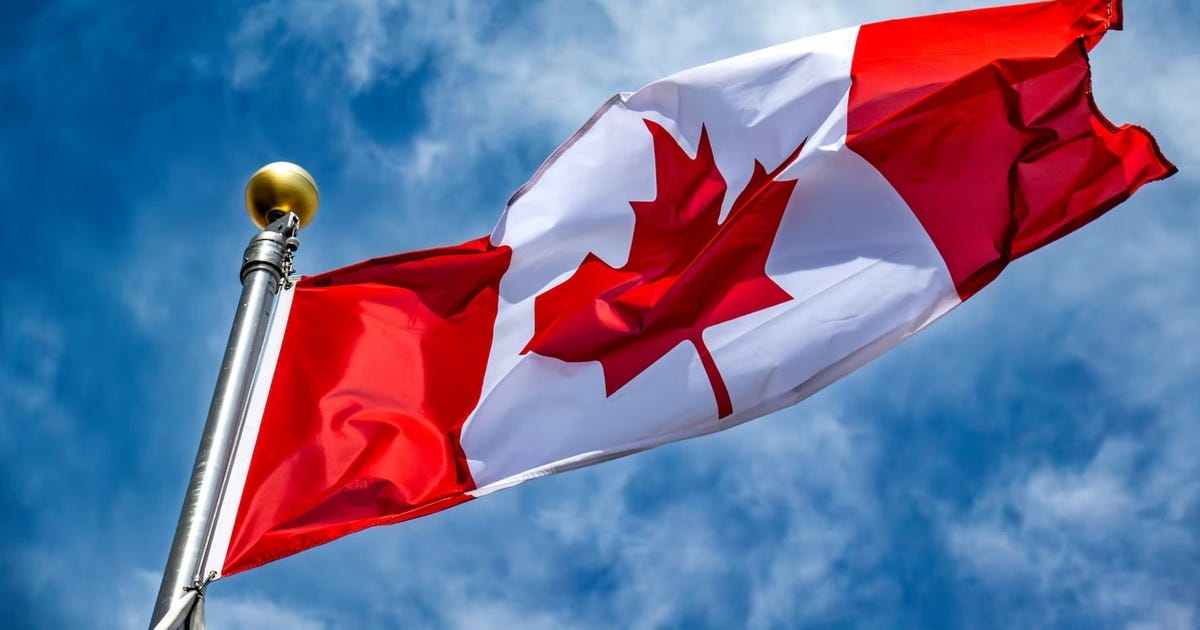
Canadians recently marked another Remembrance Day, recalling and honouring the sacrifices of previous generations in safeguarding our nation. It should also invite us to reflect on our own relationship with the nation millions before us believed was worth defending unto death. Are most of us still patriots?
Although U.S. President Donald Trump’s talk of annexation and our still-unresolved trade war prompted millions to display their apparent patriotism, the “Elbows Up” wave may mask a deeper – and opposite – trend. Not so long ago, this country was governed by a popular prime minister who proclaimed ours a “post-national state”, i.e., not a real country at all. Our elites have also grown comfortable celebrating “global citizenship” while treating patriotism with suspicion. And the list of academics, activists and left-leaning politicians questioning our country’s very legitimacy is almost endless.

There is ample reason for concern. Patriotism is neither an antiquated value nor an irrational bias towards one’s own. It is a rational reflection of and response to human nature; done right, it enables harnessing an otherwise destructive impulse and shaping it into something noble.
Human beings are tribal creatures. Tribalism is the innate tendency to favour one’s social group. It is not something we learn, but part of our evolutionary inheritance (or, for those of a religious inclination, of our “fallen” nature). Socialization may affect its degree and expression, but denying tribalism amounts to denying we are social creatures.
This tendency shapes not only our loyalties but how we perceive and judge the world.
Harm to our own child matters more to us than harm done to someone else’s. We give greater weight to the good done to our own group and the harm inflicted upon it, and ever less to ever-more distant groups.
Humanitarians and globalists may bemoan this reality, but it refuses to disappear. We cannot simply wish it away through education or activism.
The question, then, is not whether we can eliminate tribalism, but how we engage with it. We can condemn it, ignore it – or find a productive way to harness it.
Patriotism offers just this possibility. Much as personal moderation controls and elevates our individual appetites, patriotism restrains, channels and ennobles our tribal impulses. It asks us to sacrifice not merely for the enrichment of our tribe – often at the expense of others – but for the good and flourishing of our homeland.
Not all social identities are good or sturdy enough to harness tribalism. Cosmopolitanism or global humanitarianism are possible alternatives, but they remain weak identities, liable to be abandoned when a more defined one pulls in another direction.
Time and again, people have preferred their own culture, language and motherland to the abstractions of a global community.
Patriotism, by contrast, can unite people who disagree profoundly about almost everything else.
Consider Canada during the Second World War. A nation of barely 12 million people created and sustained two entire army corps overseas and became a first-ranked participant in the June 6, 1944 D-Day landings. Some 340 young Canadians gave their lives storming Juno Beach; more than 700 others were wounded or taken prisoner that day.
This was no small achievement, nor the product of sudden national consensus. Great Britain, France and Canada were politically divided societies. Yet patriotism provided a common purpose, enabling ordinary people to endure extraordinary sacrifice.
Yet despite finding its most powerful expression during wartime, patriotism itself is not a dark tunnel to war, but a path from tribalism to a nation at peace. Extending far beyond defending the homeland, it is expressed in uncounted quieter ways: supporting compatriots, preserving a cultural inheritance, accepting responsibilities towards generations past and future – any act or gesture made for the good of the country or one’s fellow citizens.
None of this requires blind obedience. Patriotism, like love for a person, is not loyalty to their whims, but devotion to their good.
A patriot must recognize that popular will and government authority can go astray. The very idea of a loyal opposition, essential to a constitutional polity, makes little sense unless citizens can dissent in pursuit of a better path.
A patriot is committed to the well-being and flourishing of the homeland. This does not require perfect harmony or mindless consensus. People can disagree, calmly or vehemently, about what is good for their community, just as loving parents disagree about what is best for their children.
As another Remembrance Day fades into the rear-view mirror and we turn our full attention back to current events, we should remember that patriotism is not xenophobia, bigotry or prejudice. It is a compelling instrument that transforms shared identity into responsibility, dedication, self-reflection – and sacrifice when needed.
The original long-form essay upon which this column was based, by Renaud-Philippe Garner, was recently published in C2C Journal.
Brock Schnurr is an Owen Sound, Ontario-born author, essayist and educator currently based in Singapore, and a regular contributor to C2C Journal.