
Op-Ed: Michigan Is a Warning. Canada Should Pay Attention
“Michigan's primary should therefore not be viewed simply as another American election. It should be understood as a warning.”
Author: Dr. Dotan Rousso
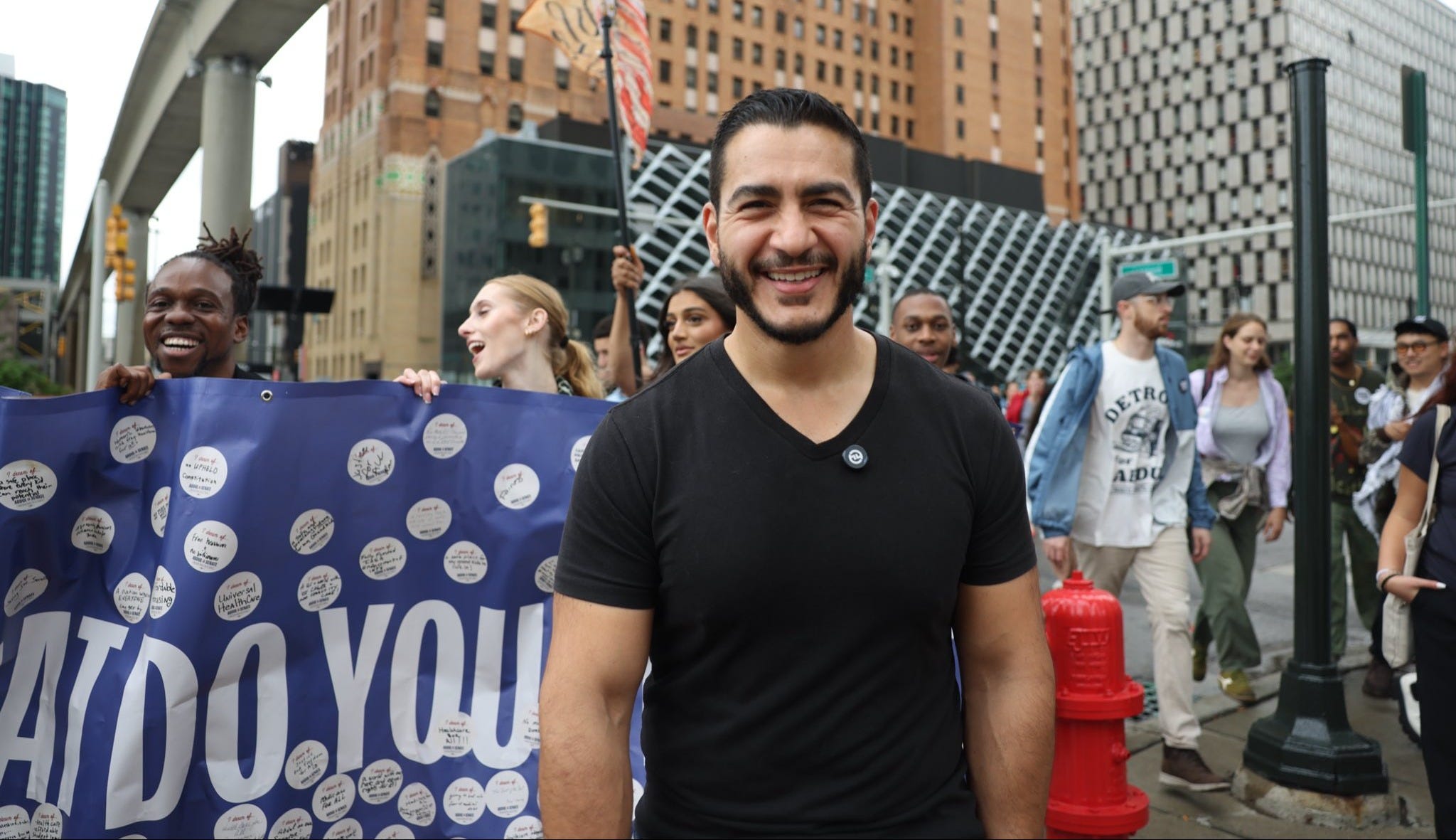
Abdul El-Sayed’s victory in Michigan’s Democratic Senate primary on August 4, confirmed the following day, is about far more than one Senate nomination. Coming less than a year after Zohran Mamdani was elected mayor of New York City, it points to a profound ideological transformation within an important segment of the Democratic Party, particularly among younger progressive voters.
The obvious point should be made immediately. The issue is not religion. America has always benefited from public servants of every faith, including Muslims. Abdul El-Sayed should be judged neither more nor less favorably because he is Muslim. The concern is entirely different. It is the political worldview that both El-Sayed and Mamdani represent and the growing electoral support it is receiving.
Israel is only one expression of that worldview. El-Sayed has repeatedly accused Israel of committing “genocide” and practicing “apartheid,” described it as a “rogue state,” and has called for ending American military assistance to Israel. Mamdani has long supported the Boycott, Divestment and Sanctions movement, has described Israeli policies toward Palestinians as apartheid, and has built much of his political profile around a strongly anti-Israel platform. Whether one agrees with those positions or not, they reflect a broader ideological framework that increasingly views Western power primarily through the lenses of colonialism, oppression and historical injustice.
That framework extends well beyond the Middle East. It is characterized by deep skepticism toward American global leadership, traditional national identity, market-oriented economics and many institutions historically associated with the Western liberal order.
This development raises a broader question. Why are these ideas proving so attractive to many younger voters?
One explanation is a growing crisis of confidence in Western civilization itself. Across many educational and cultural institutions, increasing emphasis has been placed on the West’s historical failures, including colonialism, racism and inequality. Those subjects deserve serious study. Yet too often they are presented without equal attention to the remarkable achievements of Western liberal democracy: constitutional government, individual liberty, freedom of expression, scientific inquiry, equality before the law and the unprecedented expansion of human rights.
The result can be a profoundly distorted historical perspective. Liberal democracies are increasingly portrayed primarily as systems of oppression, while authoritarian movements are sometimes evaluated through a far more forgiving moral standard. Students who passionately defend women’s rights sometimes remain largely silent about regimes that systematically deny women equal rights. Activists who champion LGBTQ equality may minimize organizations whose own ideology rejects the most basic rights of homosexuals. Defenders of free expression increasingly support restrictions on speech when confronted with opinions they consider offensive. These contradictions deserve serious public discussion.
Social media has accelerated this trend. Complex historical conflicts are reduced to simplistic narratives of permanent oppressors and permanent victims. Nuance disappears. Moral certainty replaces intellectual curiosity. Algorithms reward outrage far more effectively than careful historical analysis. Universities also deserve honest scrutiny. Intellectual traditions centered on identity, power and oppression have become increasingly influential in many disciplines.
The victories of Abdul El-Sayed and Zohran Mamdani should therefore be understood not merely as local political events but as indicators of a broader ideological realignment.
Canada should resist the temptation to dismiss these developments as uniquely American. Many of the same intellectual and cultural trends have been shaping Canadian universities, public institutions and political debates for years.
Michigan’s primary should therefore not be viewed simply as another American election. It should be understood as a warning. Democracies cannot survive on constitutional structures alone. They also depend on citizens who retain confidence that liberal democracy, despite its many imperfections, remains worth defending.


