

OP-ED: Kamloops Indian Band Chief misappropriates the Holocaust
Hymie Rubenstein writes, "Drawing on the Holocaust to bolster an argument with no supporting evidence, as Chief Casimir did, trivializes the murder of millions of Jews and other people."
By: Hymie Rubenstein
Hymie Rubenstein, editor of REAL Indigenous Report and REAL Isreal & Palestine Report, is a retired professor of anthropology at the University of Manitoba and a senior fellow at the Frontier Centre for Public Policy.
Indigenous cultural appropriation is the unauthorized or disrespectful adoption of indigenous social, cultural, or physical features, often stripped of their meaning or replaced by distorted or harmful stereotypes, both harmful practices exacerbated by the financial profit gained from the misappropriation.
The opposite practice — cultural appropriation, whether patently disrespectful or not — by Canada’s indigenous people, is rarely examined even though it is far more common. The voluntary adoption of advanced Western beliefs, behaviour, material goods, technology, and other items by Canada’s aboriginals over the past 500 years is generally viewed the normal outcome of close interaction between peoples representing very different developmental levels.

Today, little appreciation for this largely beneficial assimilation is ever publicly acknowledged.
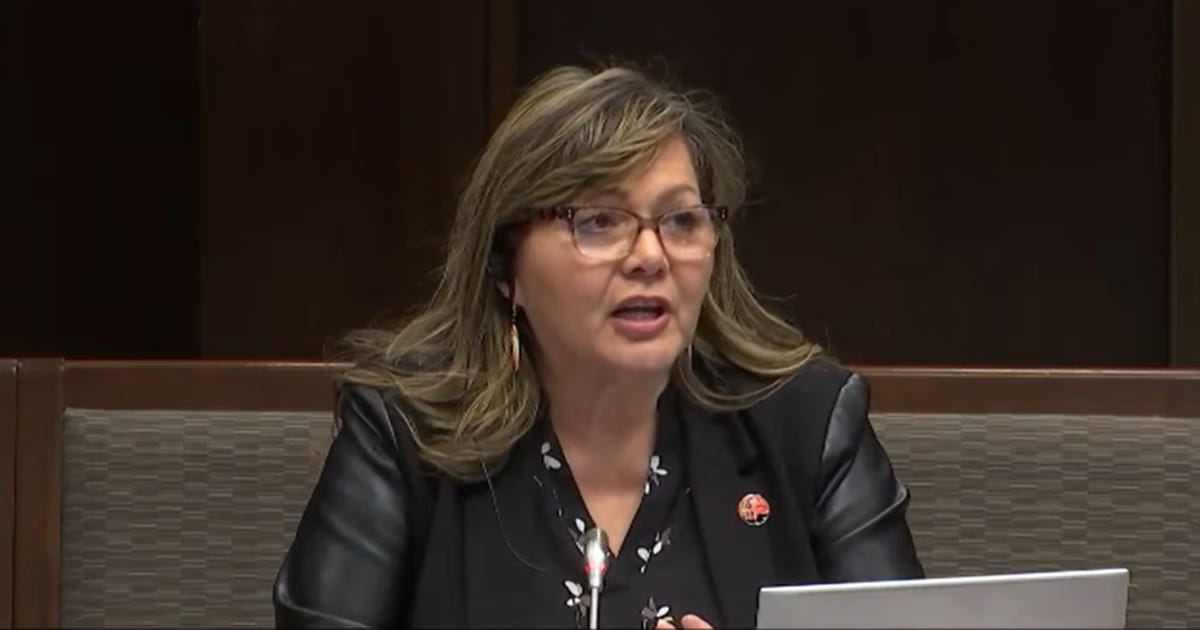
As for the less common but clearly hurtful process of cultural misappropriation by indigenous activists, there is no better example than the contents of the March 25 update to members of the Senate Standing Committee on Indigenous Issues by Rosanne Casimir, Chief of the Tk’emlups te Secwepemc First Nation (Kamloops Indian Band).
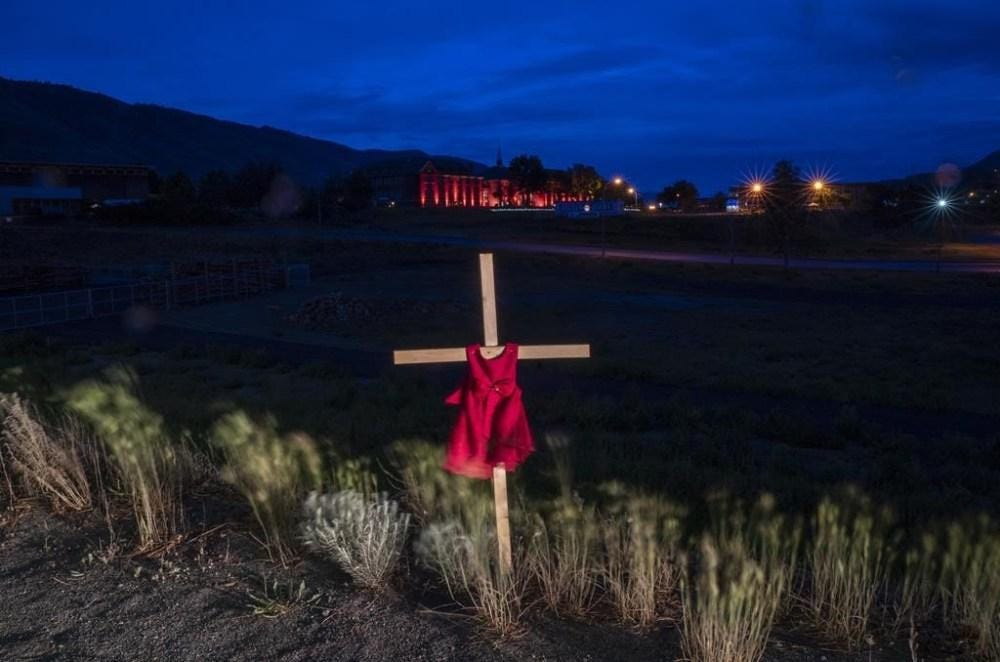
Casmir was asked about events following her shocking announcement on May 27, 2021 that the remains of 215 children who were students of the Kamloops Indian Residential School had been found buried near her reserve’s former boarding school.
Shortly following this declaration, one based on a combination of ground penetrating radar images that can’t positively detect organic remains and the unverified ‘indigenous knowings’ of unnamed individuals, many aboriginal activists began calling this ‘discovery’ part of a genocide to exterminate Canada’s aboriginal people.
Despite the passage of nearly five years, at her Senate committee appearance Casimir claimed it will take decades to begin searching for purported graves. As revealed by Blacklock’s Reporter, Casimir argued that “Holocaust investigations have continued for more than 75 years. Truth takes time.”


“Investigating what happened to the children cannot be completed in a few years or through short-term funding cycles,” she opined, a statement that ignored the $12.1 million the federal government granted the Band to do so.
Though superficially correct – indeed, study of the Holocaust is still ongoing 81 years after the end of the Second World War – Casimir’s comparison is outrageously misplaced.
Holocaust appropriation and distortion in the context of indigenous issues refers to the practice of comparing European colonization and the treatment of indigenous peoples directly to the Holocaust. This comparison is a form of horribly distorted appropriation because it belittles the specific nature of the Holocaust while misrepresenting indigenous history.
Of all recognized genocides, the Holocaust is the best documented mass killing meant to exterminate an entire ethnic group.
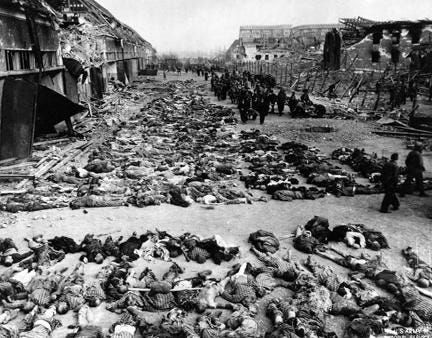
Compared to the Holocaust and other universally recognized genocides like the Armenian and Rwandan genocides, Casimir’s confession that her Band has made no attempt to recover any reputed remains at the site, not even a single body, is particularly disturbing.
This failure to retrieve any remains explains why Senator Mary Jane McCallum (Manitoba), herself a former Residential School student, stated that the families of the buried children deserved answers. “For me, I want those bodies taken home,” she said.
“They died there in violence, they were buried in violence, and we need to take them home and honour them so they can be with their loved ones,” said Senator McCallum. “Remove them from that site.”
“We are still working through those steps and those processes and still have much work to do,” replied Casimir, without giving any details about those “steps” and “processes.”
Senator Scott Tannas (Alberta) also questioned why the Band had not exhumed any remains.
“I just wondered, coming up on the fifth anniversary of the initial discovery that you were a part of, the 215 graves, how many people have you identified that you believe are within that 215?” asked Senator Tannas.
“That is out of my realm right at this time,” replied Chief Casimir.
Translation: no named student is known to be buried at the site.
“How do we get to the truth and begin to take children home where the families want them to go home?” asked Senator Tannas. “How do we identify that? I am trying to understand.”
“That’s the question I am asking,” said Senator Tannas. “How do you get to the spot where you say, ‘Okay, it’s time for us to begin excavating and trying to start bringing people home’?”
“Well, I definitely see this here, it’s definitely not a one-, three-or five-year process,” replied Casimir. “I definitely see it as a longer process that is going to take some time.”
Compare the contents of those exchanges with the two Senators to World War II carefully organized executions during which Nazi Germany committed mass murder on an unprecedented scale resulting in the murders and other deaths of six million Jews.
Apart from the careful retrieval and study of human remains, detailed statistics were calculated using multiple sources. These included surviving Nazi reports and records; prewar and postwar demographic studies; records created by Jews during and after the war; documentation created by resistance groups and underground activists; and other available, extant archival sources.
Statistics list the number of Jewish people killed in killing centers; in mass shooting operations and associated massacres; as prisoners in camps and ghettos; and outside of sites of detention in other acts of violence.
For example, the Nazi regime created five main killing centers specifically to murder Jewish people using poison gas resulting in the murder of 2.7 million Jews, most of whose names have been discovered by painstaking physical and documentary research.
Again, compare this to the totally undocumented ‘genocidal murder’ of Indian Residential School students: there is not a single, authentically documented case of a student murdered by a staff member at any government-funded Indian Residential School in Canada during the 113 years these schools operated.
Drawing on the Holocaust to bolster an argument with no supporting evidence, as Chief Casimir did, trivializes the murder of millions of Jews and other people in universally recognized genocides.
It also shows that Casimir doesn’t understand the difference between indigenous knowledge based on rumours, legends, and myths and scientific knowledge rooted in verifiable or falsifiable truths.
All this is the result of the shameless appropriation of the Holocaust – the genocide of genocides – for political and material gain by zealous indigenous activists.