

OP-ED: Carney’s Iran posture shows strategic confusion, not leadership
"This attempt to balance support for the objective while criticizing the method reveals a deeper problem. Carney is trying to occupy two positions at once."
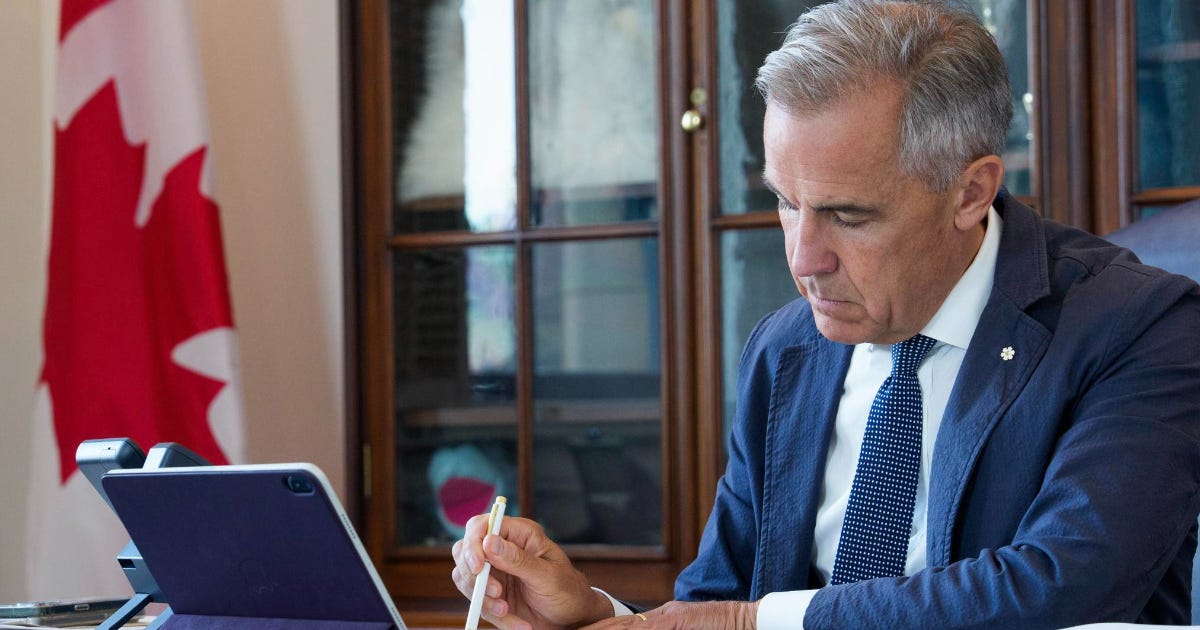
Author: Dotan Rousso
Prime Minister Mark Carney has not been silent about the war with Iran. In recent remarks during his diplomatic trip to Australia, he said Canada supports the objective of preventing Iran from acquiring nuclear weapons, but that the recent U.S. and Israeli strikes were supported “with regret.” At the same time, he suggested the strikes may be inconsistent with international law and emphasized that Canada and other allies were not consulted beforehand.
This attempt to balance support for the objective while criticizing the method reveals a deeper problem. Carney is trying to occupy two positions at once. He wants to align with the strategic goal while distancing Canada from the action that pursued it. In practice, that posture does not strengthen Canada’s voice internationally. It weakens it. It signals hesitation and a lack of clarity at a moment when Western countries are being tested on whether they still understand the nature of the regime in Tehran.
Iran is not simply another state pursuing ordinary geopolitical interests. Since the 1979 Islamic Revolution, the regime has fused power politics with a radical ideological hostility toward the West and toward Israel. That ideology has been expressed consistently through its foreign policy. Tehran has built and supported a network of proxy forces across the Middle East, including Hezbollah in Lebanon, Hamas and Palestinian Islamic Jihad in Gaza, Shiite militias in Iraq and Syria, and the Houthi movement in Yemen. Through these groups, Iran projects influence, destabilizes neighboring states, and threatens Western allies while maintaining a degree of distance from direct confrontation.
The consequences of this strategy extend well beyond the region. The Middle East remains central to global energy stability. The region produces roughly thirty percent of the world’s oil, and the Strait of Hormuz remains one of the most critical chokepoints in global trade. Roughly a quarter of the world’s seaborne oil passes through this narrow corridor bordering Iran’s southern coast. Any regime that combines ideological hostility toward the West with the ability to threaten this corridor represents a real risk to global economic stability. Canada may not depend directly on Middle Eastern oil imports, but it is deeply connected to global energy markets and supply chains that are affected by disruptions in this region.

There is also an unavoidable moral dimension to the confrontation with Iran. The regime’s hostility toward the West is matched by its brutality toward its own citizens. The violent suppression of the 2022–2023 “Woman, Life, Freedom” protests revealed the extent to which the regime is willing to use force against people demanding basic freedoms. That pattern has not changed. In 2026, Iranian security forces again responded to demonstrations with arrests, beatings, and reported killings of dozens of protesters calling for political reform and personal liberty.
These demonstrators were demanding rights that Western democracies claim to defend: freedom of expression, dignity, and accountability from their government. When a regime repeatedly suppresses those aspirations with violence, opposing that regime is not merely a strategic calculation. It is also a moral position.
Carney often speaks about the importance of defending a rules-based international order and about the responsibility of democratic “middle powers” to support global stability. Those are admirable principles. But principles mean little if they disappear at moments that require political clarity.
By trying to support the objective while distancing Canada from the actions taken against the regime responsible for regional instability and domestic repression, Canada sends a message of uncertainty. In international politics, that kind of hesitation is rarely interpreted as prudence. More often, it is interpreted as weakness.
Canada does not need reckless rhetoric. But it does need moral and strategic clarity. If Canada wants to be taken seriously on the world stage, it must be willing to stand firmly for the values it claims to defend.
For comments: dotanrousso@yahoo.com
Pictured at the top of this article.
The poster child for strategic confusion and lack of leadership.
A fake, a fraud and a liar fully supported by too many ignorant voters suffering from terminal TDS.
Sadly that terminal part will not only be where they are heading but what is going to happen to a once wonderful and respected country.
Carney is like those blow up men they have in front of car sale lots. He twists and turns like the wind blows.