
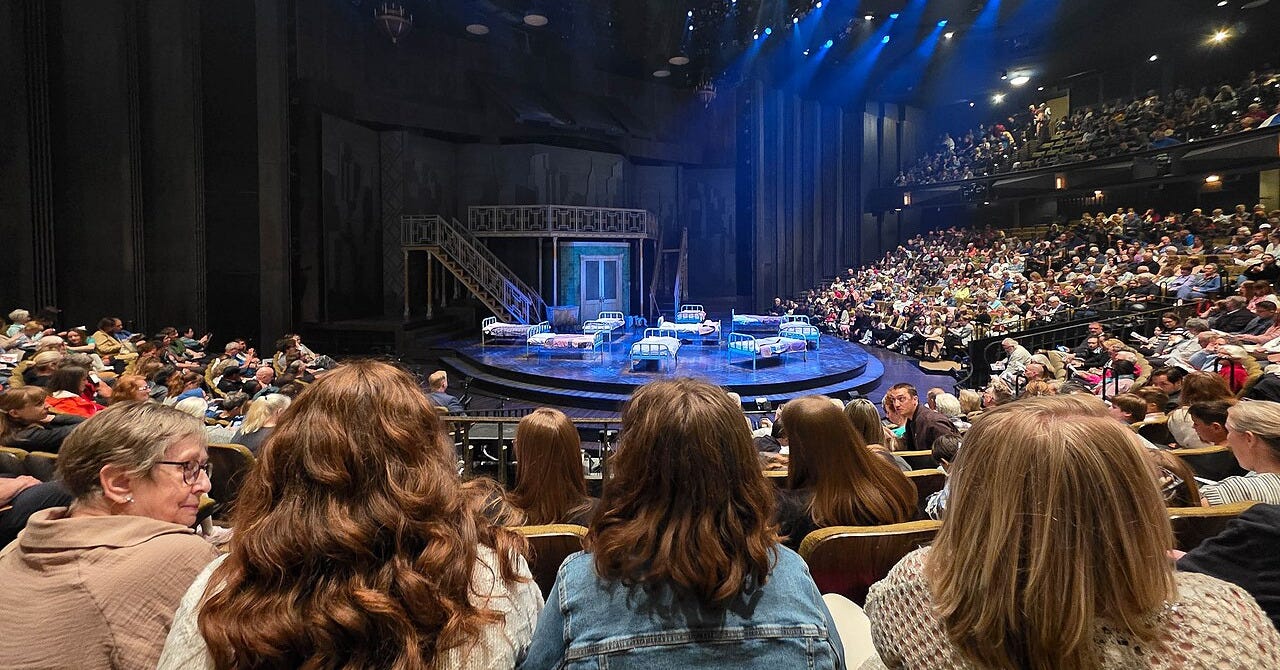
OP-ED: Canada's arts world has a diversity problem — everyone thinks alike
T. G. Kelemen writes, "Audiences are not stupid. They can smell a sermon. They know when a character has been written as a person and when he has been written as a category."
By: T. G. Kelemen
T. G. Kelemen is a writer, playwright and poet, and a former private-placement and restructuring dealmaker for owner-managed companies. His forthcoming book, Lawful But Awful, examines Canada’s drift into tutelary despotism under “Big sMother” — the soft rule of forms, experts, permissions, grants and managed dependence.
A couple of years ago, Vancouver’s PuSh Festival cancelled its planned production of Christopher Morris’s The Runner. The issue was not that the play had suddenly become unwatchable; its repeated performances had earned lavish praise. The issue suddenly was that Morris, a Canadian playwright, had “no religious or cultural ties to the region” he was portraying – Israel. So PuSh chose instead to “honour the artist whose work reflects their lived experience” by producing Palestinian-Syrian Basel Zaraa’s Dear Laila, whose perspective it described as “grossly underrepresented in Canadian theatre and performance culture.”
In plain English: Morris lacked the right biographical passport.
That is not diversity. That is a checkpoint.
The problem in Canadian arts is not that women, Indigenous artists, immigrants, minorities, gay artists and others are being supported. Good. Let them work. Let everyone work. The problem is that this support increasingly comes filtered through a constrictive moral vocabulary: identity, harm, underrepresentation, positionality, authenticity, lived experience. That vocabulary is sold as diversity. In practice, it often produces conformity: different faces, same politics, same assumptions, same approved wounds, same institutional sermon.
Victoria’s Belfry Theatre also cancelled The Runner, explaining that the aftermath of the October 7 Hamas attack on Israel was “not the time for a play which may further tensions among our community.” That sounds careful. It is also evasive. One purpose of serious theatre is to stage the tensions polite people would rather avoid. If art cannot assert common humanity under the pressure of war, grief and tribal fury, when exactly is it allowed to speak?
A theatre that cannot hold conflict is not protecting art; it is protecting itself from art.
“Lived experience” can matter. Of course it can. A writer’s life, memory, history and suffering can feed the work. But they do not replace the work. They may be material to the achievement, but they are not the thing itself.
Fundamentally the actor’s job is to become what he is not. The novelist’s job is to enter another soul. The playwright’s job is to make strangers recognizable to one another across circumstance. So in addition to – and far more than – “lived experience,” research matters. Sympathy matters. Imagination matters. Craft matters. Once lived experience becomes a trump card, imagination is no longer sovereign. The artist must present papers.
This is not an isolated quarrel. It has been happening across Canada for the past two or more decades, in diverse forms – from costing journalists their jobs for questioning the dogma of “cultural appropriation” to forcing theatre cancellations because the writer/director failed to hire the right numbers of actors of the correct skin tones.
The answer to bad art is better judgment. The Canadian answer, increasingly, is evacuation.
The deeper issue is architectural. The Canada Council for the Arts, Telefilm Canada, the Canada Media Fund and CBC/Radio-Canada have embedded representation and equity into the operating logic of cultural production. Artists learn the weather. They learn what panels understand. They learn which words travel: equity, harm, authenticity, underrepresentation, community, lived experience. The grant application begins writing the play before the playwright does.
Audiences are not stupid. They can smell a sermon. They know when a character has been written as a person and when he has been written as a category. They know when the villain is only a permitted target, when the heroine is a credential, when the husband is a ritual idiot, and when the “strong female character” is a press release with cheekbones, or the working-class storyteller who refuses to perform victimhood. That is not drama. That is moral sorting with lighting.
The classics lasted because they knew better. They knew women could be brave, vain, noble, jealous, brilliant, cruel, holy, ridiculous and wrong. They knew men could be weak, loyal, lustful, sacrificial, stupid, courageous, tyrannical and tender. They knew fathers fail and mothers devour. They knew kings can be fools and fools can speak truth. They knew sin exists. They knew grace exists. They knew comedy is not kindness and tragedy is not therapy.
But 21st century ideological art too often does the opposite. It reduces human beings to approved types. It does not liberate character. It abolishes it.
Canadian arts institutions call this diversity. Often it is anything but. Instead it’s representational variety inside ideological sameness. Faces and biographies change. Conclusions do not. Everyone is welcome, provided everyone arrives at the same moral destination.
Real diversity would be stranger. It would include diversity across viewpoint, temperament, class, religion, politics, form, humour, tragedy and taste. It would include the Catholic novelist, the atheist tragedian, the conservative filmmaker, the Indigenous dissenter, the anti-progressive liberal, the working-class satirist, the formalist poet, the woman who refuses the approved feminist script, and the man who writes masculinity without apology. It would include art that offends the left, embarrasses the right, irritates bureaucrats and still earns its place because it is alive.
Culture is made by artists serving something larger than self-display: truth, beauty, form, memory, the audience, the country. If Canadian art wants to matter again, it must stop asking who is allowed to imagine and start asking whether the work is true.
The original, full-length version of this article recently appeared in C2C Journal.


