Authors: Devin Drover and Noah Jarvis
Devin Drover is the General Counsel, and Noah Jarvis is the Ontario Director with the Canadian Taxpayers Federation.
The Court of Appeal for Ontario just handed taxpayers a big win. And it has nothing to do with whether you love bike lanes or hate them.
The court’s message was simple: if you don’t like a law, the fix is at the ballot box, not the courthouse.
Here’s the background.
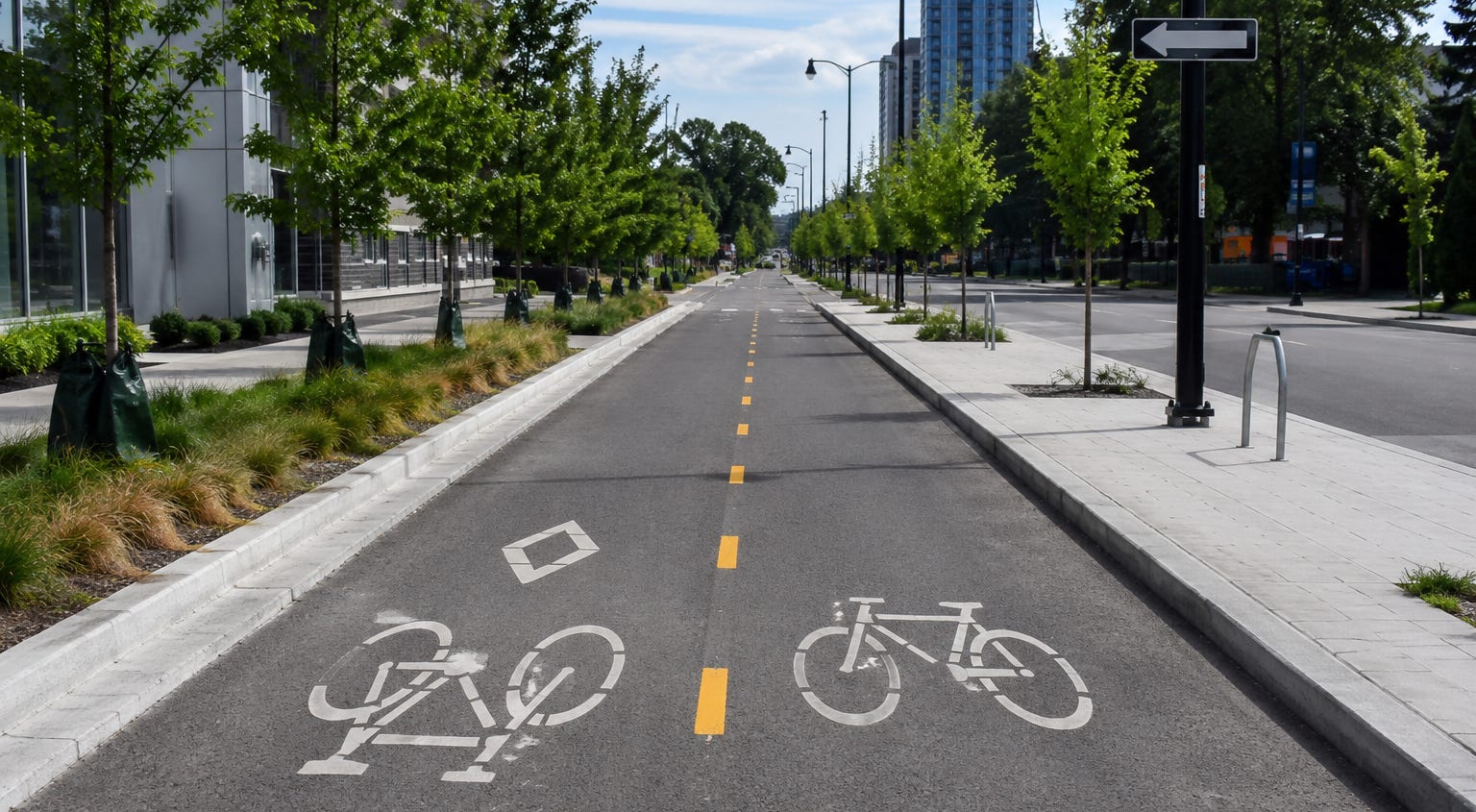
In November 2024, the Ford government passed a law that ordered bike lanes be removed from Bloor Street, Yonge Street and University Avenue in Toronto and required provincial approval before cities rip out car lanes to install new ones.
The government’s rationale is simple: Gridlock costs Ontario’s economy an estimated $11 billion every year.
You can think that’s smart policy or a boneheaded intrusion on city hall. Either way, it’s exactly the kind of decision voters get to judge at election time.
But Cycle Toronto, an advocacy group, didn’t want to wait for an election. It went to court, arguing the removal of bike lanes violated cyclists’ Charter rights to life and security of the person.
Then interest groups including Greenpeace Canada piled in as interveners.
And in July 2025, a Superior Court judge agreed and struck down the law.
The judge waved away the legislature’s goal as “saving some drivers of cars a few minutes of travel time” and went further. He declared that even “reconfiguring” the lanes to restore a lane for cars would violate the Charter.
Think about what that ruling meant. Once a government paints a bike lane, no future government could ever remove it. Every spending decision would become a one-way ratchet, locked in by judges.
If a court can forbid this government from removing a bike lane, another court can forbid a future government from cancelling a corporate subsidy, closing a failed agency or cutting a bloated program. Every dollar of spending becomes a constitutional entitlement and elections stop mattering.
As the Court of Appeal correctly put it: “Something has gone wrong.”
The appeal court reversed the ruling in a unanimous decision. Its reasoning should be printed out and taped to the desk of every activist-minded lawyer in the country.
“The Charter does not require the legislature to establish bicycle lanes,” the Court wrote. “Thus, the Ontario legislature is as free to establish bicycle lanes as it is to remove them or authorize their removal. The Charter has nothing to say about whether bicycle lanes are a good or a bad idea – wise or unwise policy. These judgments are no business of the courts.”
The Court confirmed that its role is not to make policy and should instead leave those decisions up to elected officials.
“Policy is for politics,” the court wrote. “Whether courts think legislation is wise or unwise, is irrelevant so far as its constitutionality is concerned, and constitutionality is the only question with which courts are legitimately concerned.”
And this decision matters far beyond three streets in Toronto.
Taxpayers are forced to fund for legal activists like the ones crusading for bike lanes. Government lawyers defending duly passed laws are paid with your money. And every year a policy sits frozen by litigation is a year taxpayers wait for politicians to do what they were elected to do.
The Ford government decided to remove bike lanes in November 2024. Almost two years later, nothing has changed because an interest group found one sympathetic judge to make an incorrect ruling.
The Court of Appeal said it plainly: Legislatures cannot bind their successors and “it is not for the court to end the debate by declaring a winner under the banner of arbitrariness.”
Bike lane supporters still have every democratic tool available. They can organize, campaign and vote accordingly. That’s how taxpayers hold governments accountable: all of us can have our say at the ballot box, not a handful of interest groups in a courtroom.
The court called this dispute “mere traffic regulation.” It’s right. And taxpayers won the ruling that keeps it that way.


