
NDP leadership debate includes calls for Marxist-inspired reforms, redistribution
New Democratic Party leadership candidates vying for the 2026 race put their hard-left agenda on full display in a recent debate, pitching radical ideas like a “universal basic income."
New Democratic Party leadership candidates vying for the 2026 race put their hard-left agenda on full display in a recent debate, pitching radical ideas like a “universal basic income,” “public grocery stores,” and blatant calls for wealth redistribution.
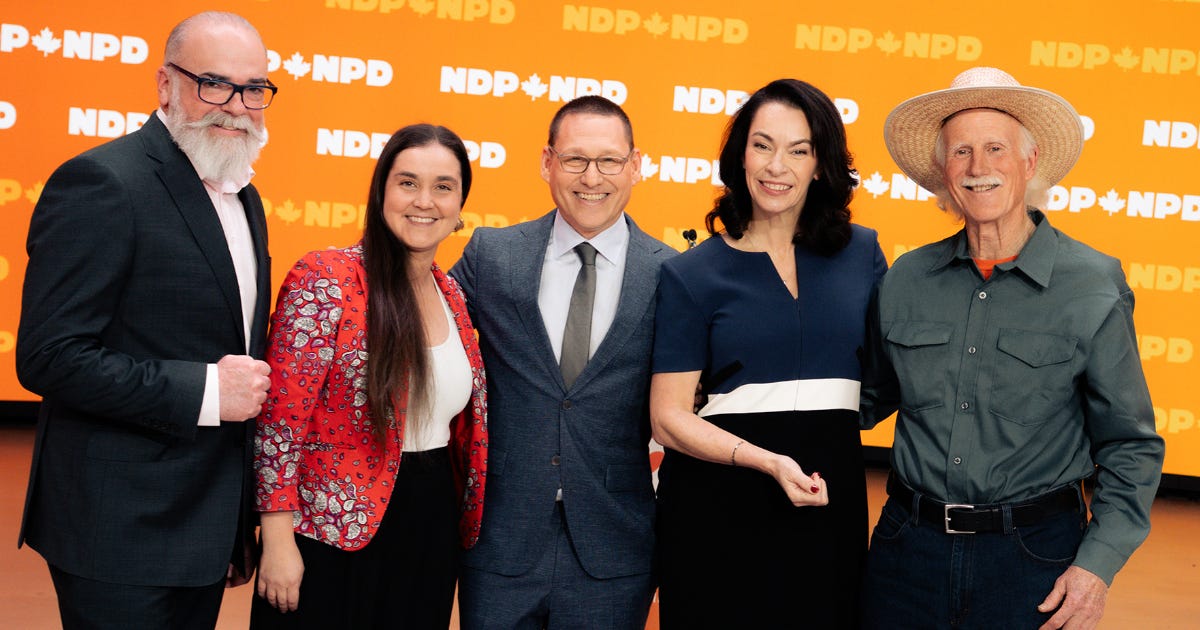
The event, held Nov. 27 in Montreal, featured Rob Ashton, Tanille Johnston, Avi Lewis, Heather McPherson and Tony McQuail as potential leadership candidates. Interim party leader Don Davies did not attend.
Topics ranged from affordability and inequality to relations with Quebec, with the debate conducted in a blend of English and French. While the format aimed for “inclusivity,” it highlighted tensions in a party grappling with its socialist roots amid broader electoral challenges.
The debate’s format was typical. Each candidate received 45 seconds for opening remarks, followed by questions from a moderator that were answered in a combination of English and French.
Eight-minute “rounds” of questions and answers followed, with each candidate given slightly more than one minute to express their desired solutions or opinions on a variety of topics.
The “get to know you” segment provided some early lighthearted moments. When asked what might surprise people about them, McPherson, an Alberta MP, offered: “I like baking cookies.”
Yet beneath the levity lay radical proposals that echoed communist themes, with some of the rhetoric sounding fairly radical and some diluted by the party’s social-democratic framework.
For example, on “affordability,” candidates were asked how they would propose to reduce the overall “cost of living” for working-class Canadians.
B.C. union leader and NDP leadership hopeful Rob Ashton responded, in part, by saying that “all the power belongs to workers,” before launching into a call for widespread “price caps.”
“We’re going to put caps on the price of groceries, on the internet we all use, and on our cell phone bills,” Ashton said.
Avi Lewis, an environmental activist and son of former Ontario NDP leader Stephen Lewis, went one step further. “Price caps, sure, to lower prices!” he said exuberantly, “but then also public grocery stores to stabilize them.”
Notably, in communist regimes like the Soviet Union, price caps and government-run grocery stores frequently led to widespread shortages, black markets and economic inefficiencies.
Ashton and Lewis further invoked Marxist language, criticizing “big corporations owning the means of production” and advocating redistribution of corporate profits to fund public services.
Tanille Johnston, who introduced herself as a proud Liǧʷiłdax̌ʷ woman from the We Wai Kai First Nation, said the federal NDP “needs to make better use of student activists.” On education, Johnston promised free post-secondary for everyone—a policy echoing past promises from high-profile socialist politicians like Bernie Sanders.
Tony McQuail, an American-born Ontario organic farmer who says he first ran for leadership of the party “in 1980,” spent most of his time going on long tirades about electoral reform.
“Tony, we only got eight minutes!” Lewis chided during one such rambling discourse on the topic.
McQuail was flustered but undeterred by the interruption.
“Yea, but you’ve got seven more and there are only four more of you, so let me make my point!” he shot back.
MP Heather McPherson, meanwhile, used language that appeared to revert back to the NDP’s previous leader Jagmeet Singh’s unique brand of identity politics, decrying the “attaquer les trans kids” when referring to policies in her home-province of Alberta.
While the debate leaned social-democratic overall, several moments veered into more radical territory, criticizing corporate power, calling for wealth seizure and using Marxist-inspired language like “means of production.”
According to an Angus Reid poll from earlier this year, when asked if they would consider the NDP in a future federal election, just 13 per cent of Canadians say this is “definitely” something they will do.


