

LEVY: Ex-Toronto detective exposes police anti-Semitism crisis
Hank Idsinga's memoir details the disturbing culture infecting the top ranks of the Toronto Police Service.
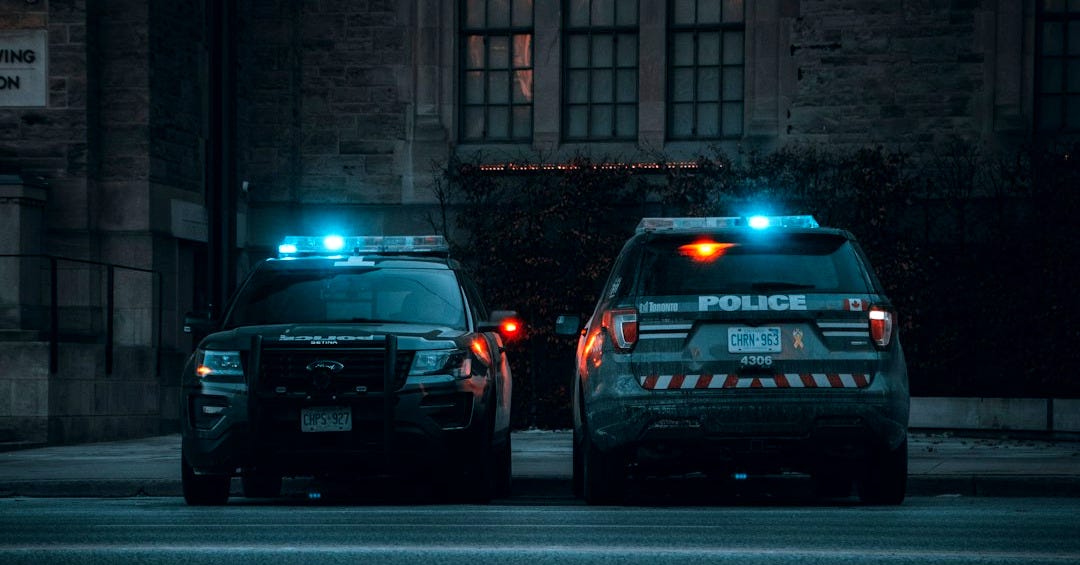
Shortly after Hank Idsinga decided he could no longer be in the presence of an officer senior to him — due to the man’s rabid Jew hatred — the retired homicide inspector was ostracized within the senior ranks of the Toronto police force.
As he details in his newly released tell-all memoir— The High Road — Confessions of a Homicide Cop — the incidents all occurred in the spring of 2020, right in the midst of COVID.
First, the officer in question referred to a kosher BBQ as a Jew-Q (calling his “joke” hilarious) and then he commented that a Jewish officer in a good news video got away with whatever (he didn’t say what that was) because “he’s a f***ing Jew.”
The final straw for Idsinga was when the selfsame officer – in the elevator with him heading to a meeting with a Jewish lawyer – said: “I can’t believe we have to pander to this f***ing Jew.”

He is careful not to name names in the book.
As the 34-year-old officer said in a recent interview, the police did nothing to address the virulent problem. Instead, he was excluded from important decisions and meetings, he was targeted twice for removal from the homicide squad and was isolated professionally from the senior officers’ clique.
His decision to avoid contact with the Jew hater made his last couple of years on the force “very uncomfortable” because that senior officer was part of the “group of friends controlling the police service, promoting and protecting each other.”
His 336-page memoir — which he wrote himself — says everything we’ve suspected about the highly secretive police force where nepotism and a self-congratulatory culture run rampant and serious incidents of incompetence and racism are swept under the rug.
The anti-Semitism hit him especially hard because his grandfather, Arthur Jacobs, was murdered in the Holocaust in 1942.
Arthur – labelled a “privileged Jew” – was arrested by the Gestapo in late 1936. He was placed into the concentration camp system and never seen by his family again, Idsinga says in his book.
He was transported with 100 other prisoners from Dachau to Schloss Hartheim in Austria. It was in the gas chamber that he was murdered.
Idsinga says the intergenerational trauma from wartime is real and he had anxiety dreams in his childhood (nightmares interspersed with images of swastikas and the gas chamber.
From an early age, he decided he wanted to do something to catch the bad guys – and that led him to policing.


The response so far to his revelations has been predictable. There have been efforts to undermine him amid claims that with his book, he’s “undermined public confidence in the police service.”
There have been promises by police board chairman Shelley Carroll and chief Myron Demkiw to look into Jew hatred in the police force and to be more aggressive about laying charges in the anti-Semitic attacks that have predominated on the streets of Toronto.
I’ll believe it when I see it.
Demkiw and Carroll are part of a group of policing officials and politicians – including Mayor Olivia Chow and her sidekick Ausma Malik – who have allowed the hate to fester.
Idsinga says he “never imagined” that the current anti-Semitism crisis would deteriorate to the point where synagogues are being shot at, Hamas supporters are permitted to parade down the city’s streets, Jewish victims are assaulted on Bathurst Street and synagogues require guest lists for entry and armed police officers with assault-type rifles for security.
He attributes that to the overall “breakdown of morality in the country” and the “normalization of criminal behaviour.”
“If any of you at any time can’t walk down any street or any sidewalk in this city without fearing for your safety, we’re doing something wrong,” he said.
He said it’s up to the police “to do something about it.”
He concedes Chow has not been “overly supportive” of the Jewish community while completely supporting the Muslim community.
“There is certainly a lack of political will municipally affecting the police response,” Idsinga said.
“This (lack of) political will filters downward into the executive level and the command level leadership,” he added.
He feels the turning point in Toronto was when former PM Justin Trudeau and Italian PM Giorgia Meloni had to cancel an event at the Art Gallery of Ontario due to the protests out front.
He said the paddy wagons should have been lined up and protesters arrested.
There’s no way that should have happened, he added.
“Since then, it has been protest after protest after protest with some pretty blatant criminal offences taking place on camera and right in front of the police officers and no action being taken,” he said.
The best leaders were those “on the ground with the rank and file” assisting with proper knowledge, he says. None of that is happening.
Idsinga can’t accept the argument, either from his former police colleagues, that charges won’t stick because they don’t “rise to the level of criminality.
“Can you imagine if I had one murder charge withdrawn and I stood up and said I’m not going to bother laying murder charges anymore because the Crown might withdraw them?” he asked.
“It’s just a ridiculous statement.”
He emphasized that legal advice is just that – legal advice.
Police brass can consider the advice, but they can also find another lawyer and get another opinion.
Idsinga says the two-tiered policing seen over the past 2 ½ years “certainly proves” something is “still rotten” in the organization.
He also feels the TPS communications strategy is abysmal despite spending millions of dollars on corporate communications per year.
I’ll say.
But he saves his most pointed criticism for Chief Myron Demkiw and the “process” followed to put him in the job.
He said “nobody” knows who participated in the last process to select him as chief and his recent contract extension was anything but transparent.
“If the board (headed by Shelley Carroll) isn’t being transparent to the public about who they’re considering for chief, how can you preach accountability and transparency at any level of the police service?” he asks.
It seems being part of the “inner circle” is key.
Despite knowing Demkiw for more than 30 years and having had “high hopes” for him as Chief, “It’s been let down after let down after let down.”
And as I’ve found out, Idsinga says he’s “very much” thin-skinned. He blocked me on X two years ago for criticizing his handling of anti-Semitic protests in Toronto.
As proof, the former homicide officer says he does commentary on AM640 and because they’ve been critical of Demkiw in the past few years, it’s the only radio station he won’t go on.
As Idsinga says, Corporate Communications explicitly states “he won’t come on because you guys don’t say nice things about him.”
This, folks, is the police chief of Canada’s largest city.
Maybe he should listen to what Idsinga and other critics have to say.

 | A guest post by
|
Looking forward to seeing how they put this genie back in the bottle..