

Author: John Carpay, President of the Justice Centre for Constitutional Freedoms
There should be no such thing as a government-approved journalist.
Yet Canada has created precisely that concept through the Income Tax Act, which gives special treatment to organizations that Ottawa deems to be “qualified Canadian journalism organizations.”
Rebel News applied for this status. The Minister of National Revenue said no. Now the Federal Court of Appeal has upheld that decision.
Whatever one may think of Rebel News, this should trouble anyone who believes in freedom of the press.
Nobody is arguing that Rebel News should get the government funding that is now being given to the CBC. Rather, the problem is that politicians and bureaucrats should not be deciding which media outlets qualify as sufficiently legitimate, sufficiently balanced, or sufficiently journalistic to receive special financial treatment in the first place (whether through a grant or a tax cut).
To qualify for receiving taxpayers’ money, an outlet must produce enough “original news” according to standards that include “multiple perspectives,” rebuttal opportunities for people being criticized, and alternate interpretations and analyses.
These are actually very solid journalistic practices. But they become something very different when government officials are empowered to decide who has followed these standards “properly”.
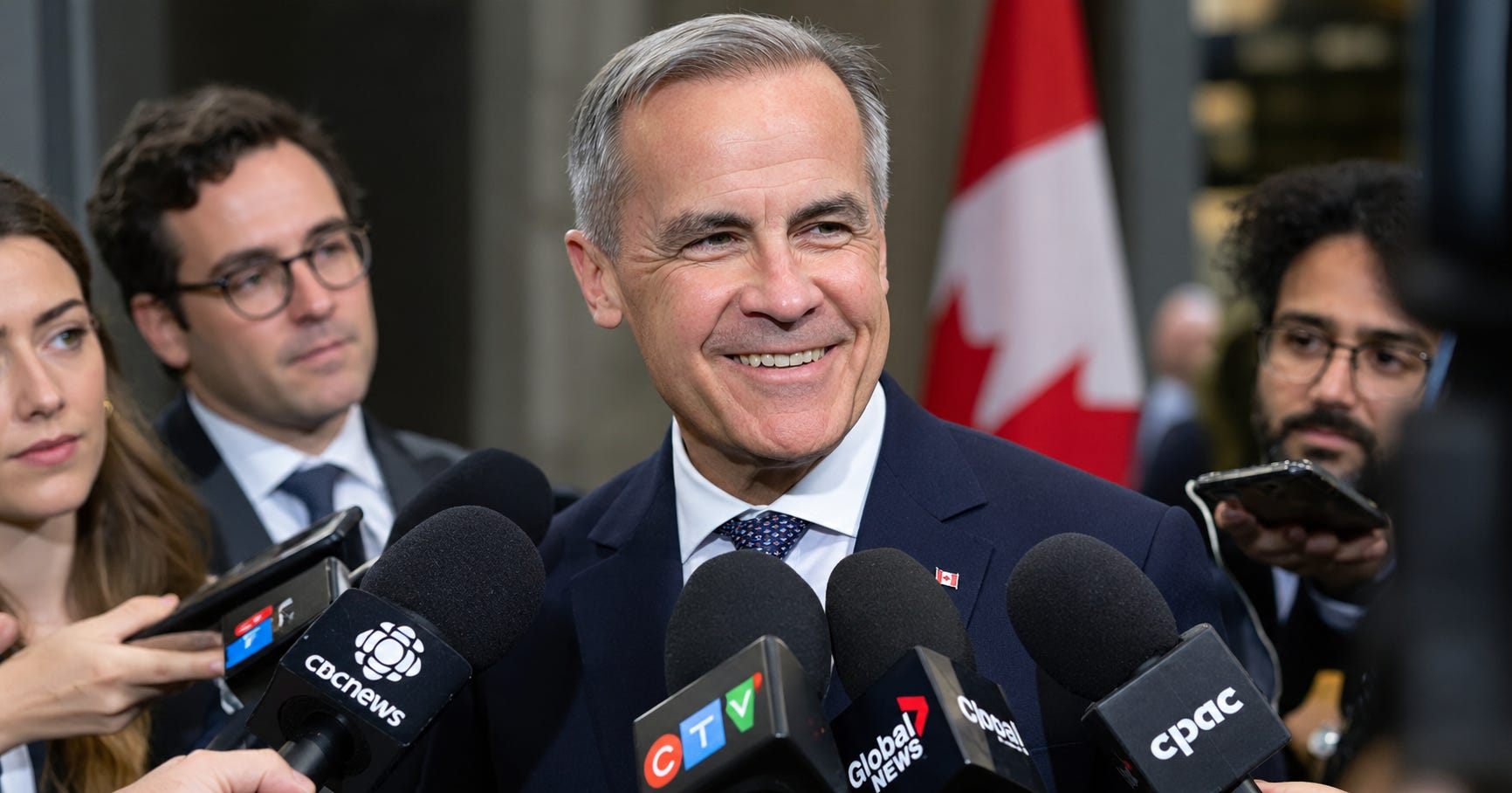
Rebel News makes no secret of its worldview. Its reporting is conservative, libertarian, populist, and right-of-centre. This honest approach serves the Canadian public far more than dishonest claims of “neutrality” and “objectivity” peddled daily by government-funded media like CBC, Global, CTV, etc.
Show me a journalist with no worldview, and I’ll show you a liar.
There was a time when newspapers openly declared their political loyalties. Readers knew which papers leaned Liberal and which leaned Conservative, because the paper itself said so. Nobody was fooled into thinking that reporters, editors, and publishers were human beings without opinions.
Today, much of the media insists that it is simply “objective.”
The CBC is a prime example.
Its worldview is not difficult to detect. More government spending, regulation, and intervention are generally treated sympathetically. Traditional, conservative, and libertarian perspectives are far less likely to receive serious representation.
After the U.S. Supreme Court overturned Roe v. Wade, I listened to CBC coverage that featured opponents of the ruling without providing any alternative perspective, interpretations or analysis.

During lockdowns, government-funded media overwhelmingly repeated the official narrative while doctors and scientists who argued that lockdowns caused more harm than good were largely ignored.
Former CBC journalists Tara Henley, Travis Dhanraj, Jason Unrau, and Marianne Klowak have themselves raised concerns about ideological conformity and the treatment of dissenting perspectives at the broadcaster. Klowak went so far as to say that, during Covid, the CBC was “pushing propaganda.”
And yet Rebel News is the organization deemed “unqualified.”
This points to the deeper absurdity.
Canada now has a media industry in which government both funds journalism and helps determine which organizations count as legitimate journalism.
If that’s what freedom looks like, I don’t think I want to be free.
The CBC received $1.58 billion from taxpayers in 2025-26. Private media benefit from roughly $70 million annually through the journalism labour tax credit, $20 million through the Local Journalism Initiative, and between $75 million and $85 million through the Canada Periodical Fund.
Ottawa also spends about $80 million each year on federal advertising. Still more public money flows into media through the Canada Media Fund, Telefilm, and the National Film Board.
That is an extraordinary amount of government money flowing into an industry whose job includes scrutinizing government.
The conflict should be obvious.
Journalists are supposed to question politicians, expose bureaucratic failures, and challenge official narratives. Yet many Canadian media organizations now depend, directly or indirectly, on those same politicians and bureaucracies for money.
Inevitably, trust in Canadian news stands at only 37 percent, down 20 points since 2018. The proportion who say they definitely do not trust the media has climbed from 17 to 30 percent. Almost half of Canadians now sometimes or often avoid the news.
Ottawa’s answer should not be to devise “better” criteria for deciding which journalists deserve government approval.
It should stop its efforts of trying to “approve” any journalists.
The Charter protects freedom of the press because a free society needs media that can operate independently of the state. Financial rewards and tax privileges handed out according to government-defined standards undermine that independence.
Rebel News should have to persuade Canadians that its journalism is worth reading and supporting.
So should the CBC, Global, CTV, various online outlets, and a host of newspapers and radio stations.
The solution is not to extend government favour to more media organizations. It is to end the favour.
No special tax treatment. No journalism subsidies. No government certification of which newsrooms are worthy.
A genuinely free press should answer to its readers, viewers and listeners, not to Ottawa.
John Carpay, B.A., LL.B., is President of the Justice Centre for Constitutional Freedoms (jccf.ca)
Government licensing in general is way overboard. Hairdressers, etc.
During the scamdemic, I saw a hairdresser (in California) had her license pulled for continuing to cut hair. The license was cheap, but that's the power behind it.