

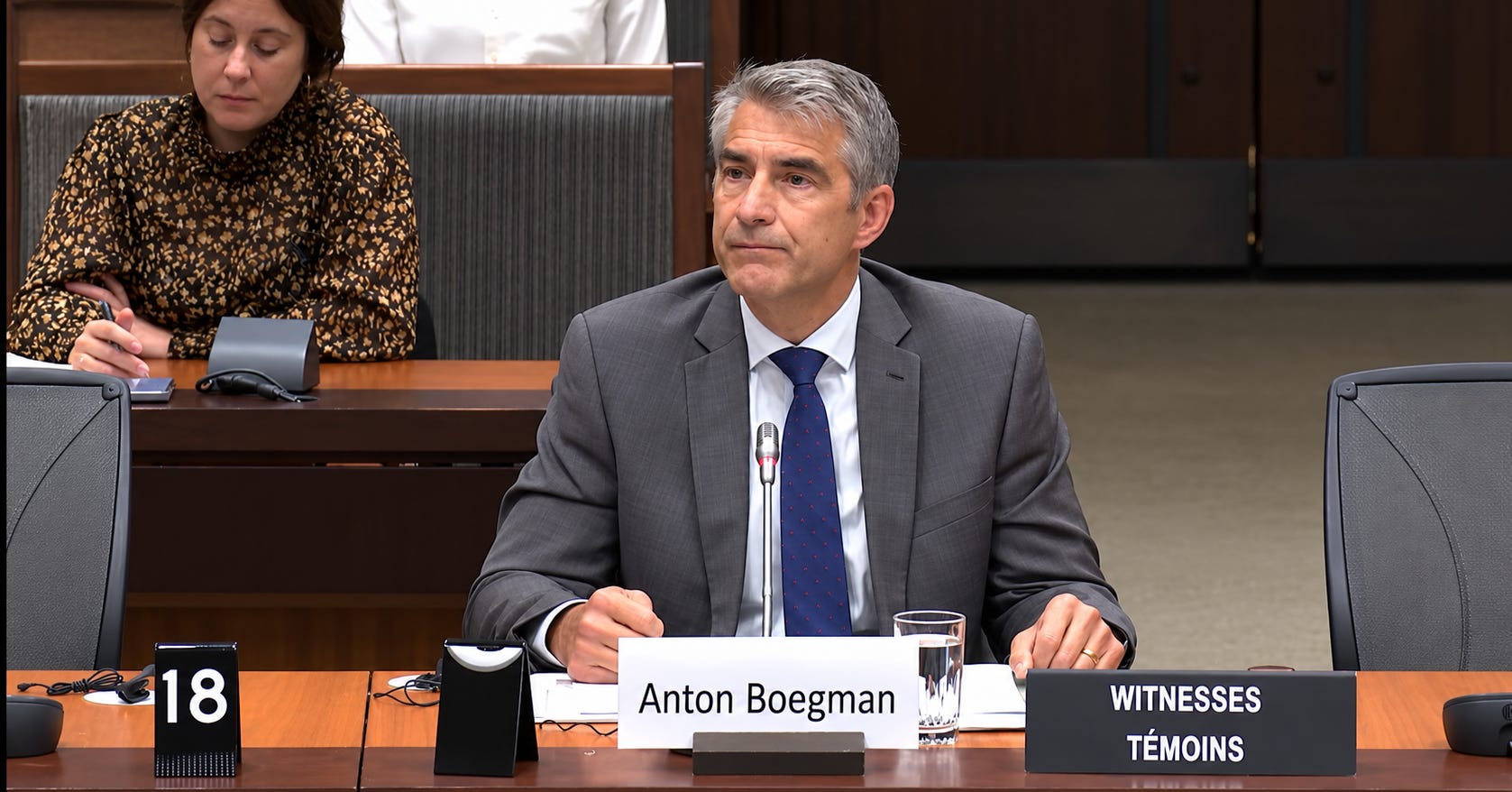
Canada’s foreign influence commissioner admitted to a parliamentary committee that he doesn’t know how many foreign agents should be registered under Ottawa’s new transparency regime.
Commissioner Anton Boegman told the House Affairs Committee that more than 30 submissions arrived around the October 3 registration deadline. Public Safety, meanwhile, has estimated approximately 2,422 potential registrants.
The registry was established under Bill C-70 and passed in 2024 following years of concern over foreign interference in Canadian politics, according to Blacklock’s Reporter.

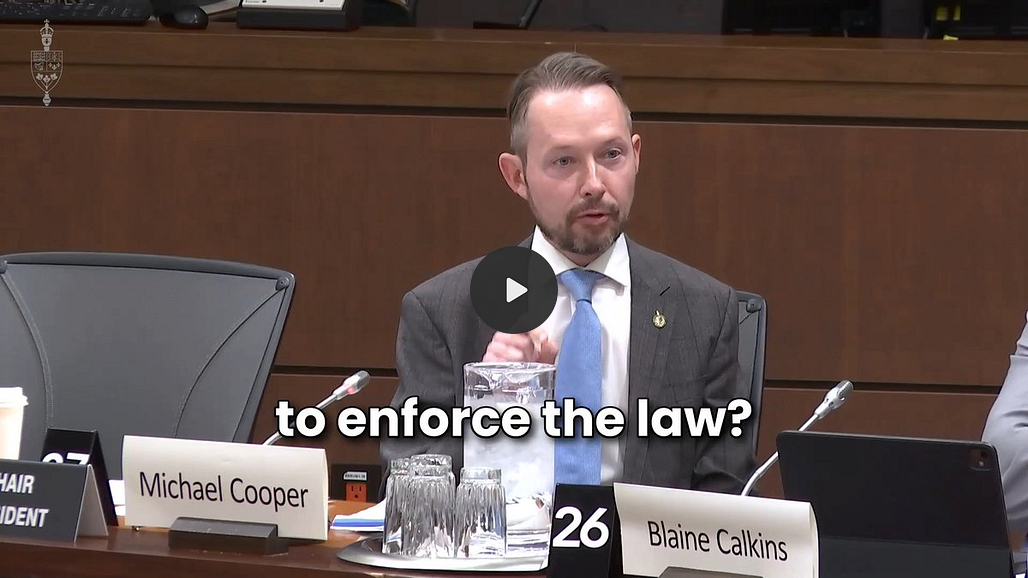
Conservative MP Michael Cooper zeroed in on the gap, noting that just two filings were publicly listed after the deadline — one involving completed work for the U.S. State Department and another involving an honorary consul for South Korea.
“Do you have any idea how many persons or entities should be registering?” Cooper asked.
“At this time I don’t have an idea [about] Canada,” Boegman replied.
“How is it possible that you don’t have the faintest idea?” Cooper shot back.
Boegman eventually estimated that the number “could exceed a thousand.”
Cooper then pointed to Public Safety’s own regulatory analysis, which estimated approximately 2,422 potential registrants — 872 individuals and 1,550 businesses.
“I stand corrected,” Boegman replied.
“You weren’t even in the ballpark,” Cooper said. “You said a thousand, not 2,422. You didn’t get the number even close.”
Cooper went further, calculating that roughly 30 submissions against Public Safety’s estimate amounted to about a one-per-cent compliance rate.
“Thirty out of a potential two thousand four hundred twenty-two based on Department of Public Safety numbers,” Cooper said. “You’re not even coming close or scratching the surface.”


He then pressed Boegman on what his office was doing about those who failed to register.
“If you don’t [register], you’re breaking the law, aren’t you?” Cooper asked.
“Well, yes,” Boegman replied.
But Boegman said his office was not currently issuing notices of violation and had not yet opened investigations.
“In short, you just explained you’ve taken zero steps,” Cooper said.
“We are taking steps to enforce the law,” Boegman replied. “However, we have not yet commenced any work on that side.”

Cooper’s one-per-cent compliance rate is his calculation, which is based on Public Safety’s estimate of 2,422 potential registrants. Boegman said more than 30 submissions still awaited validation before publication.
Conservative MP Blaine Calkins questioned why no China-linked agents appeared on the public registry, despite Chinese interference concerns helping drive its creation.
“The whole debate about whether or not we needed this registry was in large part due to… interference from the People’s Republic of China in Canada’s elections and our domestic affairs,” Calkins said.
Yet, he added, “There doesn’t appear to be anybody on the list from the People’s Republic of China.”
Canada was the last Five Eyes country to establish a foreign influence registry, despite similar systems operating among its intelligence-sharing partners for years.

The registry has also endured a lengthy and troubled rollout.
Public Safety initially promised it by spring 2025, but it did not launch until August 4, 2026.
Since then, a filing linking Canadian outlet The Canada Files to Chinese state broadcaster CGTN Français disappeared because of what officials called a technical problem. The commissioner’s office also suffered a privacy breach involving China expert Charles Burton.
Registration itself does not establish wrongdoing or mean someone has engaged in foreign interference. The registry is primarily intended to make covered foreign influence arrangements transparent.
Boegman himself has cautioned about its limits.
“It’s not going to solve foreign interference in Canada,” he previously said, explaining that the RCMP and other national security agencies are responsible for threats outside his office’s mandate.