

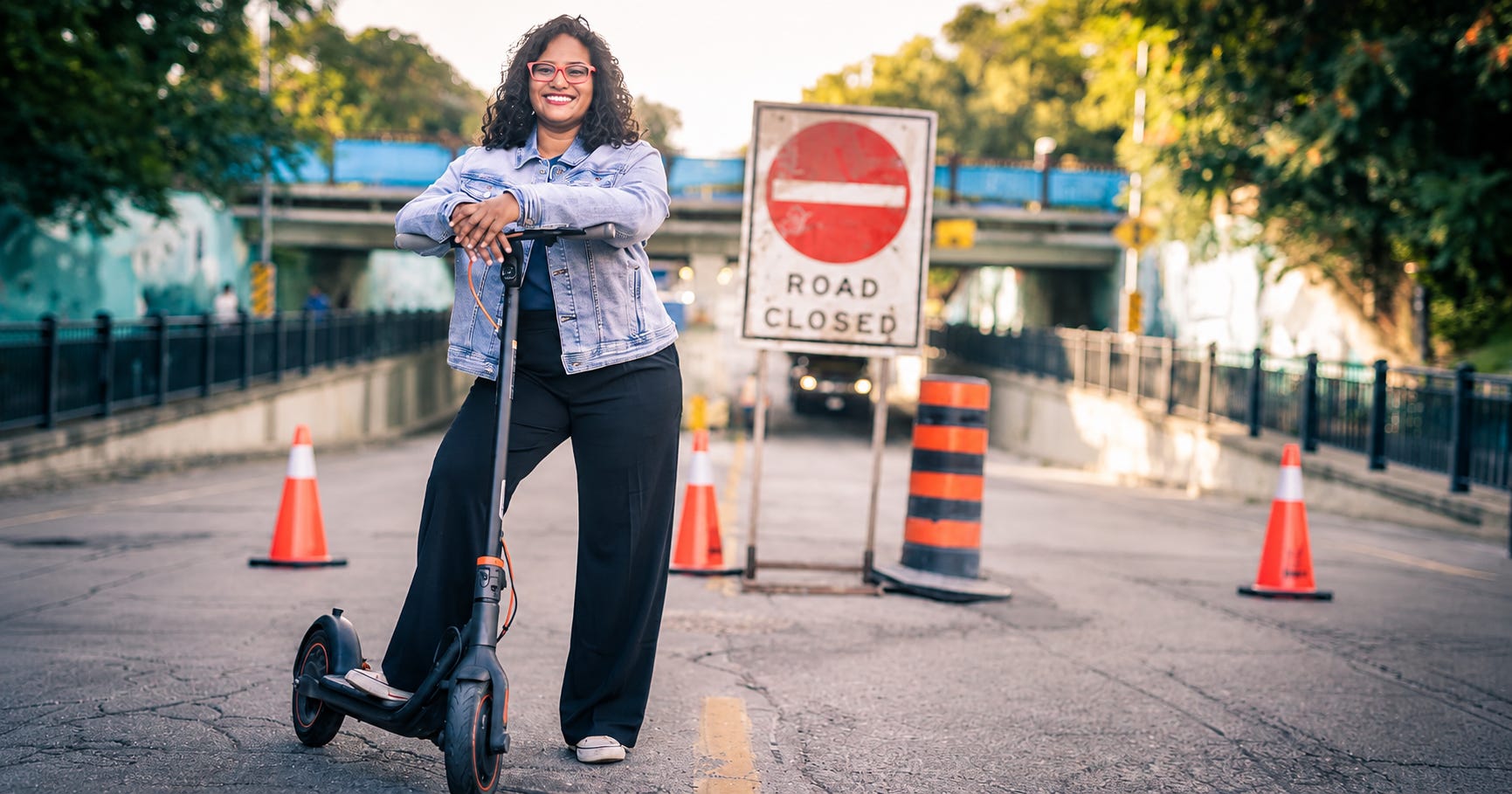
Caryma Sa’d, the internet's most prolific Canadian protest documenter, is running for Toronto city council for Toronto–Danforth’s Ward 14.
In an exclusive interview with Juno News, Sa’d shared her vision for the city and spoke about the main issues she feels face Toronto today, whether it be unsafe streets riddled with drug addiction and homelessness, poor access to transit, or a “dysfunctional” city council she believes needs to be replaced.
Sa’d is an independent journalist and a lawyer who runs the “Caryma Rules ” social media account with a popular “Protest Media” segment, which documents protests and city events ranging from Anti-Israel protests, Antifa rallies and anti immigration demonstrations.

She told Juno News that she never expected to be running for city politics, but after a councillor who’d been in power for 23 years in Ward 14 announced she wasn’t running, Sa’d felt like taking on the role could be her opportunity to improve the city she has been documenting for over five years.
Sa’d said her work documenting protests and events has left her with a lot of concerns and shown her that things just aren’t working for the city under the management of City Hall.
At the ground level, she says she’s hearing that Torontonians are very concerned with the cost of living and affordability, difficulty getting around the city with constant road closures and whether the streets are safe, but realized from speaking to people that they don’t have enough opportunities to voice their concerns and are rarely, if ever, consulted about decisions that affect the Ward.
She said Toronto–Danforth residents have a lot of “concern, fear, anxiety” about “some of the scenes that have become commonplace in other parts of the city on the streets that are making their way into Toronto Danforth.”
“These are people who express concern for their neighbours and don’t want to see others in distress, but also don’t want their own families or daily lives to be impacted by that public visible distress,” she said.
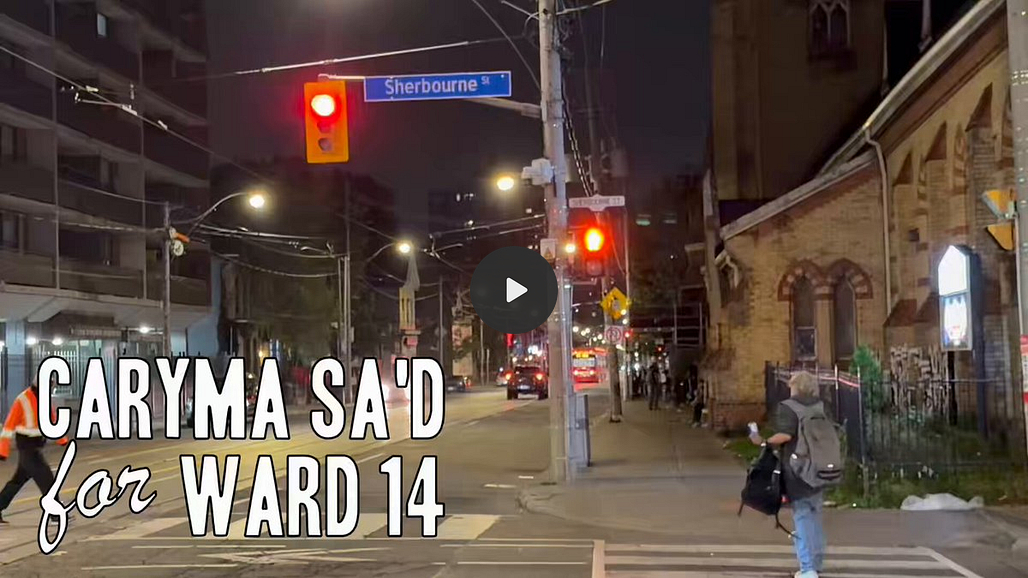
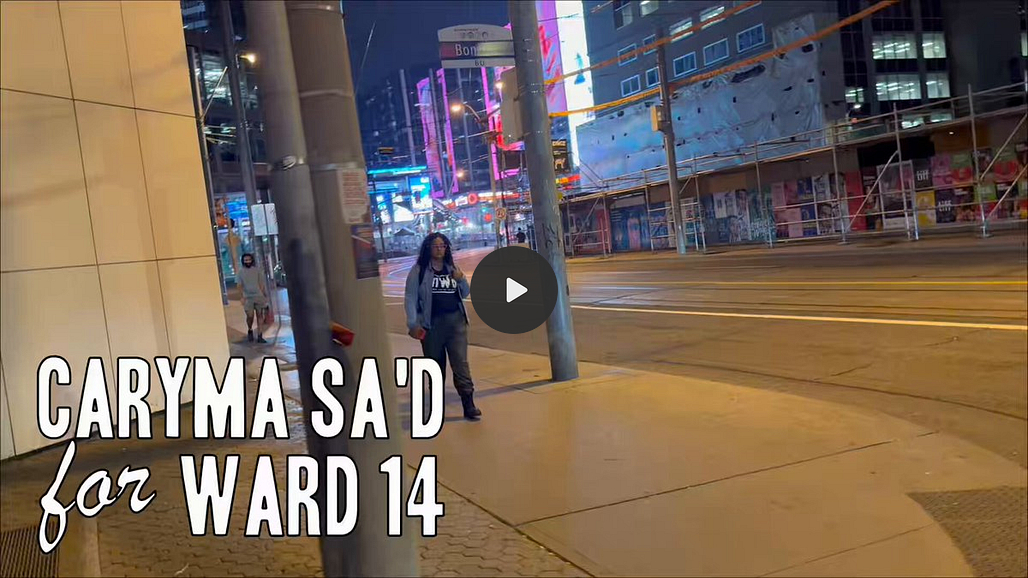
Sa’d has posted a couple of videos to her municipal election social media account on X, demonstrating just some of the commonplace scenes of homelessness and flagrant drug use in the city.
One video Sa’d shows lots of people loitering outside of a shop in Toronto–Centre, a neighbouring Ward; another video shows her being told to leave for filming other individuals who appear to be loitering on a street corner.

“Think that the city currently takes an approach that is somewhat dogmatic, in so far as harm reduction and housing first are embedded into contracts and policies, and that can produce counterproductive results,” Sa’d said.
Harm reduction is an approach to drug addiction that gives clean drug paraphernalia to addicts; in British Columbia, “Safe-supply drugs” were also given to drug users in the name of “harm reduction.” Housing-first initiatives are different approaches that aim to give subsidized housing to otherwise homeless individuals.
“I think it has been counterproductive. And that’s not to say that every aspect of harm reduction is unhelpful or not good. And it’s also not to say that there shouldn’t be maybe housing first, kind of in, but in a more thoughtful way and not spread out to everything,” Sa’d said.
“These two sorts of policies that are embedded are creating the scenarios where people have much easier access to drug paraphernalia, are accessing services in ways that make it unsafe for other people to access services, which affects the bystanders who are just trying to use transit or walk on the sidewalk and are exposed to trauma.”
Sa’d said city council needs to revisit the policies that are aimed at helping Toronto’s drug addicted population to have a more “comprehensive approach,” which doesn’t just prioritize the service users but takes into account the needs of the entire community.
“Part of the problem is that there simply aren’t facilities. You know, there’s not a ton of open beds, and I think that’s a resource allocation issue with the city as well,” she said. “The status quo isn’t working… nobody should be constantly exposed to the danger and the trauma of seeing people folded over right and high on drugs or mentally ill and not receiving treatment.”
She noted some of Toronto’s homeless can be more confrontational than others, and the way the city has been approaching the issue has endangered its civilians.
“On the whole, it just is not a good look for the city, and it’s not compassionate,” Sa’d said.
Sa’d said her work has shown her that the political climate in Toronto has become “quite toxic,” but when knocking on doors, she finds that residents often have shared concerns and have “more in common” than what divides them.

“My observation is that city hall isn’t functioning all that well. I believe that there is likely either corruption or complacency or decision-making that’s driven by ideology or a combination thereof that is producing outcomes that don’t meet the needs of taxpayers and residents more broadly,” she said. “I’ve seen all sorts of dysfunction.”
She noted events that were crashed, streets blockaded in protest, “uneven police enforcement,” councillors “fraternizing” with people who engage in political intimidation and violence, and that all of that contributes to an environment where “people aren’t having their needs met.”
She hopes that by joining city council she can advocate for solutions and present a counter to the councillors whose decisions seem to her to be influenced by ideology rather than results.
For Sa’d, the race is also about standing up for what she believes in in the face of individuals and institutions both online and in the city who “harass” her and attempt to intimidate her away from public life.
“Deciding to put my name in the hat, apart from the timing of it and my connection to the ward, it’s also that there’s been a very concerted effort to bully me out of public life,” Sa’d said. “That’s why I’m doing this: I have a pack of people telling me to go away for no good reason, and so that makes me curious to look closer.”
