
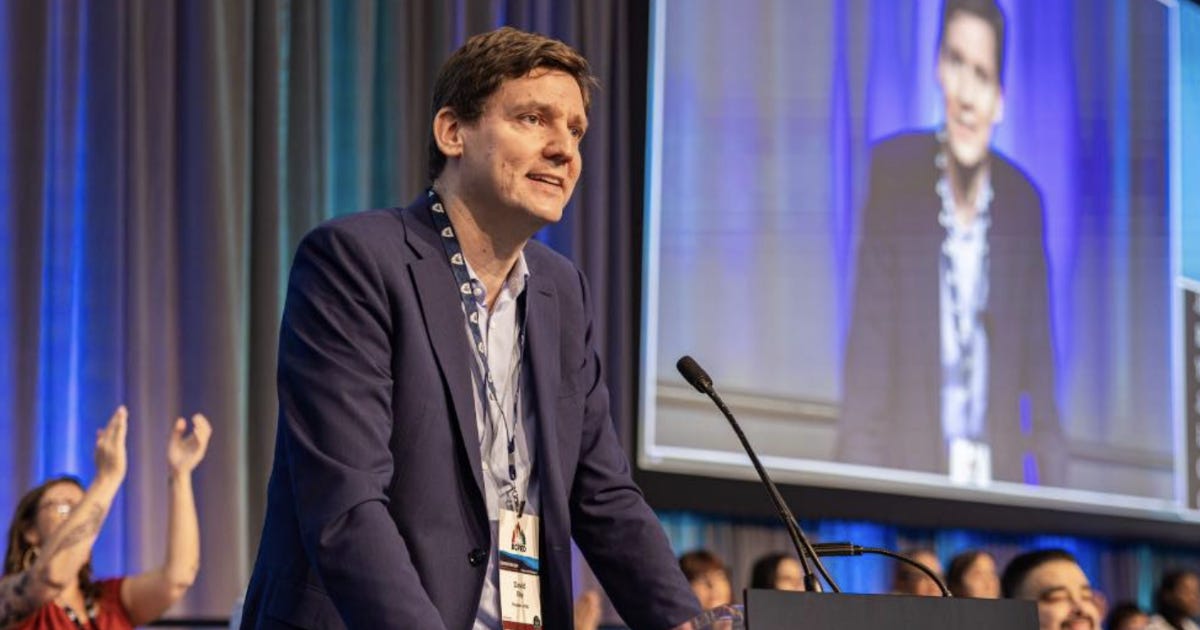
David Eby’s deadly hard drug decriminalization “experiment” ends in failure
Eby’s deadly drug decriminalization experiment is finally set to expire on January 31st, sparking concerns from politicians about the lack of a clear plan moving forward.
BC Premier David Eby’s deadly drug decriminalization experiment is finally set to expire on January 31st, sparking concerns from politicians about the lack of a clear plan moving forward after three years of the controversial policy.
The three-year pilot, supported by federal and provincial governments, removed criminal penalties for possessing 2.5 grams or less of illicit drugs. Health Canada granted B.C. a three-year exemption under the Controlled Drugs and Substances Act to decriminalize people who use drugs, effective Jan. 31, 2023.
Conservative Party Leader Pierre Poilievre commented on the experiment’s expiration at the end of the month in a Wednesday morning post.
“Liberal elites and the chattering class smeared me for wanting to ban hard drugs.”
“Now they say they were wrong—again. Sad that so many had to die for the latest Liberal experiment,” Poilievre lamented.
Conservative Party Deputy Leader Melissa Lantana echoed Poilievre’s comments.
“After the damage became way too obvious for everyone to see, B.C.’s reckless decriminalization experiment is finally being rolled back, at least part of it,” said Latsman in her own X post on Wednesday.
“Years ago, Conservatives sounded the alarm for Canadians about where David Eby’s radical NDP policies, cheerlead by Ottawa, would take us.
The response? A self-appointed expert class sneering (at) those warnings,” Lantsman continued.
While many Canadian media outlets reported that the pilot project only legalized possession of “small amounts” of illicit drugs, the exemption included powerful synthetic opioids such as fentanyl. Depending on the potency and user tolerance, 2.5 grams could represent hundreds or even thousands of potentially lethal doses.
Conservative MP Aaron Gunn expressed frustration at the lack of clarity on the future of decriminalization.
“Less than a month before the official expiry of the Liberal-NDP drug decrim disaster, neither David Eby or Mark Carney will confirm whether the reckless policy to decriminalize fentanyl, crack, crystal meth and cocaine in British Columbia will be extended,” said Gunn in his X post in response to the news.
Fellow Conservative MP Andrew Lawton, meanwhile, called the experiment a “disastrous and dangerous policy from the start.”
“The left will try to claim this is them ‘following the science,’ but they willingly ignored countless warnings and vilified those who raised concerns about this. This was a disastrous and dangerous policy from the start,” Lawton said in his X post.
B.C. Premier David Eby has admitted several times that the decriminalization pilot was a “mistake.”
“We’ve got thousands of people dead, we’ve got family and friends grieving the loss of these brothers and sisters,” Eby said when first unveiling the decriminalization experiment. “We need to drive those numbers down.”
But B.C.’s drug decriminalization experiment has not reduced those numbers.
According to the B.C. Coroners Service, more than 2,500 people died of toxic drug overdoses in 2024 — a record high since the public health emergency was declared in 2016.
More recent data and reporting from the B.C. government show little meaningful change in overdose deaths since the pilot began three years ago.
Provincial data compiled in a report to Health Canada demonstrate that the rate of unregulated drug toxicity deaths in the first 12 months of the decriminalization pilot was not statistically different from the rate in the three years before the policy began, indicating no clear reduction in overdose deaths attributable solely to the policy.
Paramedic-attended opioid overdose events also remained high, with 20,738 such events in 2024, only a modest 6 per cent decrease from 22,036 in 2023.
Deaths among youth under 19 also remained stable year-over-year, with overdose being by far the most common cause of death for minors in the province.
On Tuesday, Premier Eby said the government is still working “closely” with the federal government but neglected to offer further details. He reiterated the government has no plans to reintroduce legislation allowing drug users to consume their drugs in public places, such as school playgrounds or hospitals.
“Let me be clear,” the premier said, “We are not going back to the old policy of decriminalized, public drug use in British Columbia.”
“It didn’t work. And we ended that. So we’re in close conversations with the federal government. I look forward to having more to share soon about that.”
Eby added that the province will release the results of “concurrent studies” on drug decriminalization after the pilot ends.
“The intent is to release that data on the impacts,” Eby remarked during a Tuesday press conference.
Dr. Julian Somers, a Simon Fraser University professor and long-time outspoken critic of the B.C. government’s decriminalization experiment, said in an X post that the pilot’s results are “Exactly as we detailed in our peer reviewed analysis published prior to BC’s catastrophic experiment.” He went on to call the province’s addiction policy a “cesspool of ideology, conflicts of interest, abuses of power, and censorship.”
Meanwhile, a constitutional challenge is underway in Vancouver’s B.C. Supreme Court. Two convicted drug dealers with the Drug User Liberation Front group are launching the challenge, which seeks to uphold the right to sell and distribute “pre-tested” illicit drugs such as heroin, cocaine, and methamphetamines under Section 7 of the Canadian Charter of Rights and Freedoms’ guarantee of “life, liberty and the security of person.”
The outcome of the Drug User Liberation Front’s Charter challenge could have far-reaching implications, potentially limiting the ability of the current, or a future, provincial government to reintroduce criminal penalties for possessing hard drugs in British Columbia.


"Ends in Failure"
Duhhhhh!!!!
Eby, NDP... FAILURE
YEP... Makes perfect sense.
Ebi-jibi's plan, is to not interfere with the drug trade. That would ruin the Vancouver economy and break his money racket.