

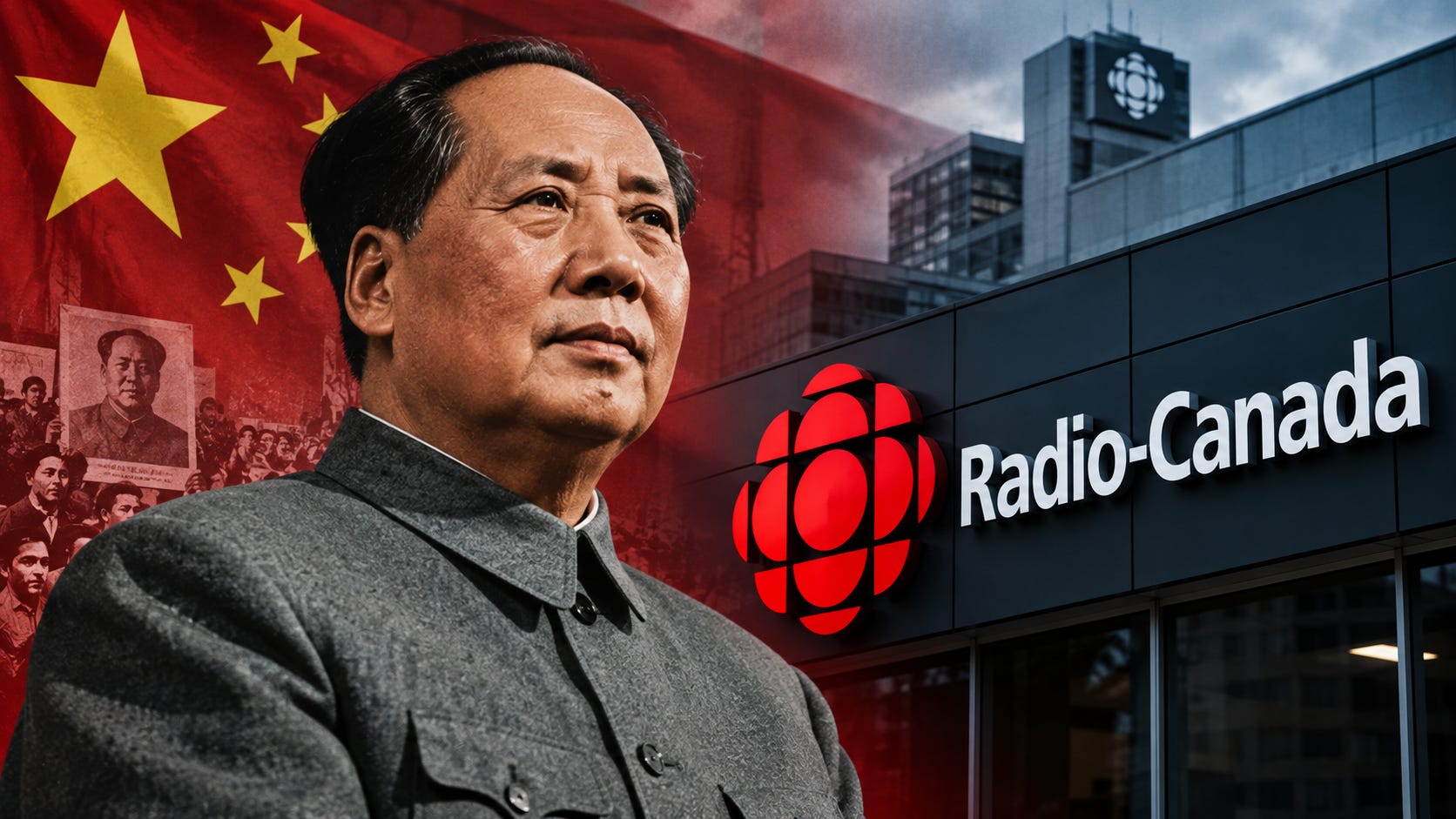
Conservative MPs are blasting CBC/Radio-Canada for giving Mao Zedong the nostalgia treatment following the state broadcaster’s decision to run an AFP feature on admirers celebrating the communist dictator 50 years after his death.
The French-language arm of CBC published the wire story under the headline “Long live Mao! 50 years after his death, the father of Communist China still inspires,” chronicling admirers who gathered in Mao’s hometown of Shaoshan to mark the anniversary.
The AFP report describes supporters carrying portraits and flags, laying wreaths and chanting “Long live Chairman Mao!”, while others praised him as a visionary leader.
“I have deep respect for him, and I was marked by his spirit,” a 28-year-old visitor told AFP.
Another admirer described Mao as “someone selfless who opened a new era for China.”
But the story also acknowledges that Mao’s rule from 1949 until his death in 1976 was marked by mass starvation and tens of millions of deaths, particularly during the Great Leap Forward and Cultural Revolution. Estimates of the overall death toll vary substantially due to the poor tracking of the regime.
The article says nostalgia for Mao’s egalitarian ideals is growing as China grapples with economic pressures and inequality.


The treatment drew criticism from Conservative MPs.
Deputy Conservative leader Melissa Lantsman accused the broadcaster of framing Mao’s legacy “around nostalgia instead of condemnation.”
“CBC/Radio-Canada runs an AFP wire piece marking 50 years since Mao’s death: a man whose policies killed tens of millions framed around nostalgia instead of condemnation,” Lantsman wrote on X.
She argued the article was evidence of what she called the “ideological capture” of Canada’s media.


Conservative MP Chris Warkentin also attacked the broadcaster over the story.
“This is an actual article featured by the CBC / Radio-Canada (via a wire from Agence France-Presse),” Warkentin wrote.
“The CBC should be ashamed of itself for cheering on this brutal, communist dictator! What are they thinking?!” he added. Warkentin cited estimates of between 40 million and 80 million deaths under Mao.
Mao founded the People’s Republic of China in 1949 and ruled until his death on September 9, 1976.

His Great Leap Forward, launched in 1958, pursued rapid agricultural collectivization and industrialization, but contributed to a catastrophic famine. Mao later launched the Cultural Revolution in 1966, unleashing a decade of political persecution, social upheaval and violence.
Nevertheless, Mao remains a Communist Party icon. His portrait overlooks Tiananmen Square and his birthplace, a major “red tourism” destination.
Fifty years after his death, admirers continue to flock there.
“Maybe, now that our quality of life has improved, unintentionally, we leave the bad memories aside,” one shopkeeper told AFP.