

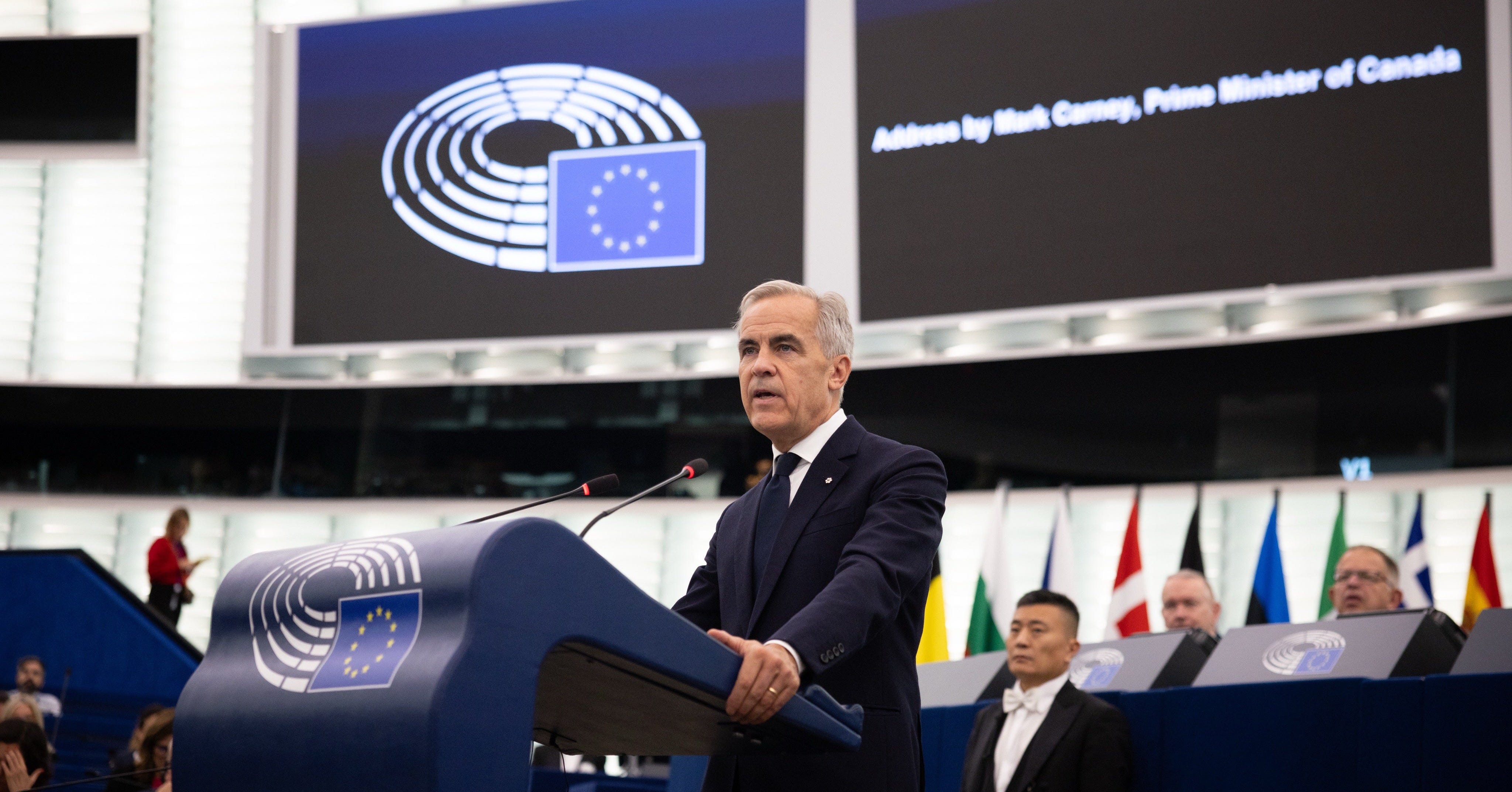
Prime Minister Mark Carney says Canada could begin increasing immigration again after years of surging population growth pushed Ottawa to slash its targets at the beginning of his tenure.
In a recent New York Times interview, Carney said Canada’s immigration system was back under control and suggested the question now is when to begin a “controlled increase” in the population.
It’s a shift in tone from his previous warnings about Trudeau-era immigration levels.
Before becoming prime minister, Carney said Canada had admitted “much higher levels of foreign workers, students and new Canadians” than it could absorb, straining housing, healthcare and social services.
Then, in July, Carney said immigration had been “far too high”, and Canada had “lost control” of international student and temporary foreign worker levels.
“The overall levels still are putting pressure on housing, so we still need a few more years of restraint,” he said, while declaring his government had “taken back control.”


Former prime minister Justin Trudeau also acknowledged his government had overshot after immigration surged during and following the pandemic.
“We didn’t get the balance quite right,” Trudeau said in October 2024 as his government moved to slash its targets.
Canada admitted roughly 437,600 permanent residents in 2022, followed by about 471,800 in 2023 — successive record-setting years at the time.
At the same time, Canada’s non-permanent resident population surged from roughly 1.5 million in July 2022 to 2.2 million in July 2023 — a 46 per cent increase in a single year — before climbing above three million in 2024.
The Trudeau government was also steadily raising permanent immigration targets. Its 2023–25 plan called for 465,000 permanent residents in 2023, 485,000 in 2024 and 500,000 by 2025.
However, temporary immigration was largely uncapped, as study permit holders rose from 550,000 in 2022 to 683,000 in 2023, while work permit holders jumped from 606,000 to 949,000.


Ottawa has since sharply reduced planned arrivals.
Under Carney, the current plan sets permanent resident admissions at 380,000 annually through 2028.
Targets for new temporary resident arrivals are also being cut, falling from 673,650 in 2025 to 385,000 this year and 370,000 in both 2027 and 2028.
Those arrival targets are distinct from the total number of non-permanent residents already living in Canada.
The federal government says non-permanent residents peaked at 7.6 per cent of the population before falling to 6.5 per cent, with a target below 5 per cent by the end of 2027.
But Ottawa is already developing its next immigration plan for 2027–29, which is expected to be tabled this fall, putting Carney’s talk of a “controlled increase” in the spotlight.


The C.D. Howe Institute is urging further cuts, recommending permanent admissions fall from 380,000 in 2027 to 340,000 by 2029 and temporary residents eventually drop to three per cent of the population.
Conservative Leader Pierre Poilievre wants deeper reductions, telling Juno News that Canada should return to Harper-era levels of roughly 200,000 to 250,000 permanent residents annually.
“We cannot bring in people faster than we add houses,” he said.
Poilievre has also pledged faster deportations of criminal temporary residents and rejected asylum claimants, while allowing some temporary residents to stay based on merit.
The unwritten rule: Anything that goes against Canadians' interests, the Weasel will propose.
He's getting ready to absorb Auntie Ursula's (the Overseas Witch) influx of rejected NAs and other Muslims that had he will announce he is accepting at the Quebec summit with the EU in October falsely believing that they will somehow magically increase the GDP. This is just another phase of the "Great Replacement,: er, the Century Project. I say send them all and we will accept them under one condition. They have to establish a self sustaining society north of the 60th parallel. It's a big enough area to accommodate 80 million of them or so in a density they are used to.