

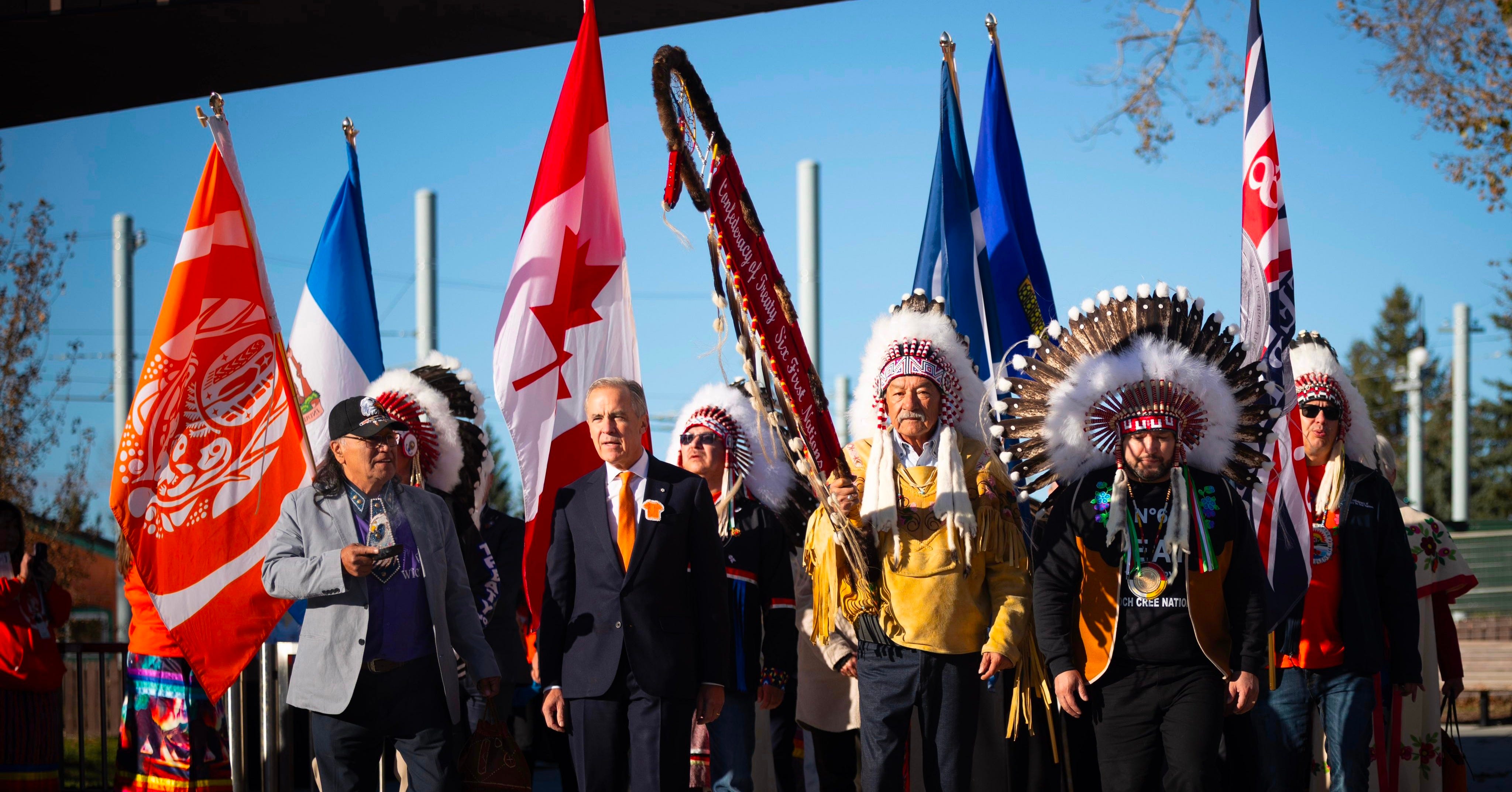
Prime Minister Mark Carney made no reference to “genocide” or suspected “unmarked graves” during his National Day for Truth and Reconciliation remarks, which came just days after renewed calls for Ottawa to criminalize residential school “denialism.”
Speaking at Fort Edmonton, Carney condemned Canada’s residential school system and urged Canadians to confront the country’s history.

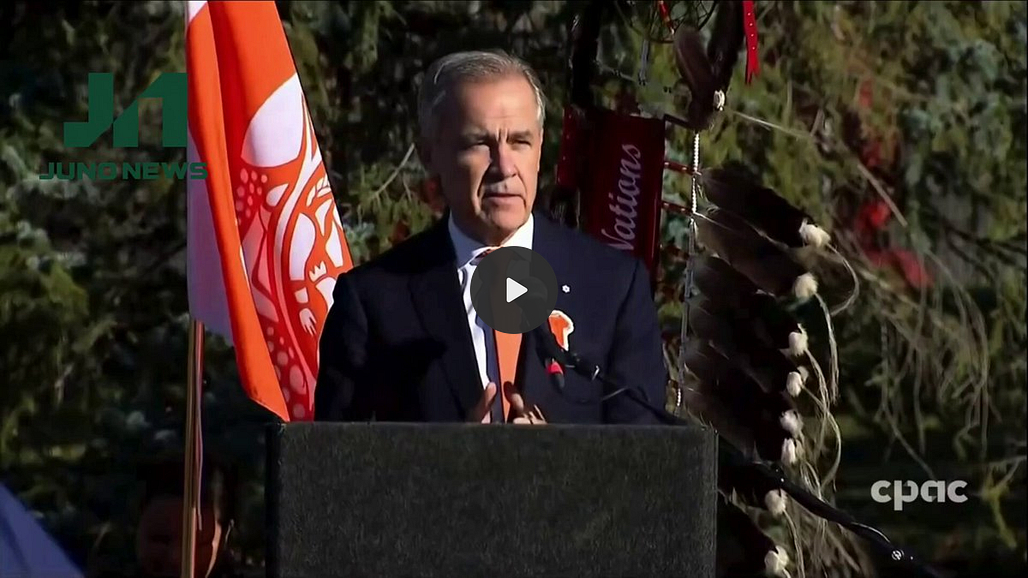
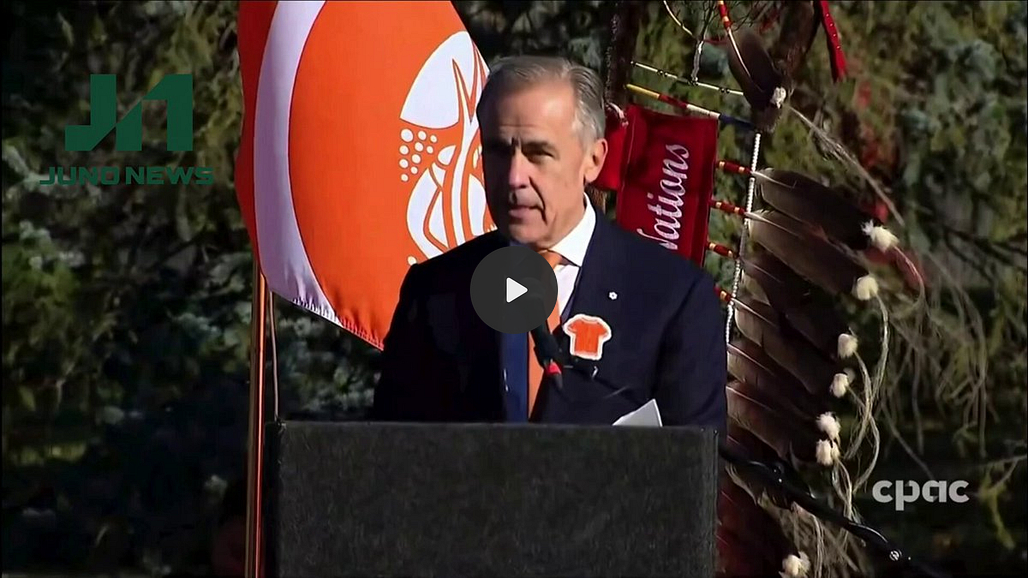
“For more than a century, this country ran residential schools,” Carney said Wednesday, noting more than 150,000 First Nations, Métis and Inuit children attended them.
“So many were taken from their homes, their families. All were separated from their culture, their language, their identities. Some never came home.”
Carney declared that “today is about all the truth,” arguing Canadians should not selectively remember the country’s past.
“We shouldn’t choose which parts of our history to remember,” he said.
“We should not hear the truth of residential schools and fail to act on it.”
But Carney did not use the word “genocide” or discuss suspected unmarked burial sites, Blacklock’s Reporter noted — two issues at the centre of an increasingly heated debate over Canada’s residential school legacy.
The Truth and Reconciliation Commission concluded Canada’s residential school policy amounted to “cultural genocide,” terminology subsequently adopted by former prime minister Justin Trudeau.
Blacklock’s has also reported that federal agencies under Carney removed references to “genocide” from some historic designation materials. Current Parks Canada materials, however, continue to use the term in connection with residential schools.


The debate has also focused heavily on suspected burial sites, particularly at the former Kamloops Indian Residential School.
In May 2021, Tk’emlúps te Secwépemc announced preliminary ground-penetrating radar findings initially described as confirming the remains of 215 children.
Radar specialist Sarah Beaulieu subsequently identified 200 “targets of interest” and said excavation would be necessary for confirmation. Tk’emlúps describes the locations as “probable unmarked burial sites.”
Tk’emlúps Chief Rosanne Casimir told senators in March that no remains had yet been recovered.
“The truth cannot be confirmed,” Casimir said. “Truth takes time.”
Ottawa has committed $246.8 million through 161 agreements supporting searches and related work at former residential school sites, including roughly $12.2 million for Tk’emlúps.
The controversy over how Canadians discuss residential schools has also spilled into Parliament.
Earlier this year, a Senate committee proposed amending Bill C-9 to make it an indictable offence, punishable by up to two years in prison, to wilfully promote hatred against Indigenous peoples by “condoning, denying or downplaying” the Indian Residential Schools system.
The Assembly of First Nations backed the amendment, while supporters argued criminalization was necessary to combat residential school denialism and anti-Indigenous hatred.
The government opposed the amendment, with Government Representative in the Senate Pierre Moreau saying the necessary groundwork had not been done.
“No consultation has taken place, and no legal analysis has been conducted,” Moreau said.
The Senate rejected the committee report containing the amendment 41–32 on June 3, and Bill C-9 passed third reading the following day without it.
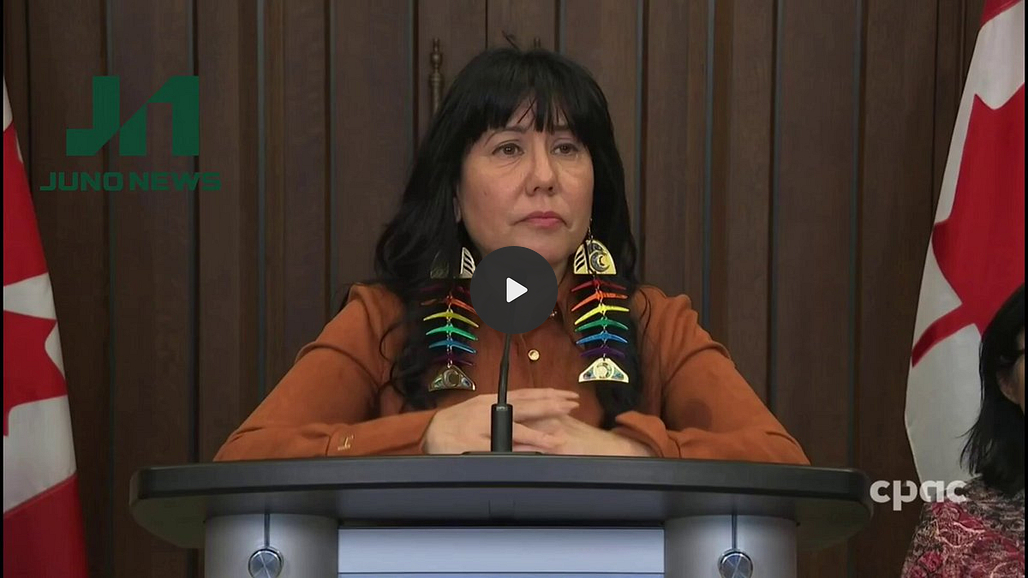
NDP MP Leah Gazan has since renewed pressure on Carney’s Liberals to adopt her private member’s bill criminalizing residential school “denialism.”
“We’re not talking about freedom of speech,” Gazan said September 24 on Parliament Hill. “We’re talking about the incitement of hate.”
“This government actually has the power to criminalize it.”
Gazan’s push intensified amid controversy over Rebel News’ Orange Shirt Day merchandise bearing slogans including “Still No Proof” and “Dig Deeper.”

EXCLUSIVE: Liberals target Rebel News after ‘hoax’ post sparks residential school merch controversy
The Liberal Indigenous Caucus called the merchandise a “campaign of hate.” Rebel publisher Ezra Levant rejected that characterization, arguing the shirts question specific claims surrounding suspected burial sites rather than deny the residential school system or the mistreatment of children.
The dispute has become a broader fight over whether questioning specific residential school claims can amount to residential school “denialism” or criminal hate.
Gazan argues legislation is necessary to protect survivors from hate, while Levant argues criminalization would threaten freedom of expression.
Carney, meanwhile, framed reconciliation around confronting Canada’s history.
“Truth is the foundation of justice,” he said.
“Today is about all the truth.”