

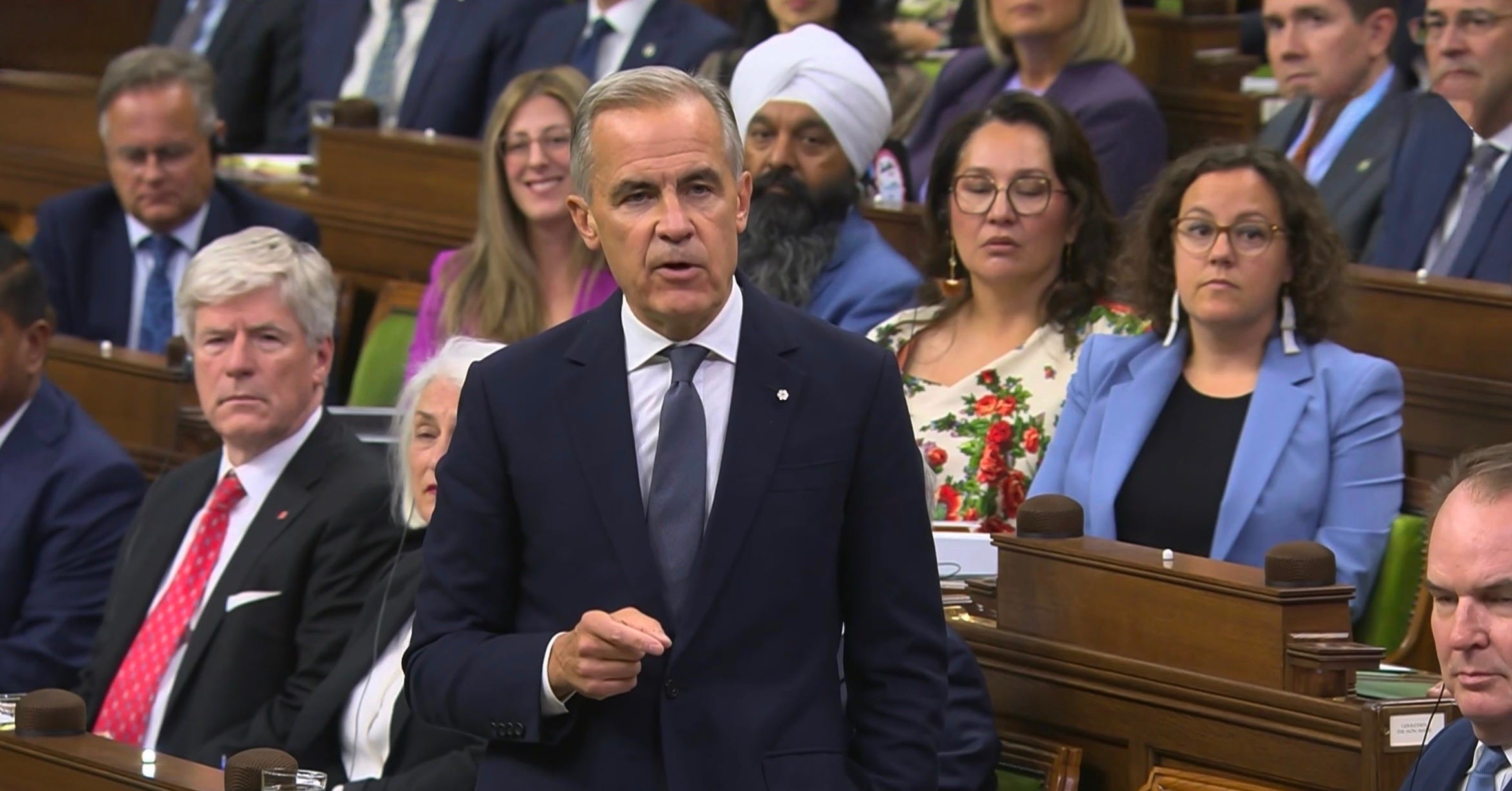
Carney insists Ottawa’s industrial carbon tax adds “zero” to grocery bills — a claim critics dispute amid affordability pressures.
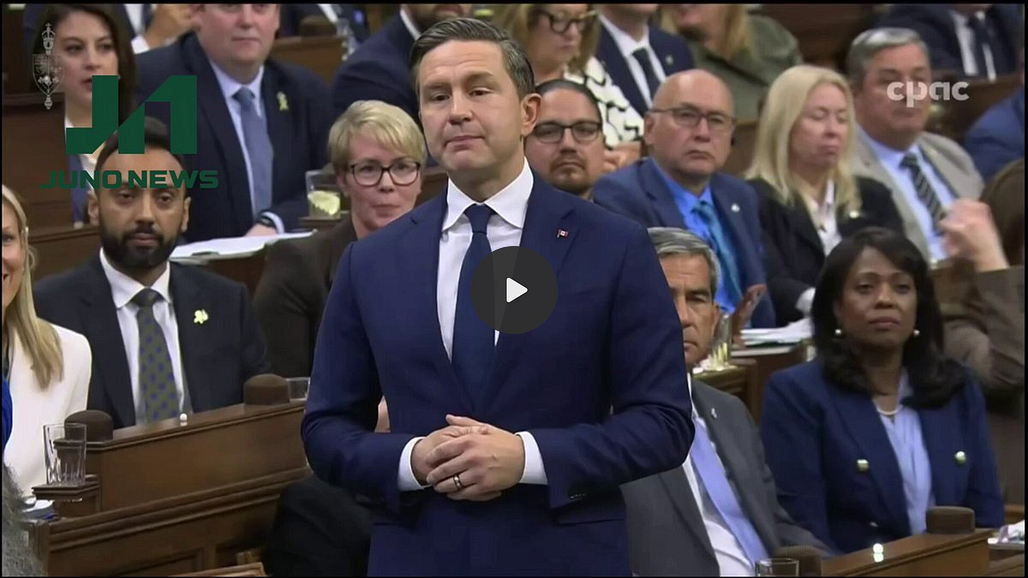
Carney made the claim after Conservative Leader Pierre Poilievre accused the government of driving up costs through industrial carbon pricing and fuel regulations.
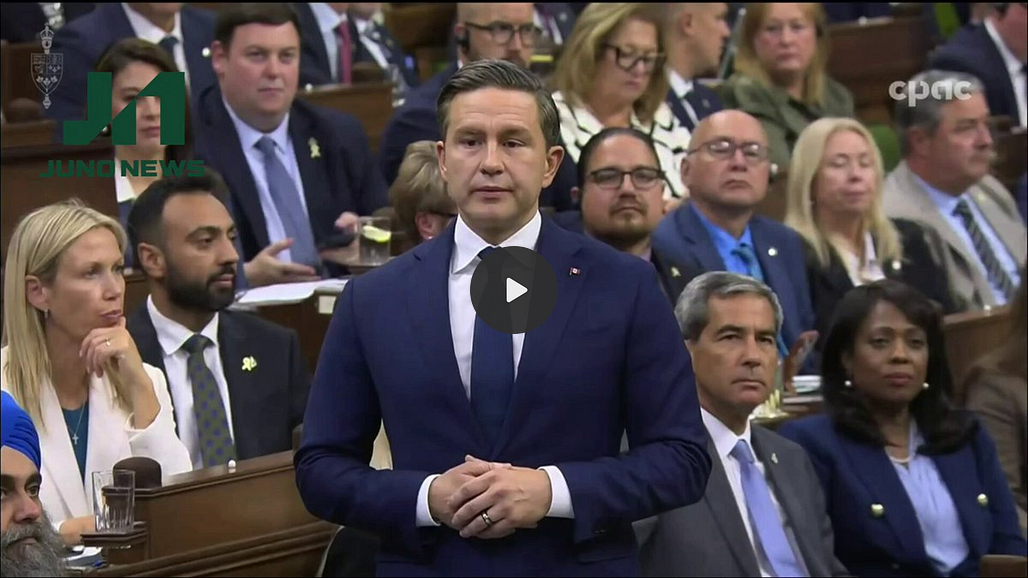
“He’s increasing the industrial carbon tax,” Poilievre said. “Will he reverse his inflationary policies so we can bring down the costs on our small businesses, consumers and workers?”

Carney rejected the connection.
“The industrial carbon tax — the impact on groceries is zero,” Carney told the House.
“The impact on fuel prices is zero,” he added, referring to the Clean Fuel Regulations.
Instead, Carney pointed to global conflicts as drivers of higher fuel and grocery prices.
“What this government knows is that there are three wars affecting Canadians: the tariff war from the Americans, the war against Iran, the war against Ukraine,” he said. “They are pushing up fuel prices. They are pushing up grocery prices.”
Carney said Ottawa was responding with affordability relief, including an upcoming payment of “up to $1,900 for a family of four.”
Higher diesel prices could further amplify that pressure.
In a Toronto Sun column, food economist Sylvain Charlebois argued diesel costs ripple through the food supply chain because the fuel powers farm machinery and transports food through processors, distributors and retailers.
His Agri-Food Analytics Lab found diesel-price changes correlated most strongly with grocery inflation nine months later, at 0.63, while cautioning that correlation does not prove causation.
The lab estimated prolonged high diesel costs could add 0.5 to 0.7 percentage points to grocery inflation, or 0.3 to 0.4 points if short-lived. The figures are scenarios, not forecasts.


Charlebois also directly disputed Carney’s industrial carbon tax claim.
“PM Carney claimed today that industrial carbon pricing has ‘zero’ direct or indirect impact on food prices,” he wrote. “That is not true.”
He pointed to federal modelling estimating millions in carbon pricing costs for food and beverage manufacturing in 2022.


The Canadian Taxpayers Federation also pushed back.
“Canadians didn’t believe Trudeau when he claimed his carbon tax didn’t make life more expensive and people don’t buy Carney’s spin now,” CTF federal director Franco Terrazzano told Juno News.
“Polling shows Canadians understand that a carbon tax on Canadian businesses means higher prices for Canadian consumers.”
A Leger poll commissioned by the CTF found 68 per cent of respondents believed businesses passed most or some industrial carbon pricing costs onto consumers.
Ottawa’s industrial carbon tax benchmark is $95 per tonne in 2026 and will rise to $100 in 2027. Carney has cited Canadian Climate Institute research, which estimates its impact on food prices at “around zero per cent.”


The CTF is also calling on Carney to scrap the Clean Fuel Regulations, which it calls a “hidden carbon tax.”
Earlier ECCC modelling estimated the regulations could add up to 17 cents per litre to gasoline by 2030, while newer ECCC-commissioned analysis put the impact at 4.3 cents.
Ottawa suspended the federal fuel excise tax in April, cutting 10 cents per litre from gasoline and four cents from diesel, and has extended the suspension through Jan. 31, 2027.
At a September 20 rally in Brantford, Ontario, Poilievre vowed to push for further tax cuts.
“Conservatives will continue to fight to cut taxes on work, investment, home building, and energy,” he said. “We’re pushing to get rid of the entire industrial carbon tax, the fuel charge, all of it.”

The Canadian Federation of Independent Business reported that 22 per cent of small businesses were in weak or critical condition and called on Ottawa to lower the small business tax rate and reduce regulation.
Word of advice to those young people who are considering the study of economics. Avoid the universities where Carney studied because he obviously learned nothing about basic economics in either of them.