

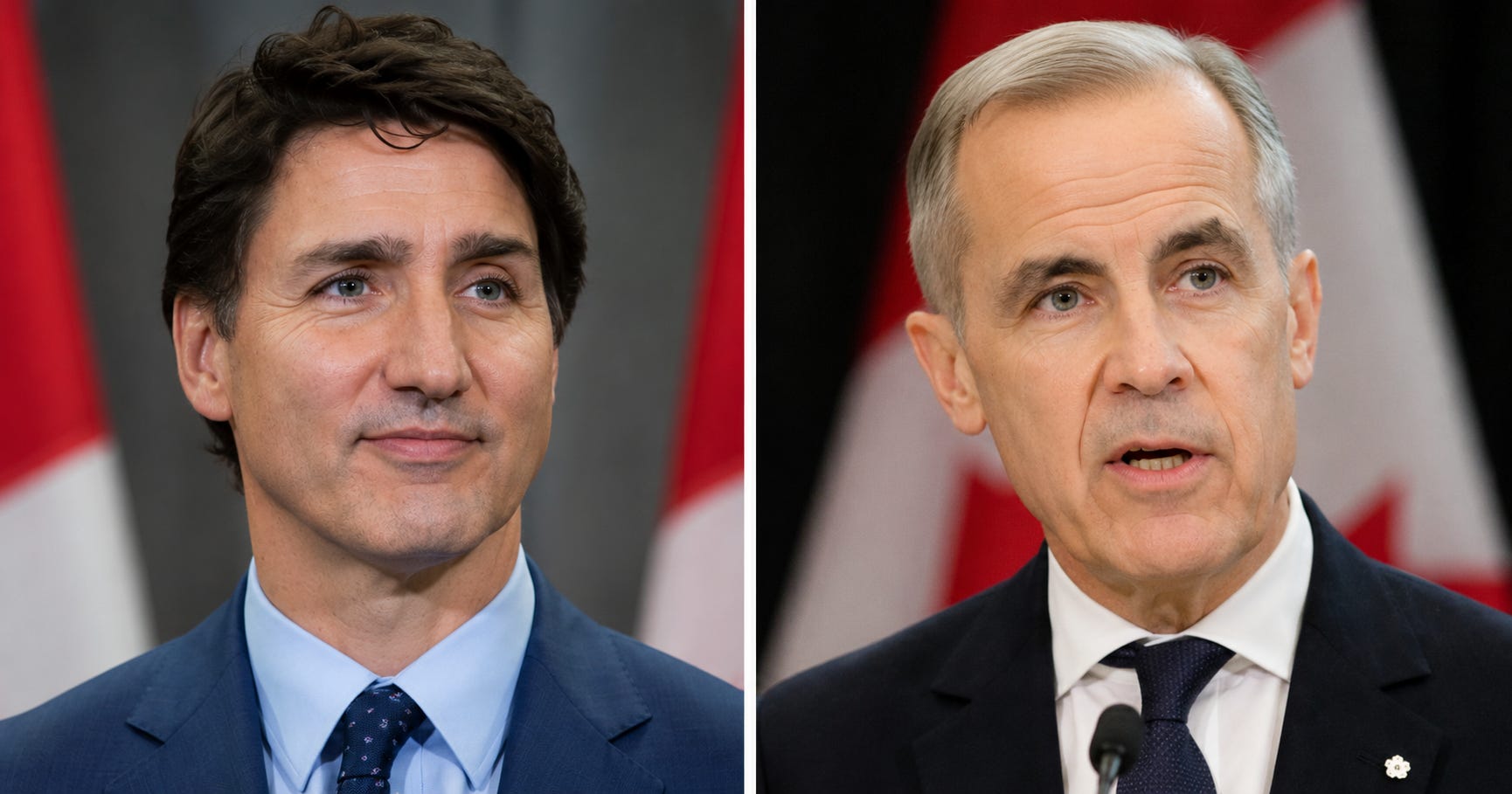
“I also want to speak directly to Canadians at this moment. I’m sure many of you are anxious, but I want you to know we are all in this together… This is Team Canada at its best.”
This is a quote from former Prime Minister Justin Trudeau, not from March 2020, but from February 2025, in response to the first round of tariffs imposed by the Trump administration over Canada’s alleged failure to get its fentanyl crisis under control.
Trudeau would go on to resign. But the COVID-style narrative of “we are all in this together” has continued to be a key part of Canada’s response to Trump’s tariffs.
With COVID-19, the world faced a new virus for which there was initially no vaccine or established treatment. But we also learned relatively quickly that the overwhelming majority of people survived and recovered, with the risk heavily concentrated among certain vulnerable groups.
The trade dispute, meanwhile, is just that: a trade dispute, the kind countries have experienced for centuries.
But in both cases, Canada has embraced an extraordinary, disproportionate response that challenged fundamental Canadian values and harmed our country.
Personal Responsibility Replaced By Collectivism
One of the most noticeable trends during the pandemic was the erosion of personal choice and responsibility and the rise of state-imposed collectivism and coercion.
You had to wear a mask. You had to get vaccinated. You could not go to church, the gym, or a restaurant with your family. You could have only a certain number of people in your home. And you could buy only “essential” items from stores, while “non-essential” items were sealed off.

Then, during this trade war, we once again replaced personal choice with collective obligation. The most notable example is the ban on U.S. alcohol imposed by Eastern Canadian provinces and British Columbia, spearheaded by Ontario Premier Doug Ford, the same man who banned the sale of “non-essential” items during the pandemic.
Canadians were no longer merely encouraged to boycott the United States, our long-standing friend and ally. They were compelled to do so.


Comply or Face Hate & Public Shaming
During COVID-19, those who did not comply with the often-ridiculous restrictions were subjected to snitching and, in some cases, public shaming.
People were labelled “selfish” and “grandma killers” for not going along with the lockdown narrative, and later “dangerous” for refusing the COVID-19 vaccine.
The Montreal police set up a special COVID-19 snitching webpage, while Sylvia Jones, then Ontario’s solicitor general, defended snitching on neighbours. Meanwhile, Niagara Regional Council unanimously voted to publicly name and shame COVID-19 rule-breakers, with the then-mayor of St. Catharines saying, “We have to start telling the public who’s been fined, and highlighting that the time of education is done.”
Now, those who do not go along with the anti-American “Elbows Up” narrative are branded “traitors” and “Vichy Canadians,” the latter being an accusation that one is collaborating with an occupier or an authoritarian power rather than resisting it.
Canadians who travel to the U.S. and post pictures on social media are routinely subjected to hate from both supposed friends and strangers. I experienced this myself when I attended Turning Point USA’s AmericaFest in Phoenix, as well as during trips to Washington, D.C.
Last week, there was a collective meltdown over news that a privately owned independent grocery store in Kemptville, Ontario, was selling American wine. It actually became a national news story, with legacy media interviewing baby boomers outraged by the move. The store ultimately caved to the pressure and removed the wine.


The Death of Common Sense
In both COVID-19 and this trade war, common sense died.
During COVID-19, you could take your mask off to eat at a restaurant but then suddenly had to put it back on to go to the bathroom. Some people wore masks while alone in their cars. And Canada’s public health officials told people to have sex with masks on. Then, when the vaccine arrived, the vaccinated needed to be protected from the unvaccinated because, apparently, the protection provided by the vaccine didn’t work?
When it came to the trade war, the first instinct was to retaliate, despite retaliation hurting Canada far more than the United States, therefore making us weaker in the face of Trump. And to elect Mark Carney, a self-described “globalist” and “elitist” with three passports, whose company, Brookfield, moved jobs from Canada to the United States, because he was apparently the true patriot who would save Canada, while Pierre Poilievre, who has lived in Canada his entire life, was branded a traitor.
Makes total sense.

And in both cases, you’ve had a legacy media that has been complicit in pushing a clear, one-sided agenda.
During COVID, the media would post headlines about “record case counts” and apocalyptic modeling while conveniently leaving out that hospitals were empty. They pushed false narratives about a “pandemic of the unvaccinated” and labelled those who questioned the prevailing COVID-19 narrative as dangerous or irresponsible.
In the case of the trade war, the media has run headlines like “Canadians ready to go elbows up as they brace for trade war with U.S.,” “Are you boycotting U.S. products over Trump’s latest tariffs? Let us know,” as well as “This isn’t just a trade war. Canada’s sovereignty is at stake,” and “Thinking the unthinkable – Canada’s defence against U.S. annexation.”

Long-Term Damage for Short-Term Gains
On Monday, the National Post reported that Ontario Premier Doug Ford pressured Mark Carney not to go ahead with the trade deal, with one Canadian official telling the National Post’s John Ivison, “We really pulled out because Ford was not on board.”
The article goes on to state that “Ford and Carney are both enjoying substantial polling bumps after walking away from a deal. Liaison’s latest poll has Ford’s PCs up four points on the Ontario Liberals.”
Prior to this trade war, Ford’s polling numbers were dire. An Angus Reid poll put him as the least popular premier in Canada, while election polls had him trailing the leaderless Ontario Liberal Party.
But amid this trade war, he gets to stage frequent media stunts that portray him as being “in charge,” and his numbers have rebounded.

We saw the same thing during the pandemic. Prior to March 2020, Ford was becoming extremely unpopular, but amid his imposition of lockdowns and frequent media appearances, his numbers skyrocketed, and he went on to win two more majority governments.
This helps explain why Ford was still locking down Ontario in January 2022, when almost 90% of the population 12 and up was vaccinated.
Never let a good crisis go to waste.
But the lockdowns caused immense harm to Ontarians and Canadians. And now, the trade war could also cause permanent harm. In fact, people have already begun losing their jobs.
In both cases, governments have offered people financial support using taxpayer money, adding to Ontario’s and Canada’s already unsustainable debt burdens and contributing to long-term economic damage, while allowing those same governments to pose as saviours for short-term political gain.
Also, in both cases, Canada and the livelihoods of young Canadians, including Gen Z Canadians, are sacrificed to appease Canadian baby boomers, the country’s most active voting bloc.
Elbows up!

The majority of Canadians are still sheep.