

Canadian crude oil prices plummet in fallout of Maduro’s capture
Canada’s crude prices on the United States Gulf Coast have collapsed in the wake of Venezuelan leader Nicolas Maduro’s capture by U.S. authorities, marking the largest plummet in several years.
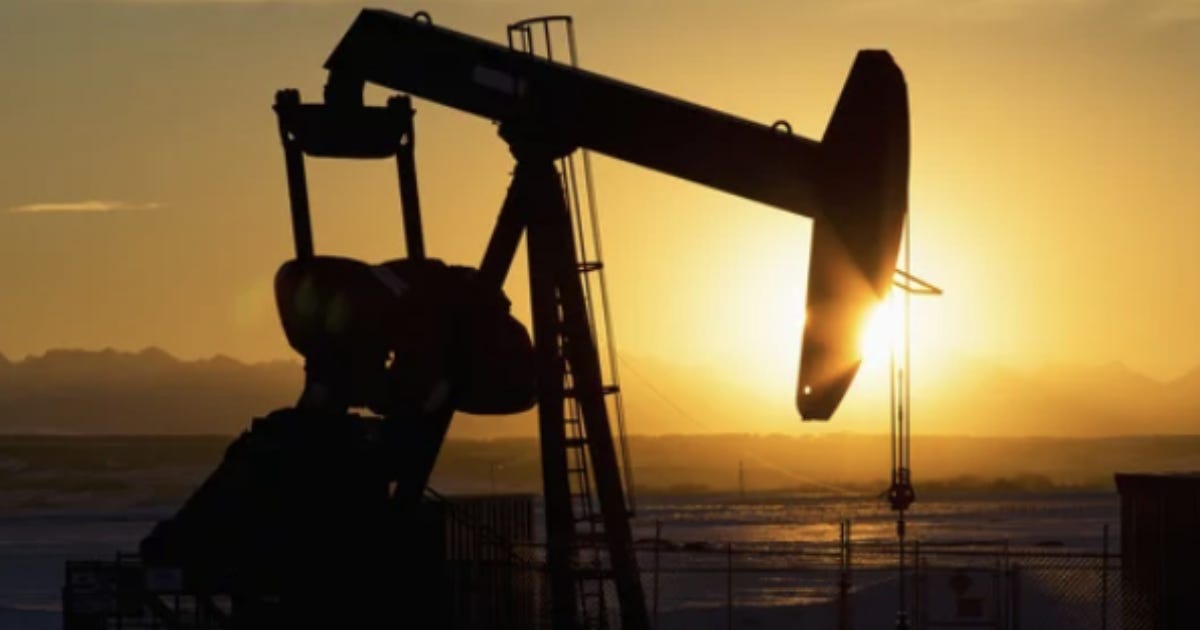
Canada’s crude prices on the United States Gulf Coast have collapsed in the wake of Venezuelan leader Nicolas Maduro’s capture by U.S. authorities, marking the largest plummet in several years.
The drop in price followed U.S. President Donald Trump’s announcement that Venezuela would relinquish as much as 50 million barrels of oil to the American market, which would be sold at domestic prices.
On Wednesday, Canadian Cold Lake crude, which is akin to Venezuela’s heavy oil, traded at a discount to the monthly average of the U.S. benchmark West Texas Intermediate.
According to Modern Commodities prices, WTI sold at $8.50 a barrel compared to only $6.80 for its Canadian counterpart on Tuesday.
Should that discount remain in effect through the market close on Wednesday, it will mark the largest price decrease since late 2023.
Meanwhile, Western Canadian Select in the Houston and Cushing markets also saw price drops of $2.50-$3.50 per barrel on Wednesday, the lowest levels since July 2024.
Venezuela’s crude output was 934,000 barrels per day in November but is now expected to increase dramatically after U.S. President Donald Trump said that his administration planned on taking over oil sales from Venezuelan state-owned oil company Petróleos de Venezuela, S.A. (PDVSA) “indefinitely.”
Conservative Leader Pierre Poilievre warned Prime Minister Mark Carney on Tuesday to begin constructing a West Coast pipeline immediately to mitigate the risk of being shut out of the lucrative U.S. oil market as Venezuelan crude surges onto the scene.
According to Poilievre, Canada would have to move millions of barrels of oil daily to overseas markets to meet the demand.
“Canada must immediately approve a pipeline to the Pacific Coast,” he wrote in a letter to the prime minister on Tuesday.


While Alberta Premier Danielle Smith and Carney signed a memorandum of understanding (MOU) to collaborate on energy infrastructure, carbon-reduction projects, and regulatory reforms, Poilievre said this doesn’t mean that construction will occur.
“Your Memorandum of Understanding with the Premier of Alberta commits only to referring a potential pipeline to a new federal office for further consideration, meaning years of additional process, delay, and uncertainty. After nearly a decade of Liberal obstruction, Canadians have no reason to trust that this leads to construction,” reads the letter.
Alberta Premier Danielle Smith issued a similar message to Carney on Monday, calling for the West Coast pipeline’s development to be expedited.
“Alberta’s government is continuing its work to submit an application to the major project office and expects the federal government to move forward with urgency,” she said. “The work doesn’t stop there – Alberta supports building pipelines in all directions to get our product to market and we look forward to continuing to work with provincial and federal partners to advance these projects.”
Saskatchewan Premier Scott Moe echoed Smith’s calls, saying that Canada needed to stop “sidelining itself” and become a leader on the energy front.
“Export capacity is not a nice to have, it’s a need to have,” said Moe. “Saskatchewan knows that securing our economic future means securing access to the world for our resources.”
Will PM Carney admit that he has done a lot of talking while Canada and Canadians are getting more and more poor?