

B.C. police chief: don’t expect arrests now that decriminalization is over
Victoria’s police chief says citizens shouldn’t hold their breath for immediate mass arrests of drug users.
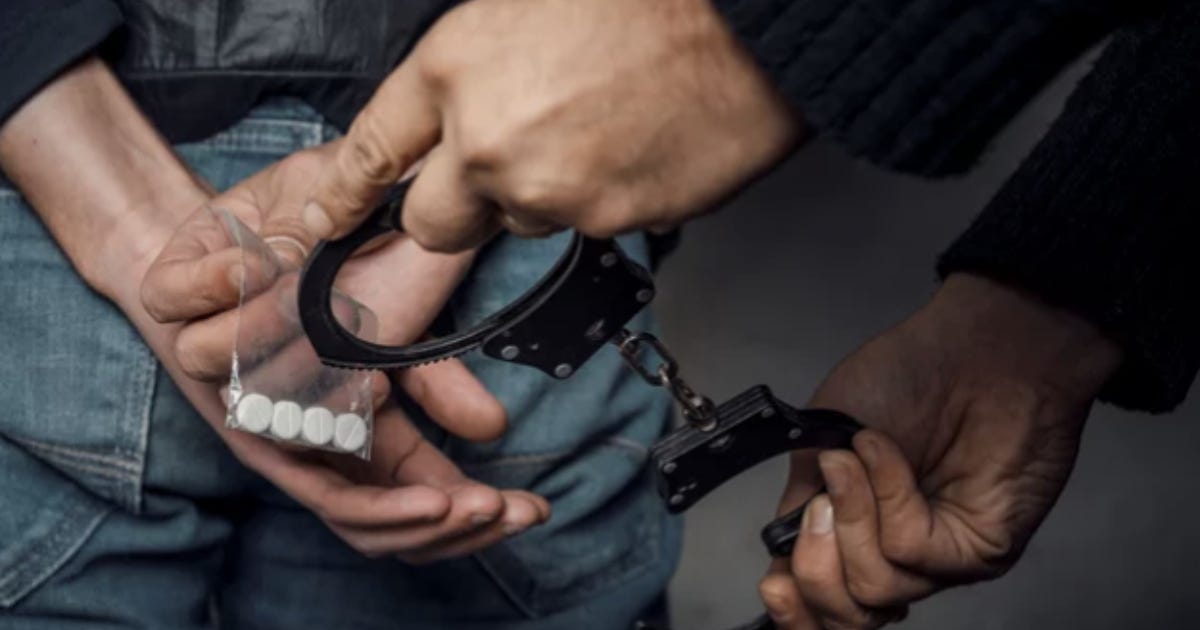
Despite British Columbia finally ending its controversial three-year experiment with drug decriminalization, Victoria’s police chief says citizens shouldn’t hold their breath for immediate mass arrests of drug users.
Deputy Chief Constable Fiona Wilson supports ending drug decriminalization in B.C., but noted the program had already begun scaling back about 20 months ago.
“I think that, as important as it is for police to be willing to support new and innovative initiatives, we also have to have the courage to stand up and say when something is not working, and that’s what happened with decriminalization here in British Columbia,” Wilson told Prince Albert Now on Thursday.
The pilot project, implemented with support from both the federal and provincial governments, removed criminal penalties for possessing 2.5 grams or less of illicit drugs.
Health Canada granted B.C. a three-year exemption under the Controlled Drugs and Substances Act to decriminalize people who use drugs, effective Jan. 31, 2023.
Wilson initially vocalized support for decriminalization of personal possession of small amounts several years ago, saying it had the “potential to address harms associated with substance use” as an “important part of an integrated approach.”
However, she said it ultimately led to “really concerning situations of public consumption” and often prevented officers from being able to intervene.
“We had situations where someone might be standing at a bus shelter with a bunch of kids on their way to school and, you know, openly smoking crack cocaine,” said Wilson.
“In a situation like that, because bus shelters were not part of exceptions to the exemption, police had no lawful authority in the absence of any other criminal behaviour to even approach that person.”
An amendment to the program was introduced in 2024 to restrict possession to private homes, areas where homeless people are legally sheltering and designated health-care clinics.
However, more than 2,500 people died of toxic drug overdoses that same year, according to the B.C. Coroners Service, marking a record high since the public health emergency was declared in 2016.
The latest data and reporting from the B.C. government also revealed little meaningful change in overdose deaths since the pilot began three years ago.
Provincial data compiled in a report to Health Canada showed the rate of unregulated drug toxicity deaths in the first 12 months of the decriminalization pilot was not statistically different from the rate in the three years before the policy began, indicating no clear reduction in overdose deaths attributable solely to the policy.
Paramedic-attended opioid overdose events also remained high, with 20,738 such events in 2024, only a modest 6 per cent decrease from 22,036 in 2023.
Deaths among youth under 19 also remained stable year-over-year, with overdose being by far the most common cause of death for minors in the province.
The 2024 amendment at least returned police the “powers” to intervene when necessary.
“The reality is the police aren’t going into people’s private residences to arrest them for simple possession because they’re using illicit drugs inside that private residence. We don’t have the grounds to do that,” said Wilson.
“Many of those health facilities already have Section 56 exemptions,” she added. “We wouldn’t be going into a supervised consumption site to arrest people for consuming illicit drugs. So the rare circumstance where the (current) exemption would still impact police is indeed very, very, very rare.”
According to Wilson, prosecutors have no intention of pursuing simple possession charges outside of extraordinary circumstances, adding that when an arrest is made, police are permitted to either direct them to treatment options or a safe consumption site.
“Police need to have discretion so that they can deal with circumstances on a case-by-case basis and I think that’s really important,” she said.
Everyone who supported this unbelievably stupid idea to ‘legalize’ hard drugs needs to held to account.
Saying sorry doesn’t cut it!!