

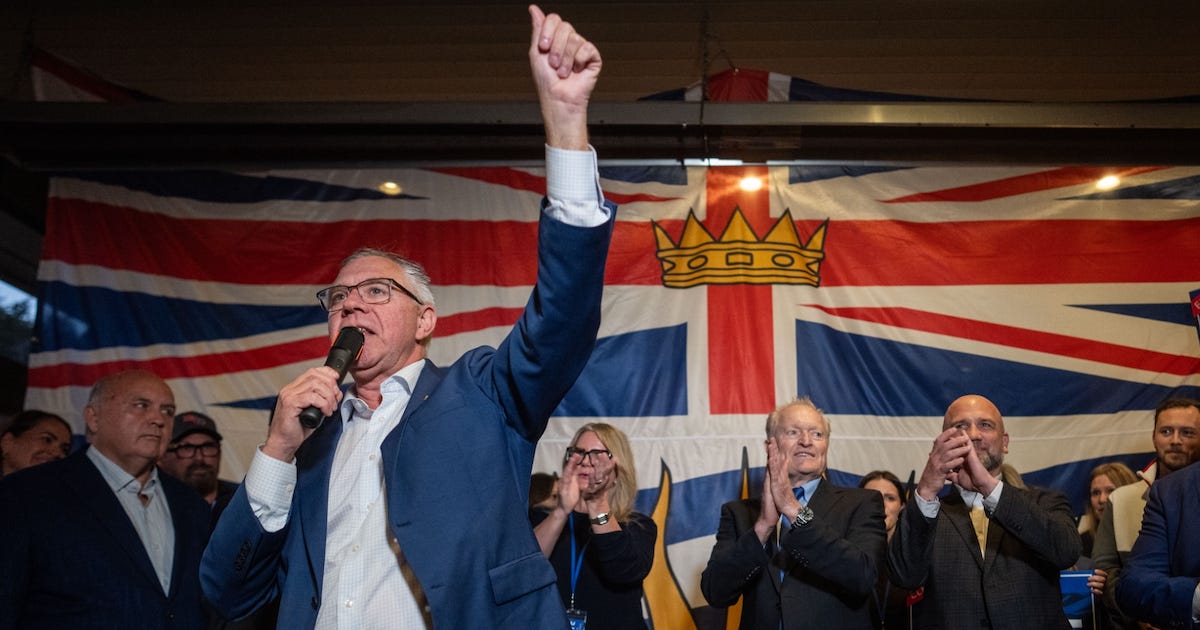
The Conservatives have unseated the NDP and now have a supermajority government.
While polls suggested a somewhat close race, once votes started coming in, it became immediately apparent what the most likely result was going to be — a Conservative victory — with Conservatives gaining momentum even in traditionally NDP-leaning strongholds.
At the time of writing, the Conservatives are leading in 63 ridings, having already won 61 of those — more than enough to secure a majority, which requires 47.
The NDP have won a mere 25 and are leading in only 3 other races.
The Greens have won two seats. Neither OneBC nor CentreBC have won a seat.
In response to the results of the election, David Eby resigned as leader of the NDP.
How We Got Here
David Eby’s snap election caught the entire province by surprise.
Municipal elections were in full swing, and the B.C. Conservatives had just elected an interim leader. No one at the provincial level, aside from Eby himself and a handful of insiders, expected they were going to be campaigning for the next month.
However, against all odds and beating every expectation, the party unified under now-Premier Lorne Doerkson pulled off a historic victory and now has the mandate to govern B.C.
As previously reported, Eby called the snap election on September 22, just two days after B.C. Conservative leader Kerry-Lynne Findlay resigned, with Doerkson stepping up to lead the party as interim leader and being given the tremendous task of stitching the party back together.
While the departure was tumultuous for the party, Doerkson chose to lead with a message of unity, vowing to bring in people from across the right wing to challenge the NDP.
