

Author: Hymie Rubenstein
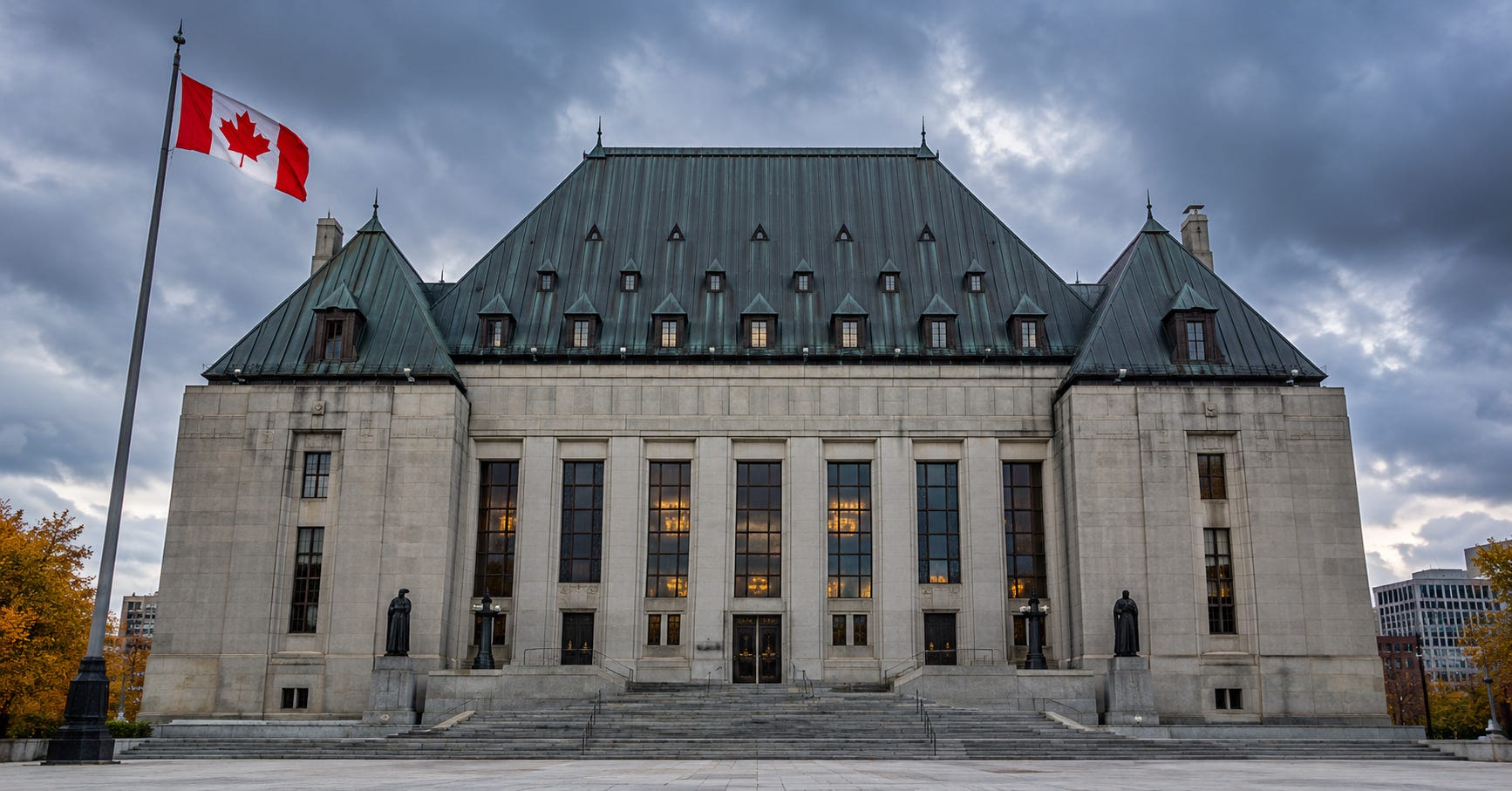
The Supreme Court of Canada recently ruled that judges must meaningfully consider indigenous traditions, such as “sentencing circles,” when ruling on the criminal behaviour of indigenous offenders.
The decision, delivered on October 9, upheld a reduced sentence for Harry Arthur Cope, an indigenous man. It emphasized the need to incorporate aboriginal perspectives and legal traditions into the Canadian justice system, a process called “braiding.”
But the decision was not unanimous: four of the nine justices dissented, arguing that indigenous law should not override established Canadian law.
My view, rooted in my understanding of traditional indigenous culture, goes far beyond the minority opinion. I assert that Canadian “indigenous law” existed neither in the past nor is it alive in present, the best evidence being that indigenous people routinely apply to the Canadian courts whenever confronted with civil or criminal issues.
Equally important, law is a system of enforceable rules created and backed by a governing or societal authority to regulate behaviour, maintain order, and resolve disputes. More specifically, it requires a supreme governing body, legislature, or established custom, backed by official sanctions, penalties, fines, or imprisonment if violated, that generally applies equally to all members of a community, including citizens, organizations, and the government itself.
“Indigenous law” does not manifest these features.
This does not mean people without formal legal systems lack customary ways of dealing with chronically disruptive or violently destructive behaviour. This includes “healing circles,” now arbitrarily transformed into “sentencing circles,” that peacefully resolve serious conflicts among competing parties.
Still, such informal tribunals should not be conflated or “braided” with true legal systems.
But this muddling now exists in Canada’s criminal law system, even at the highest court level, resulting in guilty parties receiving reduced sentences based on ethnic or racial membership. Meanwhile, the victim is left to suffer in silence.
In a recent Supreme Court case, the accused party was an indigenous man, thereby opening the proceedings to what are called Gladue sentencing principles as part of his guilty verdict.

In its narrow decision, Canada’s Supreme Court upheld a lower court’s reduction in Nova Scotia of a criminal sentence against Hope for brutally assaulting his “intimate partner” in 2021 by “ … on a sidewalk, repeatedly punching her and throwing her to the ground. She suffered severe injuries to her face and upper torso.”
Indigenous sentencing circles include offenders, victims, elders, and other community members who take part alongside justice officials in determining an appropriate sentence for a crime, including possible alternatives to incarceration, according to the Department of Justice.
At his first trial, Cope pleaded guilty to aggravated assault. That led to a Gladue-mandated sentencing circle, an indigenous restorative justice process in which the offender, victim, elders, and community members discuss the crime and recommend a sentence to the judge. The circle recommended three years.
The trial judge rejected this recommendation.
In a landmark 1999 decision, the Supreme Court of Canada established Gladue principles by interpreting Section 718.2(e) of the Criminal Code. “The law was created to address the severe and disproportionate overrepresentation of First Nations, Métis, and Inuit people in Canadian prisons. … The principles apply to all indigenous people (Status, non-Status, on-reserve, or urban/off-reserve) throughout various stages of the criminal justice process.”
These principles ignore the elementary fact that indigenous women are disproportionately more likely to experience assault and other forms of abuse at the hands of their intimate partners, with these partners most often being indigenous men. Their incarceration rests on the timeless dictum “you do the crime, you do the time.”
This admonition runs counter to the Gladue principles. Judges at all levels must account for the ongoing impacts of colonization and historical trauma, which include: the legacy of Indian residential schools and foster care systems; systemic and individual racism; loss of land, culture, and traditional languages; poverty, addiction, and housing insecurity.
The Nova Scotia judge disagreed and sentenced Cope to five years.
But a Nova Scotia appeals court later accepted the sentencing circle’s recommendation, reducing the sentence to three years.
The Supreme Court ultimately agreed with the three-year sentence, concluding that the original judge had failed to “sufficiently recognize that the offender’s mental illness contributed to the commission of the aggravated assault” or “meaningfully engage with the sentencing circle process.”
Where does that leave Cope’s victim, especially since she is indigenous, too? The Supreme Court considered that factor and even warned that a shorter sentence “perpetuates a discounting of the lives of, and harms to” indigenous women. Still, its decision rejected this consideration.
This reduced sentence decision suggests that Gladue principles should be privileged over the harms done to aboriginal victims. The minority opinion of the four justices who argued for a harsher sentence supports this interpretation, prioritizing denunciation and deterrence for crimes against vulnerable victims, and suggesting that “you do the crime, you do the time” is still alive in some judges’ minds.
A thoughtful reading of these guidelines also suggests that many of them easily apply to non-indigenous people as well, thereby making them racist in their intent and application.
For example, countless non-indigenous criminally convicted Canadians have suffered one or more of the following adversities: foster care, racism, loss of traditional land in their overseas homelands (why they migrated to Canada), cultural loss through public school assimilation, gradual loss of their ancestral languages, extreme poverty, addiction to various substances, and homelessness.
Why aren’t Gladue-like principles extended to them in equal measure?
More worrying still is that Gladue-like principles have recently been extended to other so-called marginalized Canadians. According to the Department of Justice Canada, impact of race and culture assessments (IRCAs) are reports that help criminal justice professionals better understand the effects of poverty, marginalization, racism, and social exclusion on black and racialized offenders and their life experiences. IRCAs are like Gladue reports, but are used primarily for black offenders, both adults and youth.
IRCAs allow “black and racialized offenders” to employ them during sentencing. The reports enable judges to consider how the “effects of poverty, marginalization, racism, and social exclusion” may have contributed to the crime.
But like Gladue reports, which they closely resemble, ignored is the basic fact that sexual and other assaults against women occur among all sectors of society, whether rich or poor, regardless of their skin colour, ethnicity, or life experiences.
Equally disconcerting, one of the Supreme Court justices, Michelle O’Bonsawin, who is aboriginal, went on to endorse using indigenous traditions in tandem with conventional Canadian sentencing law, in a process the majority called “braiding.”
She referred to a 2024 Supreme Court decision that implemented the United Nations Declaration on the Rights of Indigenous Peoples (UNDRIP) in indigenous child and family services. She said, “Sentencing circles provide an opportunity for this braiding.”
She also added that reconciliation between indigenous and non-indigenous people can advance by “braiding together” the two legal traditions to form a “single, strong rope.”
O’Bonsawin even disingenuously claimed that “these provisions do not create a parallel regime for Indigenous offenders” and said judges must continue with “the fundamental sentencing principle of proportionality” and “the ultimate objective of protecting society.”
The four dissenting justices disagreed with the majority, particularly its reliance on legal principles linked to UNDRIP.
Justices Malcolm Rowe and Mahmud Jamal, writing for the dissent, said they don’t agree that indigenous law and legal practices can be “braided” into criminal sentencing law.
They argued that the majority incorrectly relied on a previous Supreme Court ruling about implementing UNDRIP in line with legislation recognizing indigenous jurisdiction over child welfare, even though Parliament has made no comparable changes to Canada’s laws in line with the majority’s decision.
“Parliament has done nothing comparable in the Criminal Code; it has not conferred jurisdiction on Indigenous communities over sentencing decisions, nor has it directed sentencing judges to defer to Indigenous legal traditions,” Rowe and Jamal wrote, adding that the Criminal Code must guide a judge’s authority and that the view of the majority could limit a judge’s discretion.
While the dissenting judges agreed that indigenous sentencing factors could inform judicial decisions, they said such factors should not override Canadian law as established by Parliament.
The four dissenting judges had called for restoring Cope’s original five-year sentence, saying the reduced sentence he’d received by the appeal court didn’t adequately take into account the severity of the violence he committed, the vulnerability of the victim, or the danger Cope posed to the community.
I already dismissed this “braiding” in an earlier piece about so-called indigenous science, which is relevant to the falsely termed notion of “indigenous law” as well.
Just as there is no “indigenous science,” there is also no “indigenous law.”
Briefly, I contended that braiding and the connected issues of “bridging” and “weaving” are a repudiation of the Western scientific tradition because they privilege common sense visual understandings by labelling them scientific to score political or sectarian points, thereby mocking a foundational concept — science — that no amount of “bridging, braiding and weaving” could ever displace.
The same holds for the privileging of traditional indigenous “healing circles” masquerading as “sentencing circles,” a charade easily revealed by the fact that Indian Band members immediately turn to the police for help when woundings and shootings take place on their reserves.
Overall, then, this decision speaks volumes about the need to reconsider the causes and consequences of the racially and ethnically discriminatory Gladue sentencing principles.
Hymie Rubenstein is a retired professor of anthropology at the University of Manitoba and a senior fellow at the Frontier Centre for Public Policy.
So concerning. What can overturn a Supreme Court ruling?